
Loading, please wait...
LOT 0782
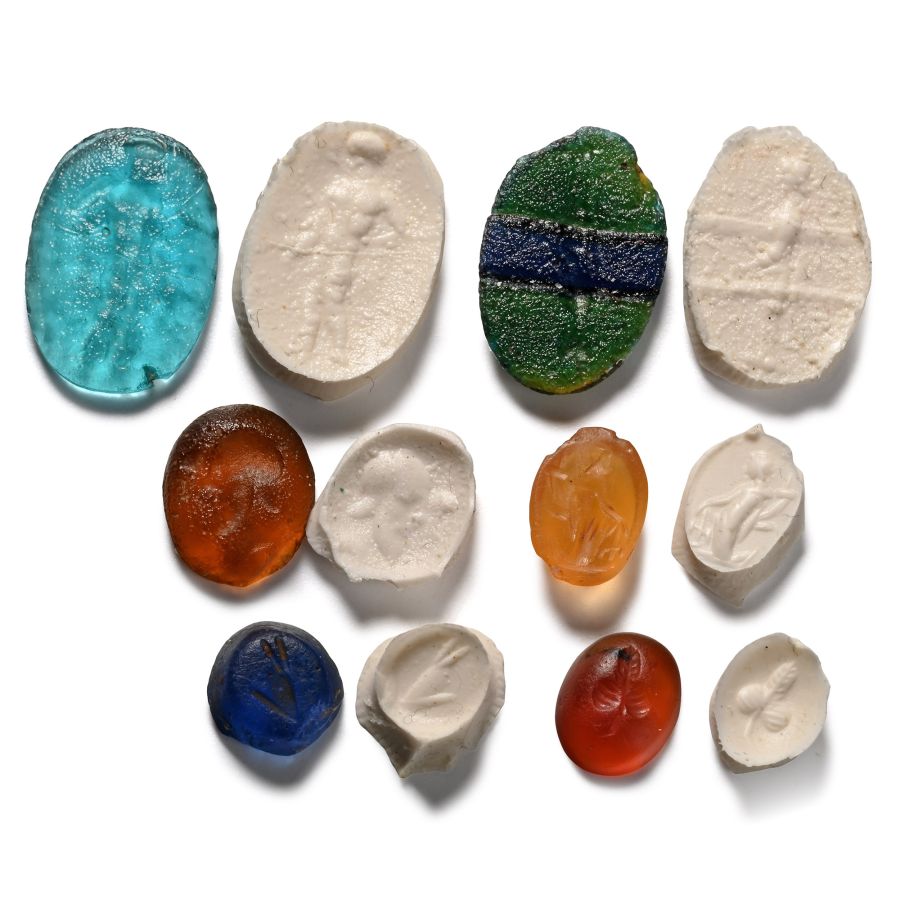
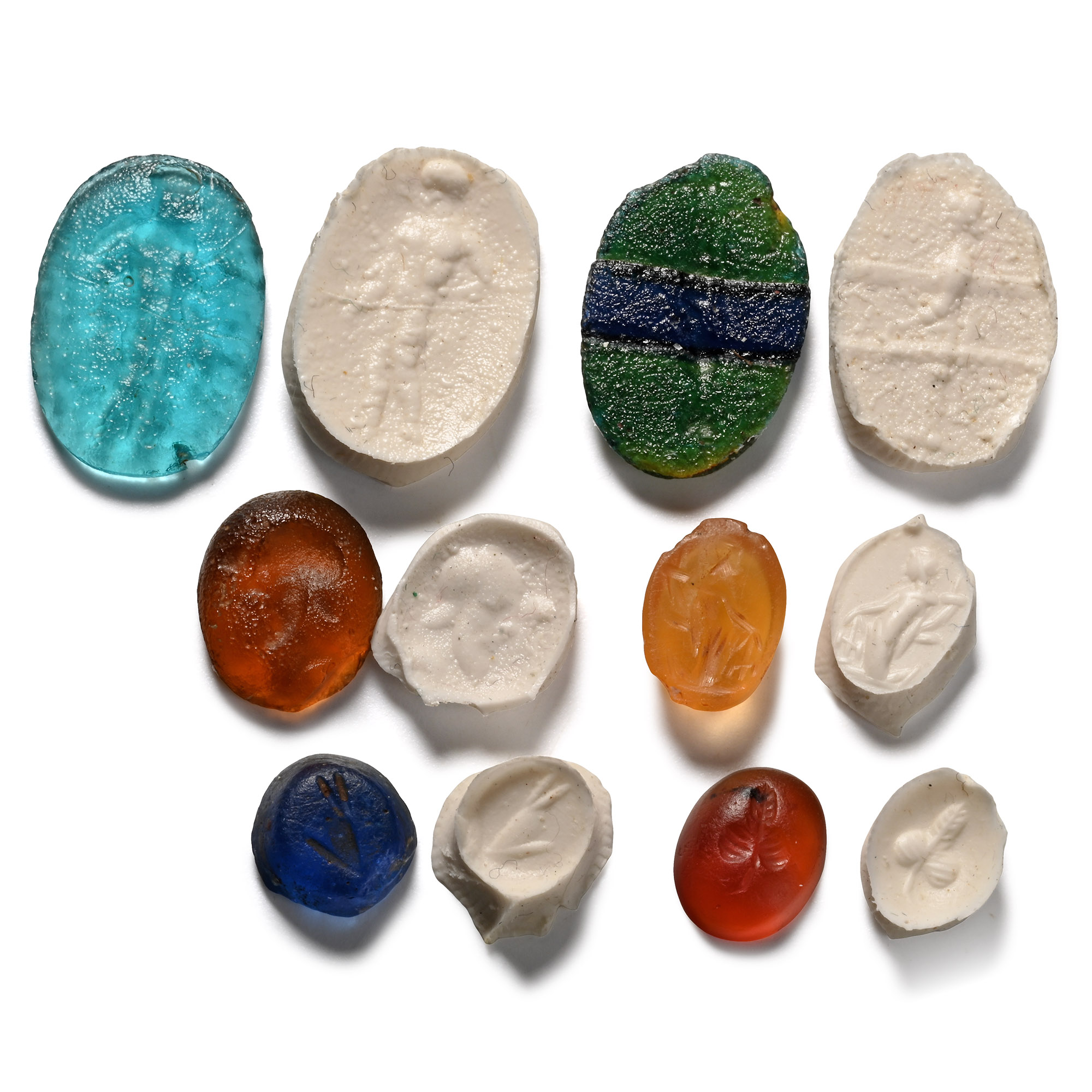
Roman Gemstone and Glass Intaglio Collection
CIRCA 2ND-3RD CENTURY A.D.
1/4 - 5/8 in. (2.23 grams total, 7.48-15.98 mm).
Comprising: two with standing figures; profile bust; trefoil; fish; Fortuna; each supplied with a museum-quality impression. [6, No Reserve]
ProvenanceFrom the private collection of a European gentleman (1942-2024), formed since the 1970s.
CONDITIONTimeLine Auctions follows a vetting process to ensure the authenticity and legality of all items, reinforcing our commitment to integrity and responsible trading. Each antiquity, antique, and coin lot undergoes thorough examination by a vetting committee of at least ten external specialists, professional trade association members, scientists, and archaeologists: Our Vetting Process
AUCTIONS:
TimeLine is a leading auction house specialising in antiquities, ancient art, collectables, natural history, coins, medals, and books. Our auctions offer museums, collectors, historians, and enthusiasts the opportunity to acquire unique and historically significant pieces.
-
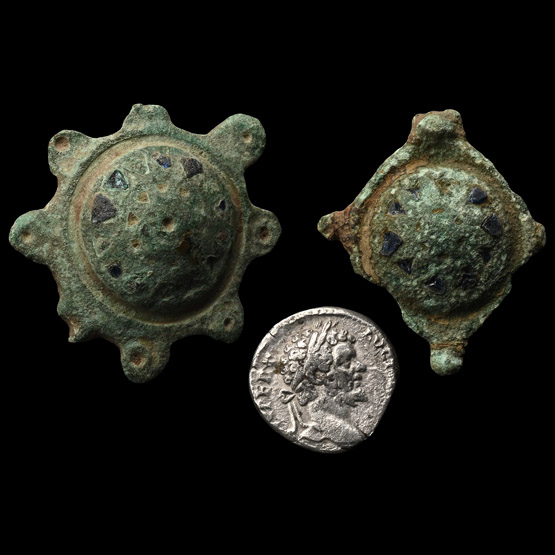
Roman Enamelled Bronze Umbonate Brooch and Silver Denarius Group
2nd-3rd century A.D.Sold for (Inc. bp): £98
Comprising: two domed umbonate brooches with radiating fretwork design to accept enamel fill; silver coin of Septimius Severus. 17.6 grams total, 17-33 mm
Found Lincolnshire, UK.
This silver denarius belongs to Septimius Severus, probably the mint of Rome, AD 198. On the obverse: [L] SEPT [SEVERVS] PER AVG [P M IMP XI,] laureate head right. -
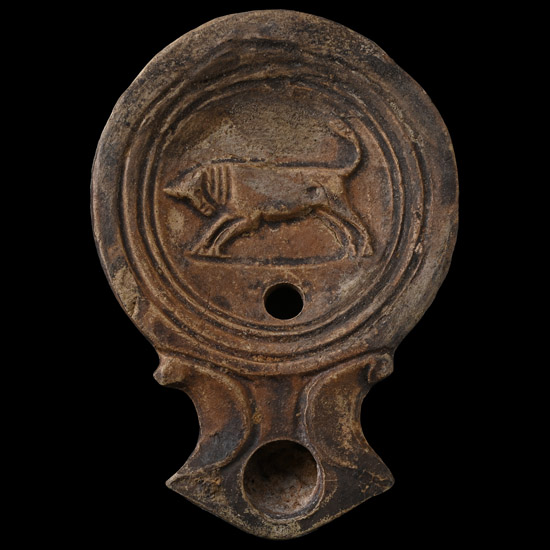
Roman Terracotta Oil Lamp with Butting Bull
Circa 1st century A.D.Sold for (Inc. bp): £234
Shallow, circular body with volute scrolls flanking the nozzle, low relief image of a butting bull on a baseline on the discus. 59.5 grams, 91 mm
From the private collection of Mr Brian Edwards, New Malden, Surrey, UK, formed from the late 1970s-early 1980s; thence by descent. Accompanied by the original collector's data sheet with reference no.A38. -
.jpg)
Roman Carnelian Gemstone with Panther in Gold Ring
1st-2nd century A.D. and laterSold for (Inc. bp): £4,160
Ellipsoid cabochon with intaglio scene of a panther resting with forepaws extended beside a rocky outcrop with a frond extending above, thyrsus behind the shoulders; mounted in a later gold ring; supplied with a museum-quality impression. 13.72 grams, 33.34 mm overall, 16.97 mm internal diameter (approximate size British M 1/2, USA 6 1/4, Europe 13.09, Japan 12)
From the private collection of a European gentleman (1942-2024), formed since the 1970s.
