
Loading, please wait...
LOT 0810
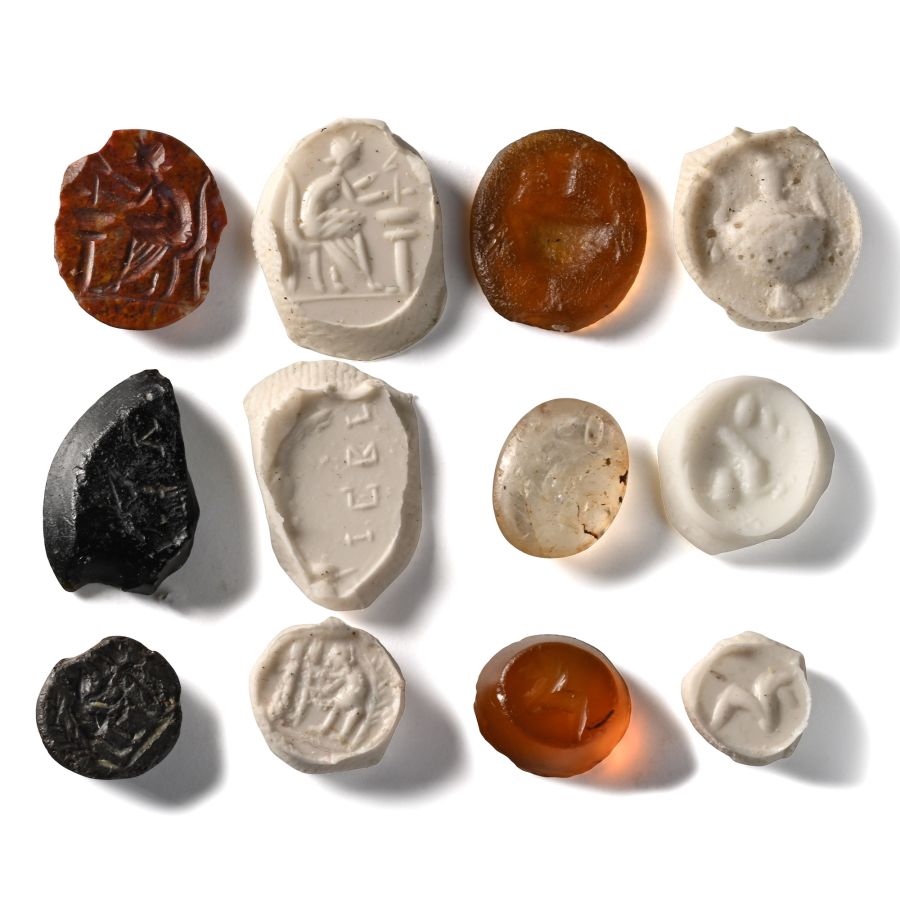
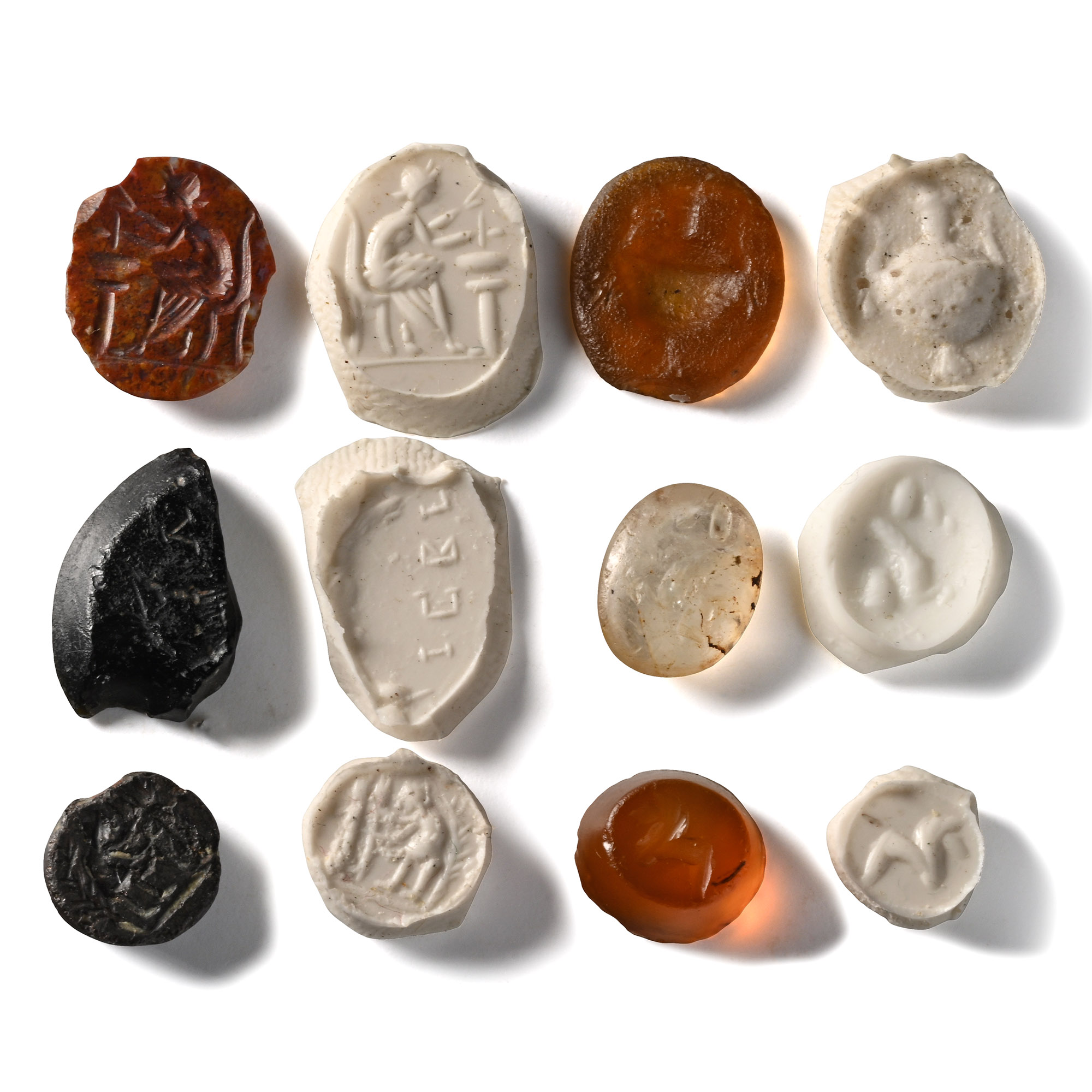
Roman Gemstone and Glass Intaglio Collection
CIRCA 2ND-3RD CENTURY A.D.
1/4 - 1/2 in. (2.70 grams total, 8.49-13.58 mm).
Comprising: potter at his wheel; amphora; 'ICBL' legend; stooping figure; bird in flight; horse in profile; each supplied with a museum-quality impression. [6, No Reserve]
ProvenanceFrom the private collection of a European gentleman (1942-2024), formed since the 1970s.
CONDITIONTimeLine Auctions follows a vetting process to ensure the authenticity and legality of all items, reinforcing our commitment to integrity and responsible trading. Each antiquity, antique, and coin lot undergoes thorough examination by a vetting committee of at least ten external specialists, professional trade association members, scientists, and archaeologists: Our Vetting Process
AUCTIONS:
TimeLine is a leading auction house specialising in antiquities, ancient art, collectables, natural history, coins, medals, and books. Our auctions offer museums, collectors, historians, and enthusiasts the opportunity to acquire unique and historically significant pieces.
-
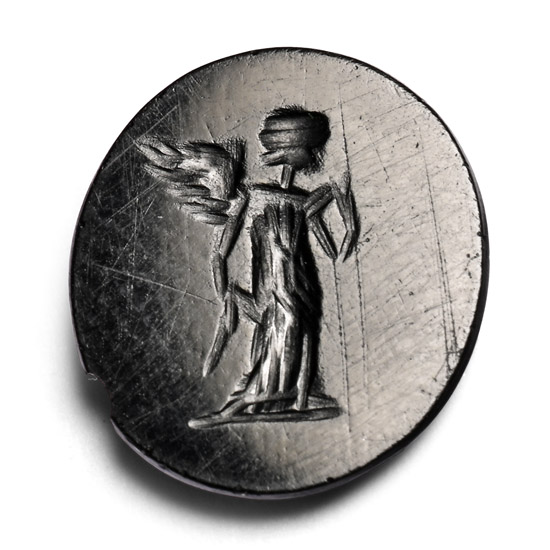
Roman Black Gemstone with Victory
2nd-3rd century A.D.Sold for (Inc. bp): £156
With intaglio Victory standing in floor-length robe, wreath in one hand; supplied with a museum-quality impression. 0.62 grams, 13.26 mm
From the private collection of a European gentleman (1942-2024), formed since the 1970s. -
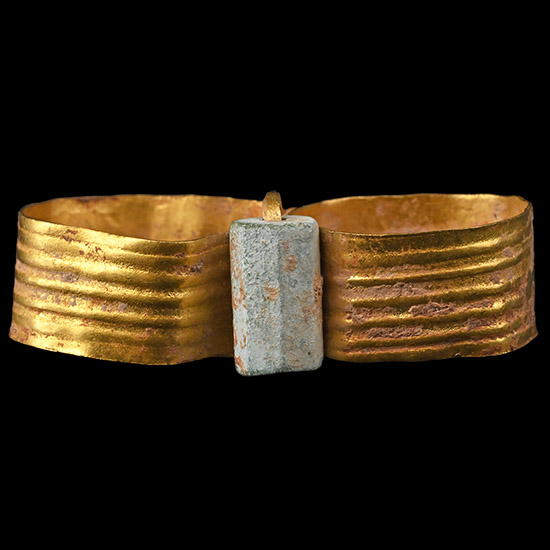
Roman Gold Double Ring with Bead
1st-2nd century A.D.Estimate: £700 - 900 (+bp*)
Opening Bid: £350
Comprising two broad sheet-gold hoops, each with reeded outer face, joined with applied granules below and a wire loop above, securing a facetted glass bead. 3.52 grams, 31 mm
Ex German art market, 2000s. Acquired from an EU collector living in London. From the collection of a Surrey, UK, gentleman. -
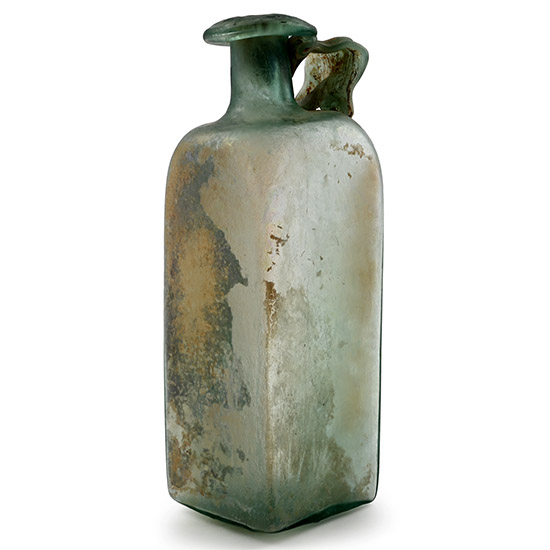
Large Gallo-Roman Mould-Blown Green Glass Flask
1st-2nd century A.D.Sold for (Inc. bp): £702
Square in plan with rounded shoulder and trumpet-shaped mouth; folded strap handle. 303 grams, 20.6 cm
Collection F. Martens Netherlands, 1980s-1990s. Anonymous sale, Cahn International Auction, Basel, Switzerland, 2010. Private collection, Europe.
Glass blowing was first used in the early 1st century B.C. and became widespread in the 1st century A.D. It simplified and increased the production of glass vessels, reducing their cost and transforming them into a general commodity. In the 1st century A.D., colourful glass vessels were still popular, while glass with a natural, light green colour, such as this, gained popularity in the subsequent centuries.
