
Loading, please wait...

LOT 0674
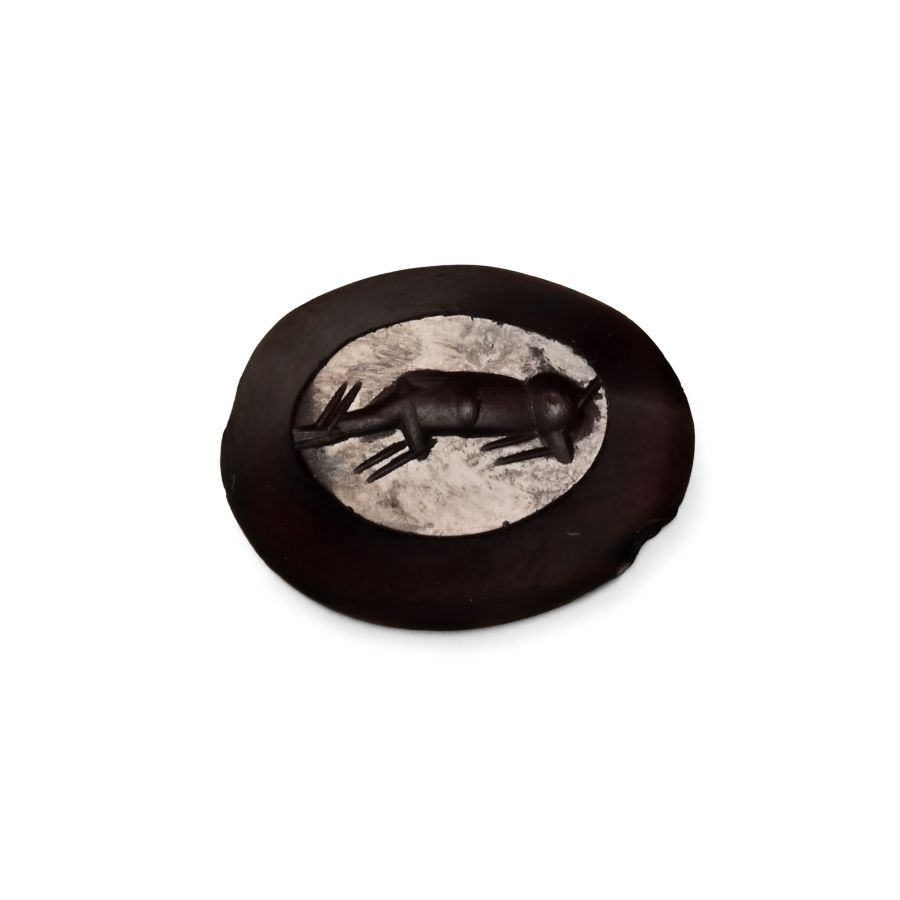
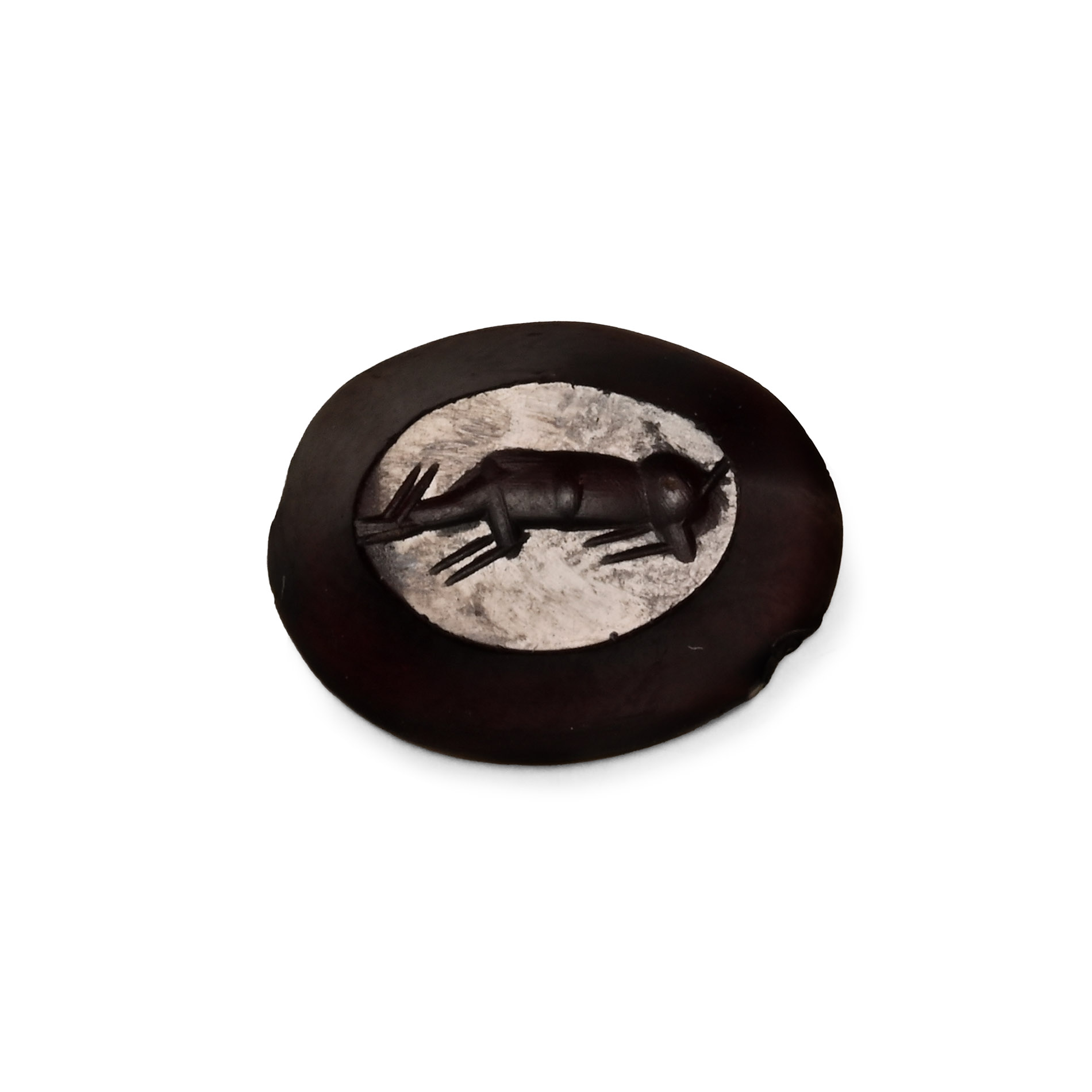
Roman Garnet Gemstone Depicting a Hunting Dog
1ST-2ND CENTURY A.D.
5/8 in. (1.62 grams, 15 mm).
Ellipsoid in plan with intaglio hound crouching.
ProvenanceFrom the private collection of Mr K.A., acquired in the 1990s-early 2000s.
This lot is accompanied by an illustrated lot declaration signed by the Head of the Antiquities Department, Dr Raffaele D'Amato.
Cf. Roman gemstone in the British Museum, London, with hunting dog, hare and eagle, inventory 1814.0704.1417, for style, in Walters, H.B., Catalogue of Engraved Gems & Cameos, Greek, Etruscan & Roman in the British Museum, London, 1926, no.2417.
FootnotesThe Romans kept dogs for many purposes; such as for hunting game, protecting a flock of sheep, guarding the house, and providing companionship.
CONDITIONTimeLine Auctions follows a vetting process to ensure the authenticity and legality of all items, reinforcing our commitment to integrity and responsible trading. Each antiquity, antique, and coin lot undergoes thorough examination by a vetting committee of at least ten external specialists, professional trade association members, scientists, and archaeologists: Our Vetting Process
AUCTIONS:
TimeLine is a leading auction house specialising in antiquities, ancient art, collectables, natural history, coins, medals, and books. Our auctions offer museums, collectors, historians, and enthusiasts the opportunity to acquire unique and historically significant pieces.
-
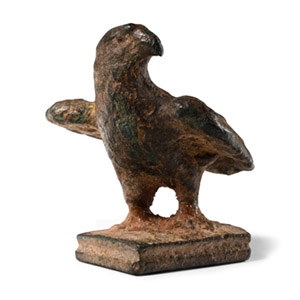
Roman Gilt Bronze Eagle Statuette
2nd-3rd century A.D.Sold for (Inc. bp): £1,170
Modelled in the round on a square base with gusseted sides, standing with head turned and wings spread. 104 grams, 47 mm
Acquired in the mid 1980s-1990s. Private collection, Switzerland, thence by descent. Private collection, since the late 1990s. This lot has been checked against the Interpol Database of stolen works of art and is accompanied by search certificate number no.12239-222315. This lot has been cleared against the Art Loss Register database, and is accompanied by an illustrated lot declaration signed by the Head of the Antiquities Department, Dr Raffaele D’Amato. This lot is accompanied by an illustrated lot declaration signed by the Head of the Antiquities Department, Dr Raffaele D'Amato. -
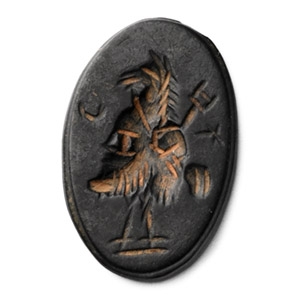
Roman Gryllus Gemstone
2nd-5th century A.D.Sold for (Inc. bp): £195
Ellipsoid in plan with incuse Abraxas motif. 1.13 grams, 16 mm
From the collection of a gentleman, acquired on the London art market in the 1990s. This lot is accompanied by an illustrated lot declaration signed by the Head of the Antiquities Department, Dr Raffaele D'Amato. -
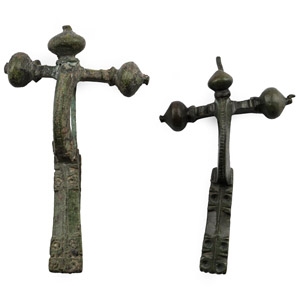
Roman Bronze Crossbow Brooch Group
4th century A.D.Sold for (Inc. bp): £52
Comprising two brooches with onion knop finials; one with a pin, the other with remains of a pin. 50 grams total, 63-71 mm
Ex German art market, 2000s. Acquired from an EU collector living in London. From the collection of a Surrey, UK, gentleman. This lot is accompanied by an illustrated lot declaration signed by the Head of the Antiquities Department, Dr Raffaele D'Amato.
