
Loading, please wait...
LOT 0767
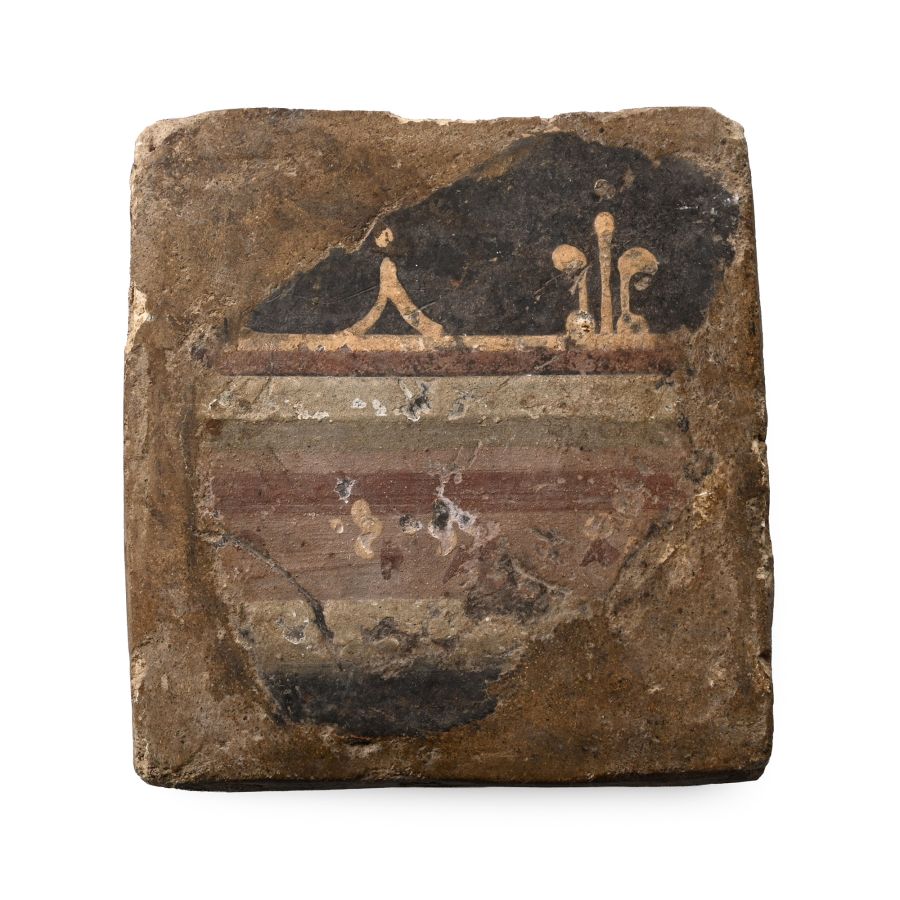
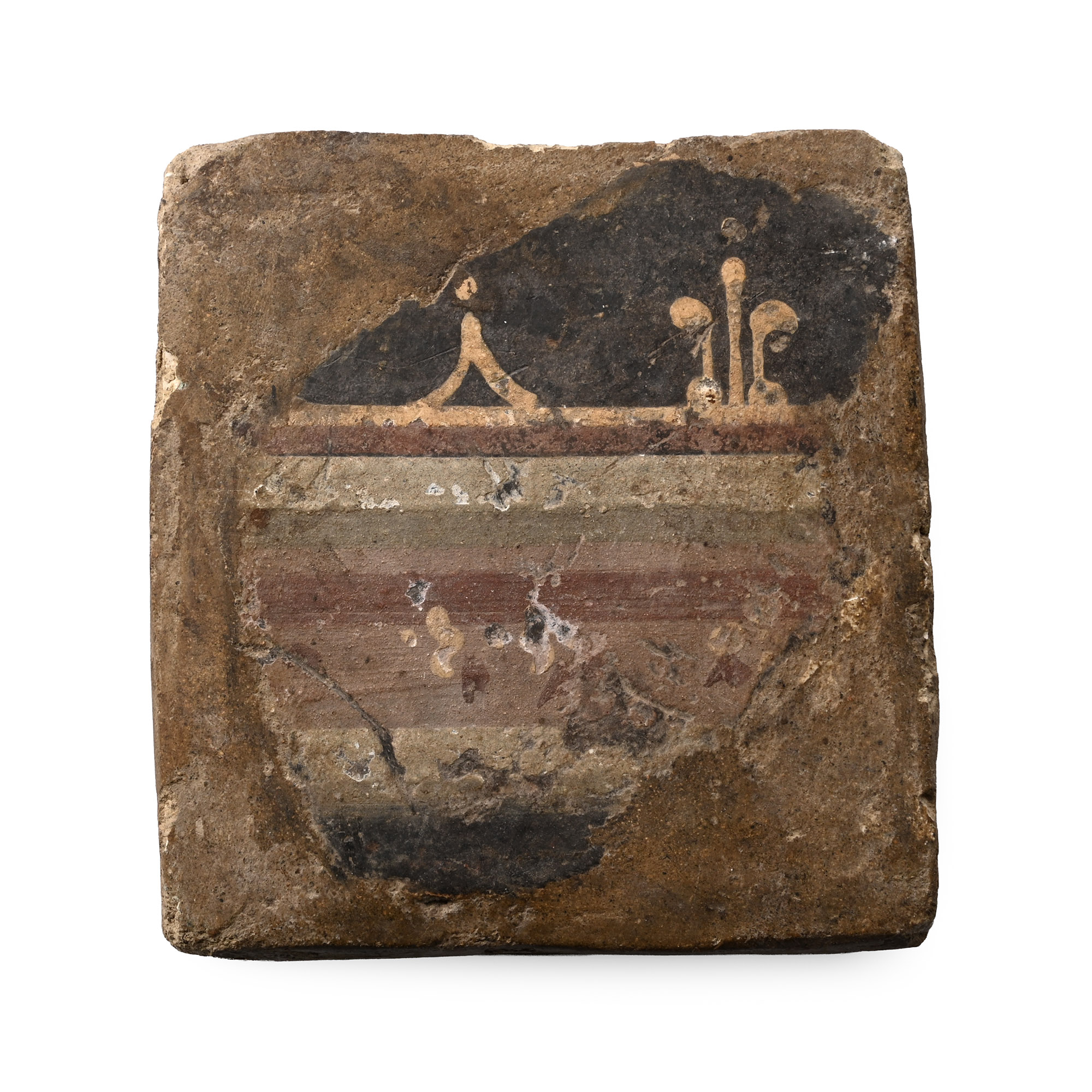
Roman Fresco Wall Plaster Fragment
1ST CENTURY A.D.
3 3/8 x 3 5/8 in. (374 grams, 86 x 92 cm).
Fragment of wall plaster with black upper band and graduated bands below, yellow foliage motifs; set into a square block of plaster; with old early 20th century label to verso. [No Reserve]
ProvenanceFrom an early 20th century French collection.
From an old London, UK, collection since circa 1985.
This lot is accompanied by an illustrated lot declaration signed by the Head of the Antiquities Department, Dr Raffaele D'Amato.
TimeLine Auctions follows a vetting process to ensure the authenticity and legality of all items, reinforcing our commitment to integrity and responsible trading. Each antiquity, antique, and coin lot undergoes thorough examination by a vetting committee of at least ten external specialists, professional trade association members, scientists, and archaeologists: Our Vetting Process
AUCTIONS:
TimeLine is a leading auction house specialising in antiquities, ancient art, collectables, natural history, coins, medals, and books. Our auctions offer museums, collectors, historians, and enthusiasts the opportunity to acquire unique and historically significant pieces.
-
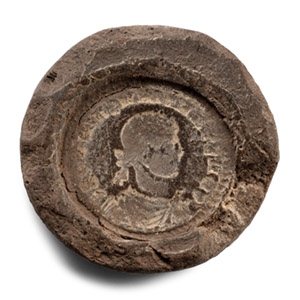
Roman Terracotta Forger's Casting Mould
4th century A.D.Sold for (Inc. bp): £208
Discoid clay mould with design of a coin to each face. 4.74 grams, 27 mmm
From the collection of a gentleman, acquired on the London art market in the 1990s. This lot is accompanied by an illustrated lot declaration signed by the Head of the Antiquities Department, Dr Raffaele D'Amato. -
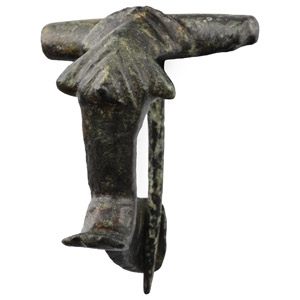
Roman Bronze Dolphin Bow Brooch
1st-2nd century A.D.Sold for (Inc. bp): £52
The bow formed as a dolphin holding a sphere in its mouth; detailing to the fins and head; pin lug, pin and catchplate to reverse. 11.9 grams, 32 mm
Ex German art market, 2000s. Acquired from an EU collector living in London. From the collection of a Surrey, UK, gentleman. This lot is accompanied by an illustrated lot declaration signed by the Head of the Antiquities Department, Dr Raffaele D'Amato. -
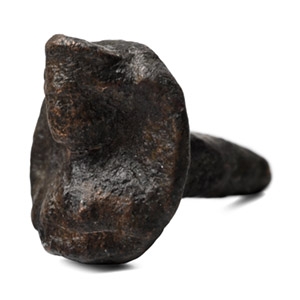
Roman Bronze Sword Baldric Stud with Bust
1st-4th century A.D.Sold for (Inc. bp): £59
With discoid head and square-section shank, female bust modelled in the half-round. 10.3 grams, 22 mm
From the collection of a gentleman, acquired on the London art market in the 1990s. This lot is accompanied by an illustrated lot declaration signed by the Head of the Antiquities Department, Dr Raffaele D'Amato.
