
Loading, please wait...
LOT 0918
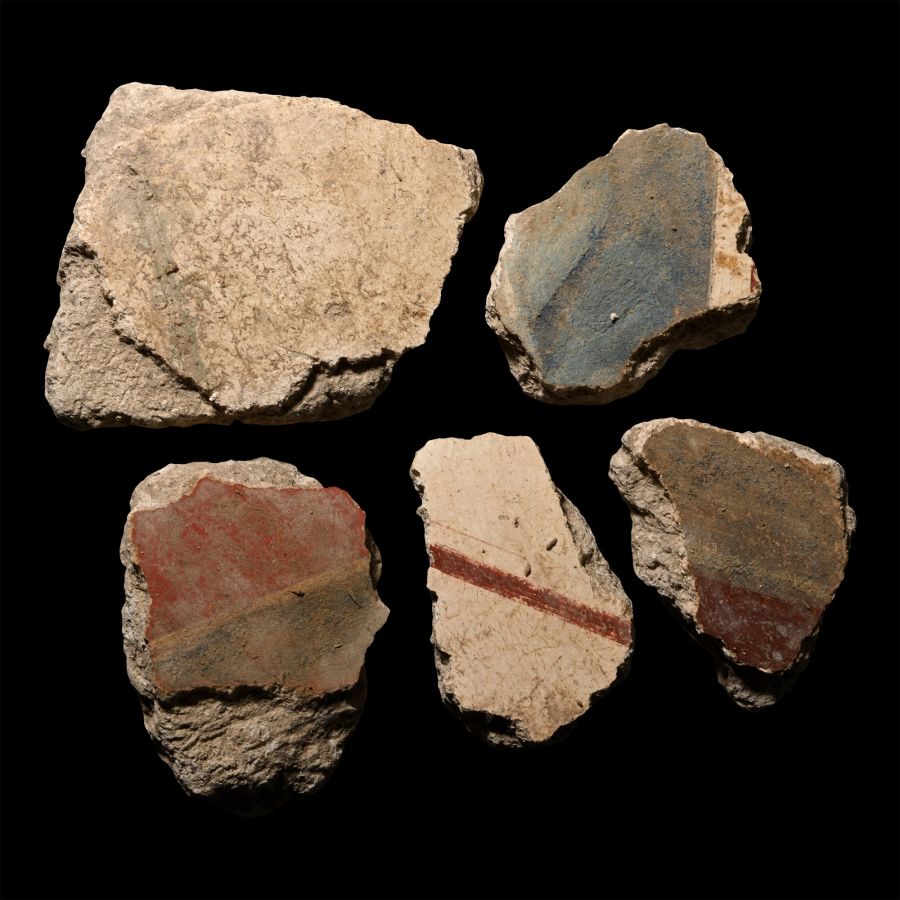
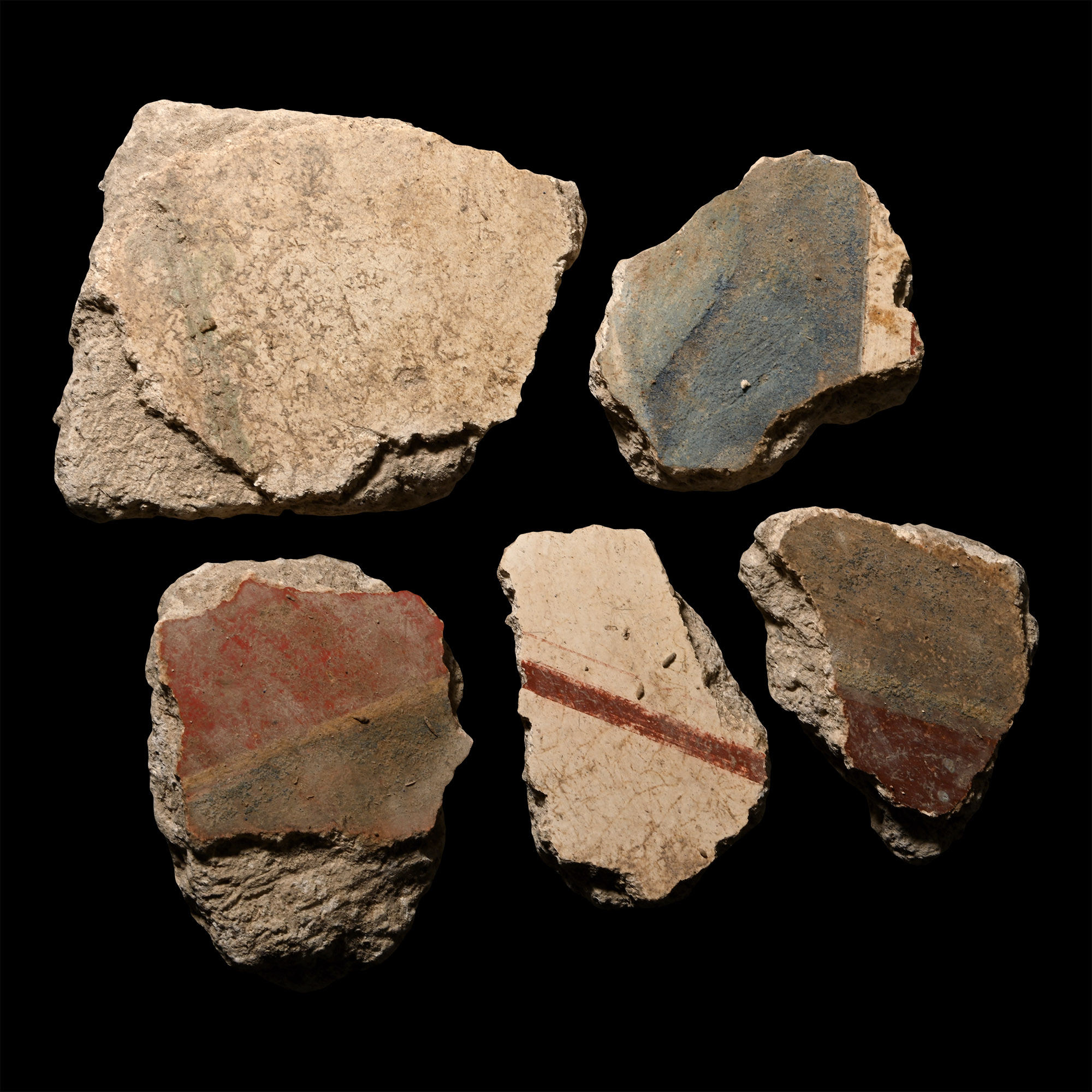
Roman Fresco Wall Plaster Collection
1ST CENTURY A.D.
3 3/4 - 6 in. (1.06 kg total, 9.7-15.3 cm).
Fragments of wall plaster with rendered surface painted with mainly Pompeii red, pale blue and white detailing; some with an impression of timber laths to the reverse. [5, No Reserve]
ProvenanceAcquired in the 19th century.
Ex Jeger collection, Switzerland.
UK gallery, early 2000s.
Cf. Hakanen, V., 'VI Wall Plaster Fragments' in Berg, R., Kuivalainen, I., Domus Pompeiana M. Lucretii, IX,3, 5.24, The inscriptions, Works of Art and Finds from the Old and New Excavations, Vantaa, 2019, pp.196-224, figs.3-4.
FootnotesThese small fragments, by analogy with the fragments of Pompeii, seem to belong to the second style of Roman painting - red panels representing highlight and shadow, decorated with vegetal interlaces. A red grenade fillet probably framed some panels. A fragment shows alternate blue and red colours over a cream background, maybe pertinent to a socle.
CONDITIONTimeLine Auctions follows a vetting process to ensure the authenticity and legality of all items, reinforcing our commitment to integrity and responsible trading. Each antiquity, antique, and coin lot undergoes thorough examination by a vetting committee of at least ten external specialists, professional trade association members, scientists, and archaeologists: Our Vetting Process
AUCTIONS:
TimeLine is a leading auction house specialising in antiquities, ancient art, collectables, natural history, coins, medals, and books. Our auctions offer museums, collectors, historians, and enthusiasts the opportunity to acquire unique and historically significant pieces.
LOT 0918
Roman Fresco Wall Plaster Collection
Estimate £50 - 70€58 - 81 (for guidance only)$68 - 95 (for guidance only)
Opening Bid
£5 (EUR 6; USD 7) +BP*
-
Roman Gold Earring Pair with Bead Drops
Circa 2nd-4th century A.D.Estimate: £800 - 1,000 (+bp*)
Opening Bid: £400
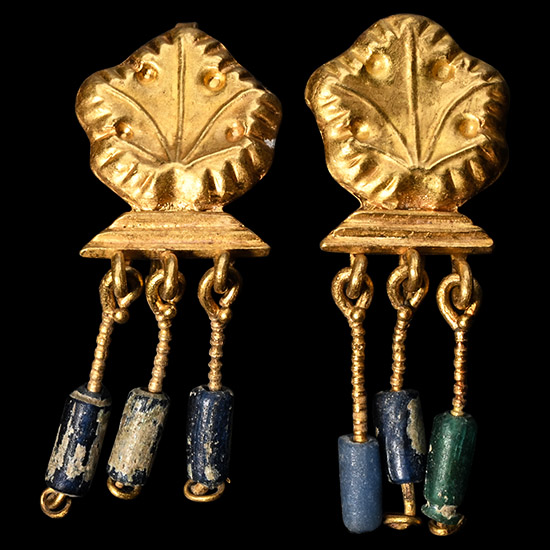
Matched pair, each comprising a leaf plaque on a triangular band with three loops, each with a round-section tubular ribbed shaft with blue and green glass beads; hook closure to the reverse. 7.02 grams total, 38 mm each
Ex German art market, 2000s. Acquired from an EU collector living in London. From the collection of a Surrey, UK, gentleman. -
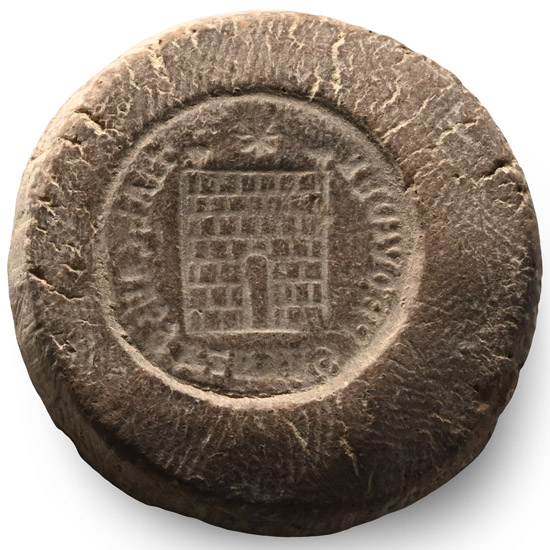
Roman Terracotta Forger's Coin Mould
Circa 3rd-4th century A.D.Estimate: £50 - 70 (+bp*)
Bids: 3 | Current Bid: £25
Discoid clay mould with an impressed design of a campgate on each face. 5.13 grams, 28 mm
London gentleman's collection, 1970-1990s, by descent. -
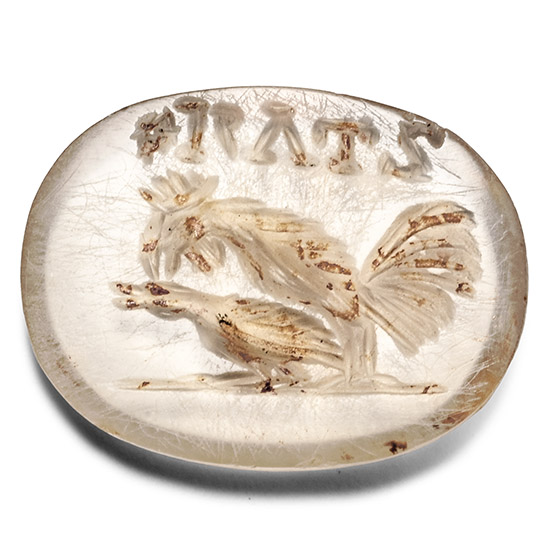
Roman Rock Crystal Gemstone of an Archigallus Priest
Circa 1st century B.C.-1st century A.D.Estimate: £800 - 1,000 (+bp*)
Bids: 1 | Current Bid: £250
Ellipsoid in plan with an engraved scene of a cockerel copulating with a hen, inscription above. 0.62 grams, 14 mm
Property of a European gentleman, acquired from the estate of a London collector (formed before 2000).
In ancient Rome, a cockerel, Latin gallus, was a symbol of virility and fertility. But gallus (plural galli) was also the term for a religious devotee and later for a priest of Cybele (Magna Mater). Often eunuchs, they performed ecstatic dances and rituals, sometimes even engaging in sexual acts as part of their religious practices. In Rome, the head of the Cybele priests was the archigallus, chosen by the quindecimviri sacris faciundis. Reliefs show that the archigallus was wearing luxurious and extravagant costumes and jewellery. This unique gemstone can be attributed to such an archigallus. The cult of Cybele/Magna Mater and the presence of galli also spread to Roman Britain, where it is attested, e.g. in Catterick and Corbridge.
