
Loading, please wait...
LOT 0675
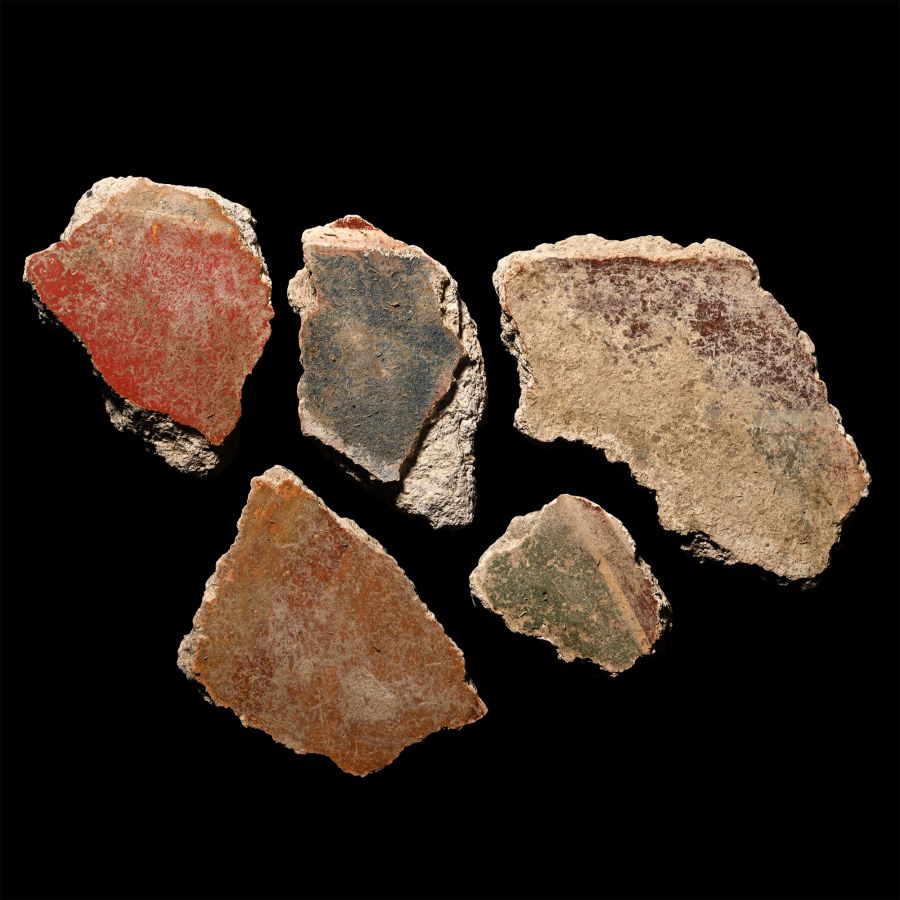
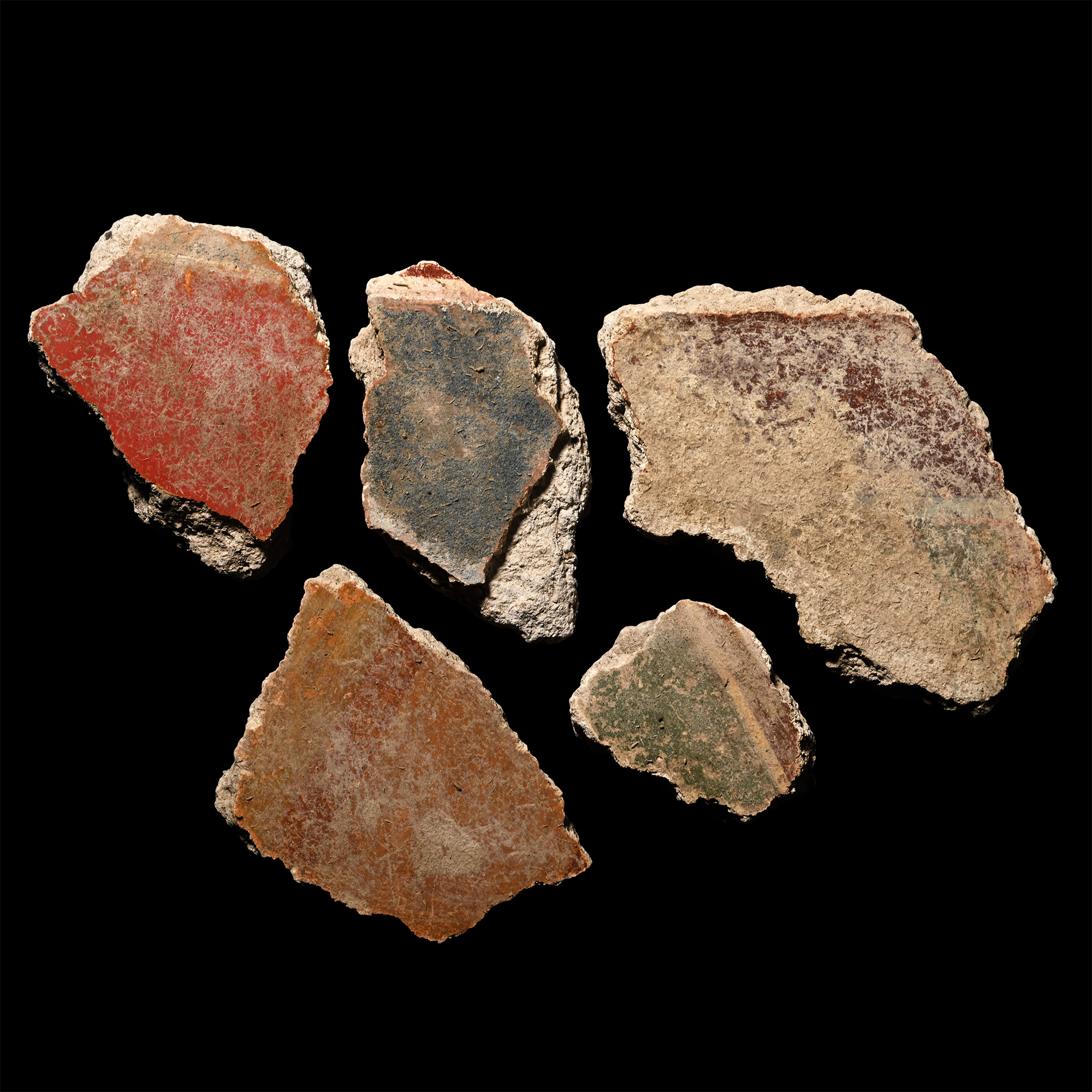
Roman Fresco Wall Plaster Collection
1ST CENTURY A.D.
2 5/8 - 6 1/4 in. (897 grams total, 6.8-16 cm).
Fragments of wall plaster with rendered surface painted with mainly Pompeii red, pale blue, brown and white detailing; some with an impression of timber laths to the reverse. [5, No Reserve]
ProvenanceAcquired in the 19th century.
Ex Jeger collection, Switzerland.
UK gallery, early 2000s.
Cf. Hakanen, V., 'VI Wall Plaster Fragments' in Berg, R., Kuivalainen, I., Domus Pompeiana M. Lucretii, IX,3, 5.24, The inscriptions, Works of Art and Finds from the Old and New Excavations, Vantaa, 2019, pp.196-224, figs.3-4.
FootnotesThese small fragments, for analogies with the fragments of Pompeii, seem to belong to the second style of Roman painting, red panels representing highlight and shadow, decorated with vegetal interlaces. A red grenade fillet probably framed some panels. A fragment shows alternate blue and red colours over a cream background, maybe pertinent to a socle.
CONDITIONTimeLine Auctions follows a vetting process to ensure the authenticity and legality of all items, reinforcing our commitment to integrity and responsible trading. Each antiquity, antique, and coin lot undergoes thorough examination by a vetting committee of at least ten external specialists, professional trade association members, scientists, and archaeologists: Our Vetting Process
AUCTIONS:
TimeLine is a leading auction house specialising in antiquities, ancient art, collectables, natural history, coins, medals, and books. Our auctions offer museums, collectors, historians, and enthusiasts the opportunity to acquire unique and historically significant pieces.
-
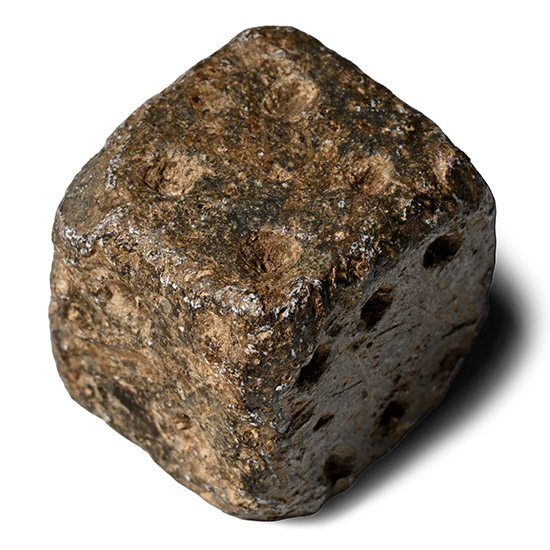
Large Roman Lead Gaming Die
Circa 1st-4th century A.D.Sold for (Inc. bp): £143
Cuboid dice with impressed markings unusually disposed 1:6, 2:3, 4:5. 57.2 grams, 19 mm
Ex gentleman collector of antique and antiquity games from Berkshire, UK, having collected for over 20 years. -
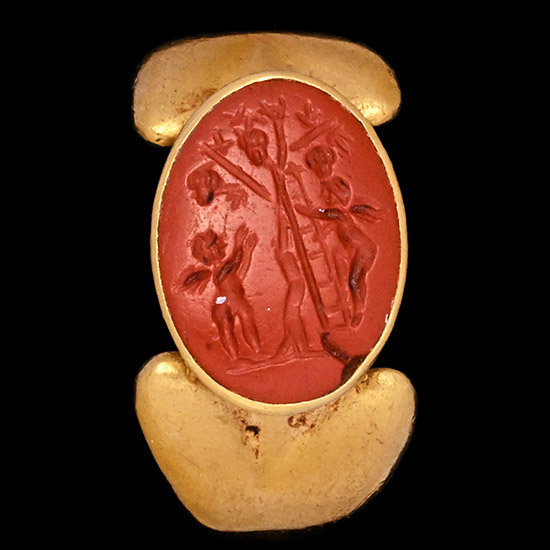
Roman Red Jasper Gemstone with Group of Amores Harvesting Grapes in Gold Ring
1st-2nd century A.D.Estimate: £4,500 - 5,500 (+bp*)
Opening Bid: £2,250
The hoop with flaring shoulders and an oval bezel set with a jasper intaglio engraved with a winged Amore (Erote) standing beneath a tree bearing grapevines, another Amore climbing up a ladder propped against the trunk; supplied with a museum-quality impression. 6.77 grams, 22.48 mm overall, 18.92 x 17.38 mm internal diameter (approximate size British R , USA 8 1/2, Europe 18 3/4, Japan 18)
Acquired on the European art market. This lot has been checked against the Interpol Database of stolen works of art and is accompanied by search certificate number no.13344-257956.
According to A. Furtwängler, the Amores are working on the olive harvest. The vintaging scenes, whether illustrating a realistic portrait of a vineyard or an abstract display of vintaging Erotes working among vine rinceaux, include realistic elements of agricultural practice. The tools and farming implements used, the method of viticulture employed, and the various stages of wine production need to be carefully observed. -
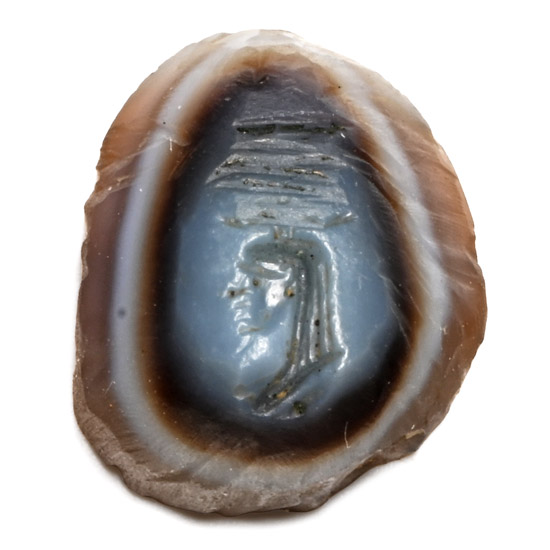
Roman Banded Agate Gemstone with Head of a Goddesss
1st-2nd century A.D.Sold for (Inc. bp): £546
Scaraboid type with incuse design of a female bust in profile; supplied with a museum-quality impression. 0.68 grams, 11 mm
From the private collection of a European gentleman (1942-2024), formed since the 1970s.
