
Loading, please wait...
LOT 0968
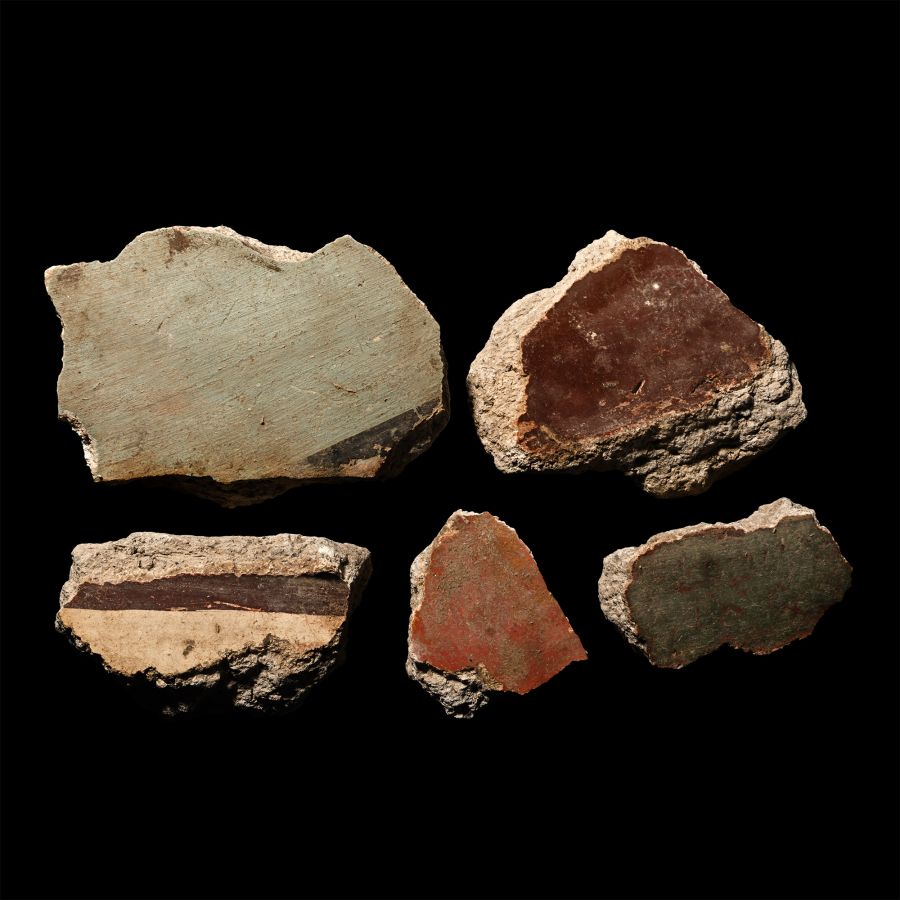
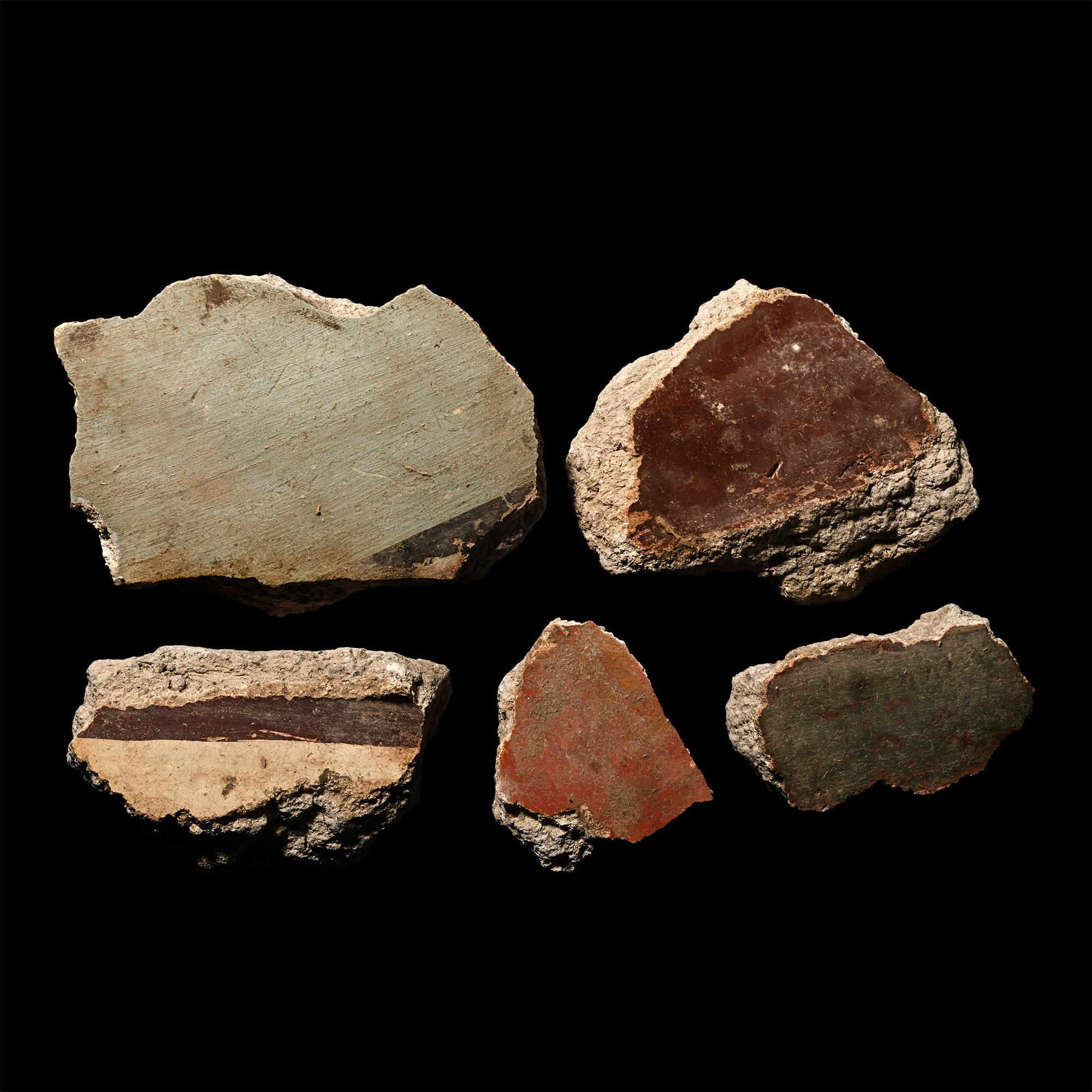
Roman Fresco Wall Plaster Collection
1ST CENTURY A.D.
3 1/8 - 6 1/4 in. (1.46 kg total, 7.9-16 cm).
Fragments of wall plaster with rendered surface painted with mainly Pompeii red, pale blue, brown and white detailing; some with an impression of timber laths to the reverse. [5, No Reserve]
ProvenanceAcquired in the 19th century.
Ex Jeger collection, Switzerland.
UK gallery, early 2000s.
Cf. Hakanen, V., 'VI Wall Plaster Fragments' in Berg, R., Kuivalainen, I., Domus Pompeiana M. Lucretii, IX,3, 5.24, The inscriptions, Works of Art and Finds from the Old and New Excavations, Vantaa, 2019, pp.196-224, figs.3-4.
FootnotesThese small fragments, for analogies with the fragments of Pompeii, seem to belong to the second style of Roman painting, red panels representing highlight and shadow, decorated with vegetal interlaces. A red grenade fillet probably framed some panels. A fragment shows alternate blue and red colours over a cream background, maybe pertinent to a socle.
CONDITIONTimeLine Auctions follows a vetting process to ensure the authenticity and legality of all items, reinforcing our commitment to integrity and responsible trading. Each antiquity, antique, and coin lot undergoes thorough examination by a vetting committee of at least ten external specialists, professional trade association members, scientists, and archaeologists: Our Vetting Process
AUCTIONS:
TimeLine is a leading auction house specialising in antiquities, ancient art, collectables, natural history, coins, medals, and books. Our auctions offer museums, collectors, historians, and enthusiasts the opportunity to acquire unique and historically significant pieces.
-
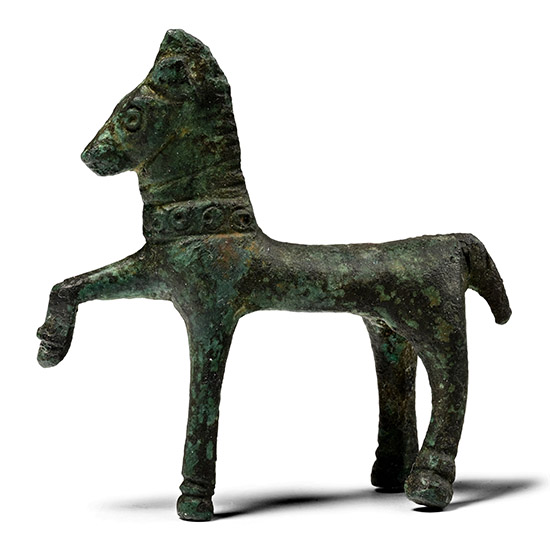
Roman Bronze Stepping Horse Statuette
100-300 A.D.Sold for (Inc. bp): £468
Modelled in the round with an elongated body and legs, right foreleg raised, head turned slightly to the right, a stamped ring-and-dot collar around the neck and eyes indicated by ring-and-dot motifs. 27.44 grams, 49 mm
From the private collection of a European gentleman (1942-2024), formed since the 1970s. -
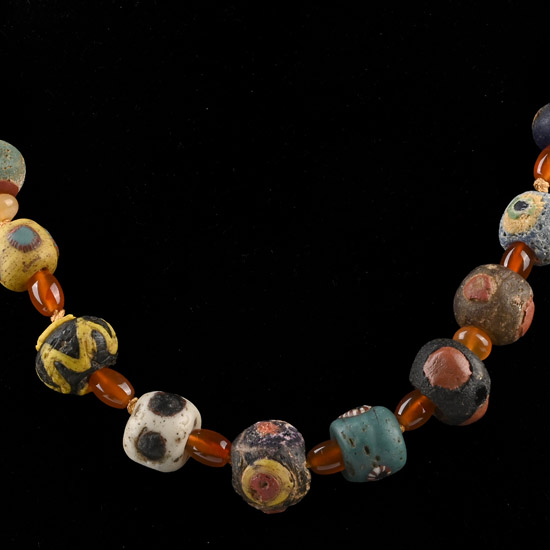
Roman and Later Glass 'Eye' Bead Necklace
3rd-4th century A.D. and laterSold for (Inc. bp): £390
Designer necklace composed of alternating 'eye' and other polychrome glass beads alternating with polished carnelian beads, restrung and with a hook-and-loop clasp. 99 grams, 53 cm
London, UK gallery, 1971-early 2000s. Private collection, London, UK. -
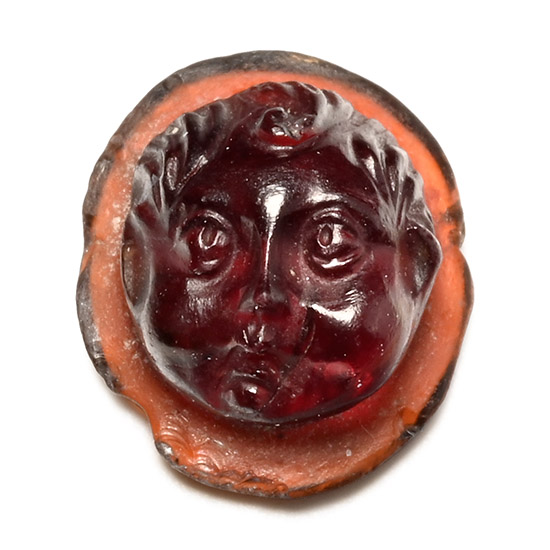
Roman Garnet Cameo of Eros the Greek God of Love
1st century A.D. or laterSold for (Inc. bp): £780
Discoid in plan with a high-relief plastic head of Cupid (Greek Eros). 0.42 grams, 8 mm
Private English collection, formed between the late 1970s and early 1990s. Private collection, London, UK.
The finely engraved head on the cameo represents a young child, probably intended as Eros (Cupid). Such depictions were produced in numerous variations to illustrate the stages of childhood and the capacity of children to undertake meaningful or symbolic actions. The high relief type appears to have been especially popular and was probably derived from metalwork, like the plaster medallion from Begram, Afghanistan.
