
Loading, please wait...
LOT 0883
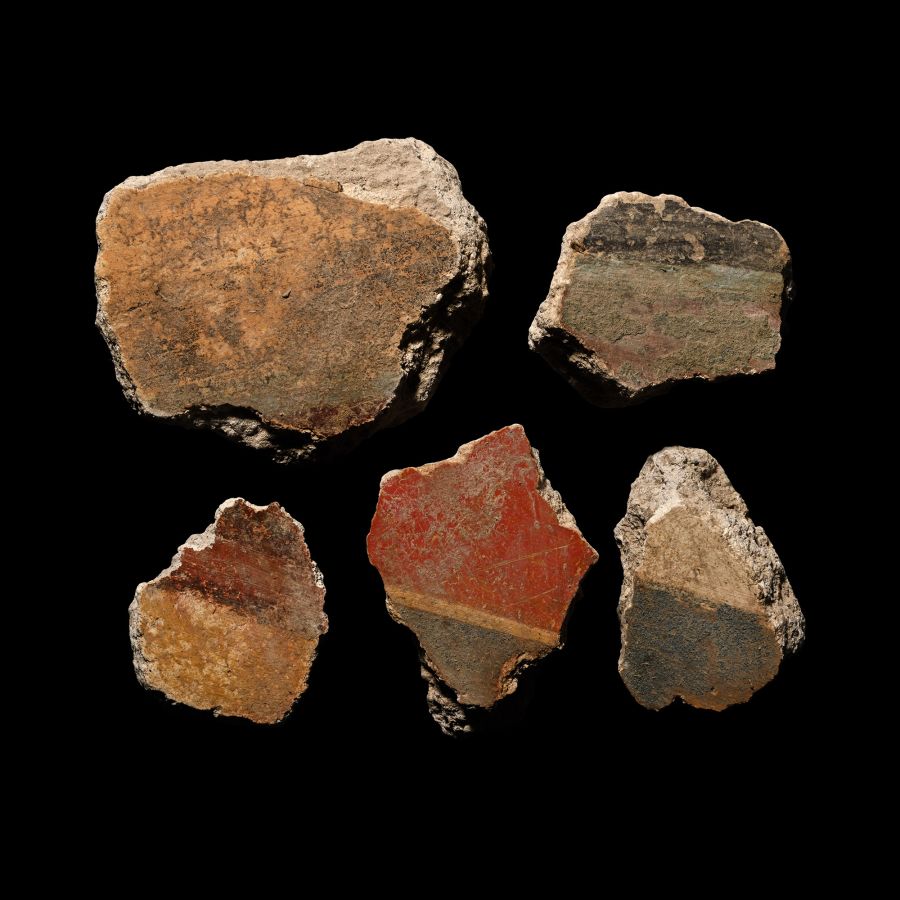
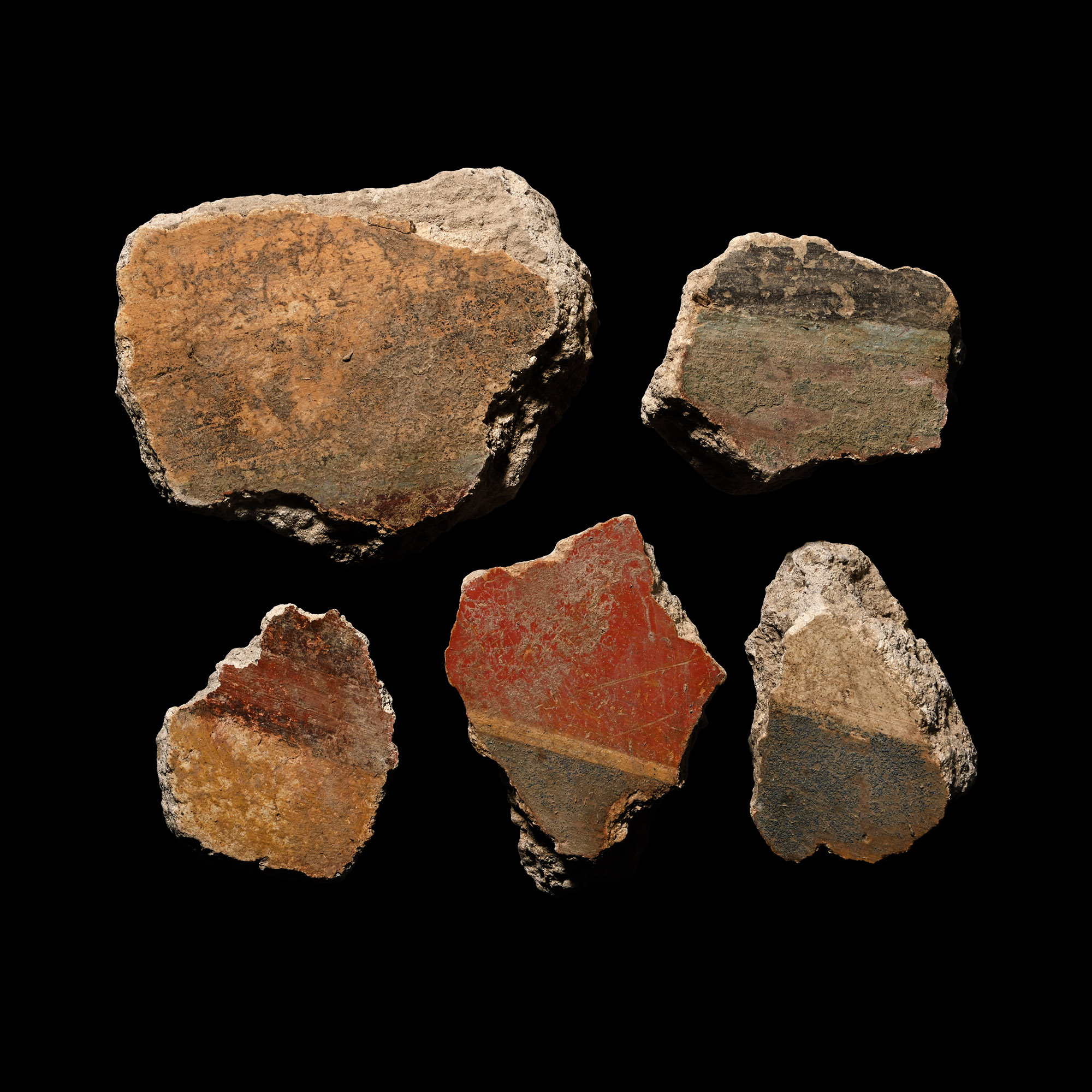
Roman Fresco Wall Plaster Collection
1ST CENTURY A.D.
2 1/2 - 4 1/2 in. (673 grams total, 6.3-11.3 cm).
Fragments of wall plaster with rendered surface painted with mainly Pompeii red, pale blue, brown and cream detailing; some with an impression of timber laths to the reverse. [5, No Reserve]
ProvenanceAcquired in the 19th century.
Ex Jeger collection, Switzerland.
UK gallery, early 2000s.
Cf. Hakanen, V., 'VI Wall Plaster Fragments' in Berg, R., Kuivalainen, I., Domus Pompeiana M. Lucretii, IX,3, 5.24, The inscriptions, Works of Art and Finds from the Old and New Excavations, Vantaa, 2019, pp.196-224, figs.3-4.
FootnotesThese small fragments, for analogies with the fragments of Pompeii, seem to belong to the second style of Roman painting, red panels representing highlight and shadow, decorated with vegetal interlaces. A red grenade fillet probably framed some panels. A fragment shows alternate blue and red colours over a cream background, maybe pertinent to a socle.
CONDITIONTimeLine Auctions follows a vetting process to ensure the authenticity and legality of all items, reinforcing our commitment to integrity and responsible trading. Each antiquity, antique, and coin lot undergoes thorough examination by a vetting committee of at least ten external specialists, professional trade association members, scientists, and archaeologists: Our Vetting Process
AUCTIONS:
TimeLine is a leading auction house specialising in antiquities, ancient art, collectables, natural history, coins, medals, and books. Our auctions offer museums, collectors, historians, and enthusiasts the opportunity to acquire unique and historically significant pieces.
-
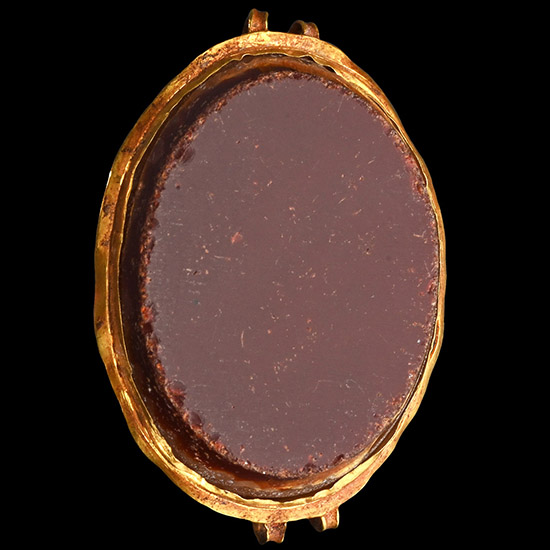
Roman Gold Cell with Jasper Cabochon
1st-3rd century A.D.Sold for (Inc. bp): £520
Ellipsoid in plan cell with flange rim and a pair of loops at each end for connection to a chain; inset jasper cloison. 9.63 grams, 34 mm
Acquired by a Swiss family in the mid-1980-1990, thence by descent. Private collection, since 1993.
The specimen has a good parallel with an element of a gold-chain necklace from the treasure of Nikolaevo. The use of stone to decorate Roman jewellery was very popular after the end of the 2nd century A.D., as is visible in the medallions of the Castellani and Frank Bequest collections in the British Museum. -
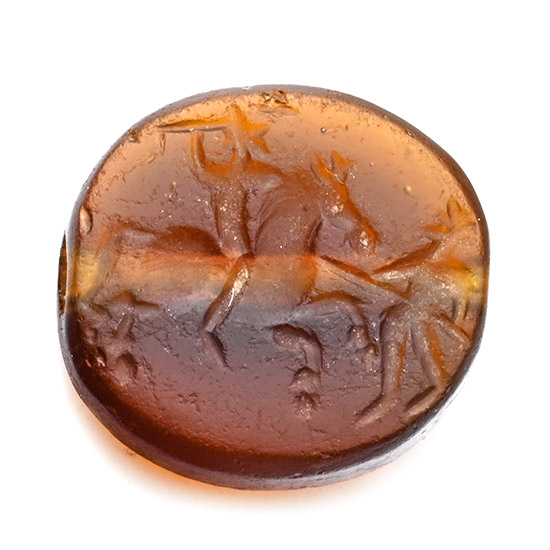
Roman Agate Gemstone with Rider Combat Scene
Circa 1st century B.C.Sold for (Inc. bp): £91
Plano-convex in section with incuse scene: rider advancing from left with sword in his raised hand, opposed standing figure with spear levelled at the horse's chest. 1.97 grams, 15 mm
Property of a European gentleman, acquired from the estate of a London collector (formed before 2000). -
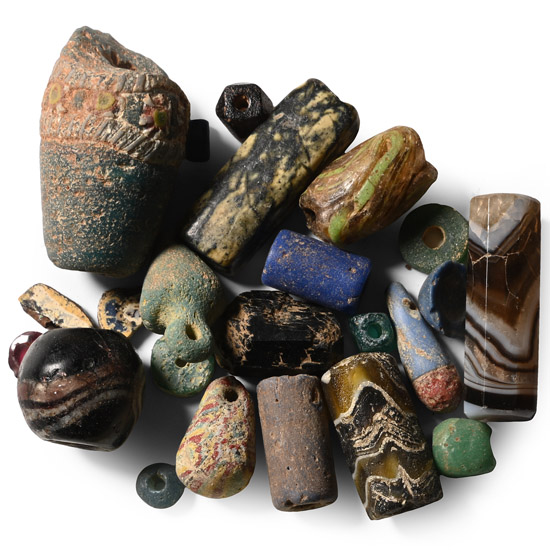
Roman Glass and Stone Bead and Pendant Collection
1st-4th century A.D. and laterSold for (Inc. bp): £208
Mixed group including cylindrical, spherical, teardrop-shaped, conical and other types. 31.2 grams total, 4-26 mm
From the private collection of a European gentleman (1942-2024), formed since the 1970s.
