
Loading, please wait...
LOT 0814
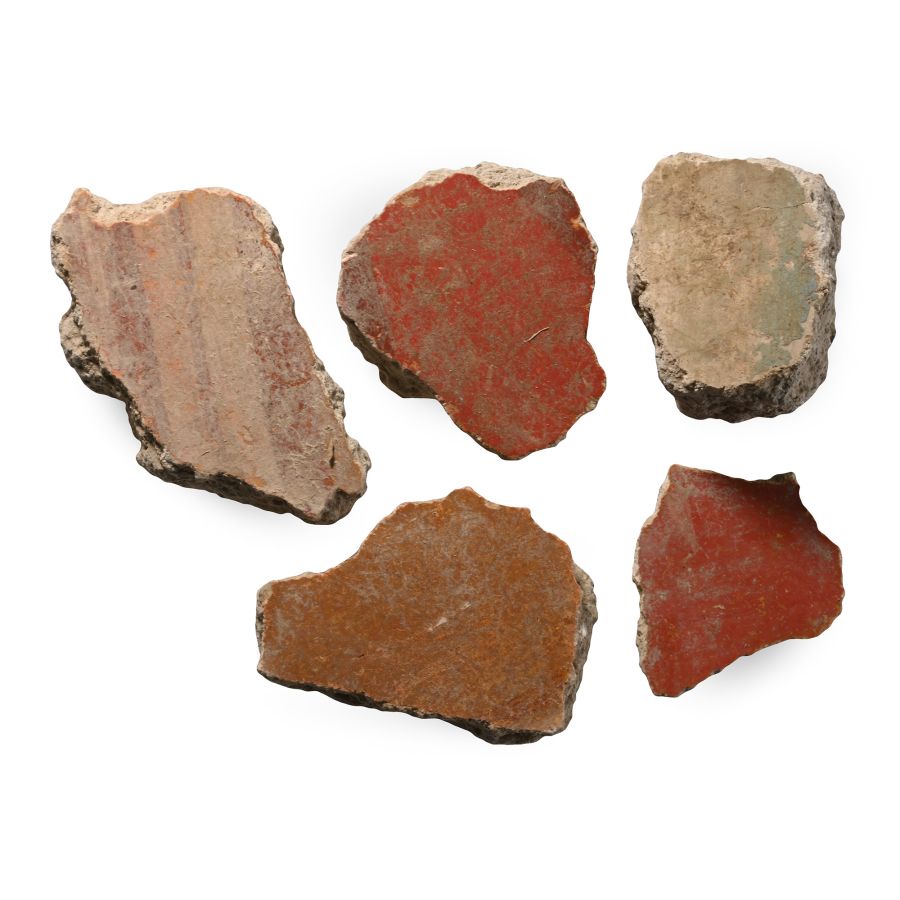
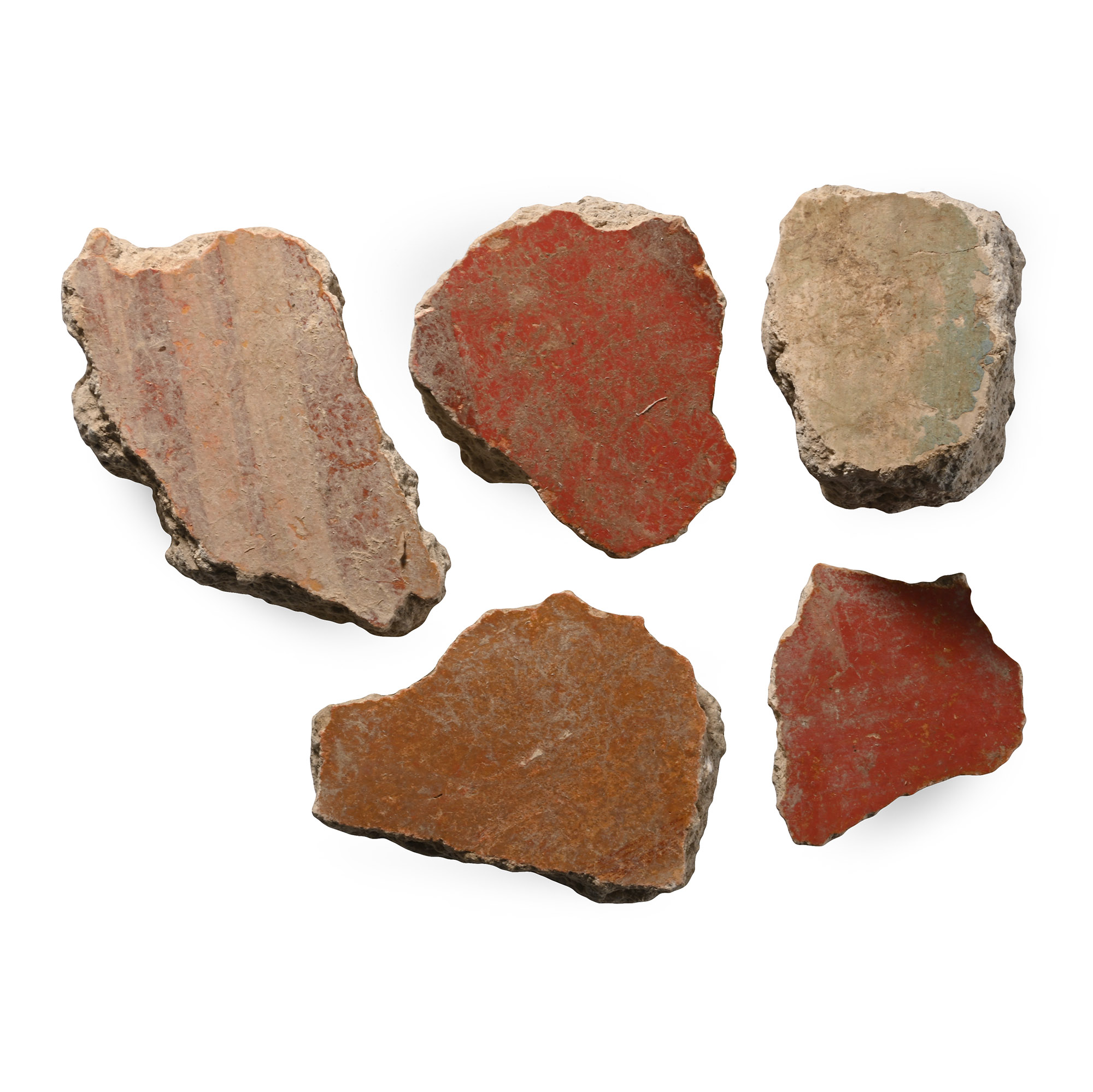
Roman Fresco Wall Plaster Collection
1ST CENTURY A.D.
2 3/4 - 4 1/4 in. (496 grams total, 7-10.7 cm).
Fragments of wall plaster with rendered surface painted with mainly red, pale blue and white detailing; some with impression of timber laths to the reverse. [5, No Reserve]
ProvenanceAcquired in the 19th century.
Ex Jeger collection, Switzerland.
UK gallery, early 2000s.
Cf. Hakanen, V., 'VI Wall Plaster Fragments' in Berg, R., Kuivalainen, I., Domus Pompeiana M. Lucretii, IX,3, 5.24, The inscriptions, Works of Art and Finds from the Old and New Excavations, Vantaa, 2019, pp.196-224, figs.3-4.
FootnotesThese small fragments, showing analogies with fragments from Pompeii, seem to belong to the second style of Roman painting, red panels representing highlights and shadows, decorated with vegetal interlaces. Some panels were probably framed by a red grenade fillet. A fragment shows alternate blue and red colours over a cream background, maybe pertinent to a socle.
CONDITIONTimeLine Auctions follows a vetting process to ensure the authenticity and legality of all items, reinforcing our commitment to integrity and responsible trading. Each antiquity, antique, and coin lot undergoes thorough examination by a vetting committee of at least ten external specialists, professional trade association members, scientists, and archaeologists: Our Vetting Process
AUCTIONS:
TimeLine is a leading auction house specialising in antiquities, ancient art, collectables, natural history, coins, medals, and books. Our auctions offer museums, collectors, historians, and enthusiasts the opportunity to acquire unique and historically significant pieces.
-

Large Roman Green Mosaic Glass Fragment
Late 1st century B.C.-early 1st century A.D.Estimate: £3,000 - 4,000 (+bp*)
Opening Bid: £1,500
Irregular panel fragment made from mosaic-type glass in shades of green and cream; one polished face; mounted on a custom-made stand. 473 grams total, glass: 16.3 cm
Dr Jutaro Kawabe, Nagoya, Japan, assembled during the 1960s-1980s. with Hoshigaoka Gallery until the late 1990s. This lot has been checked against the Interpol Database of stolen works of art and is accompanied by search certificate number no.13093-248078.
The decoration is well documented in the Eastern Roman Empire, especially the Syro-Palestinian coast. The most frequently occurring colours in these glass mosaics are opaque red, but green and blue tints are not uncommon. -
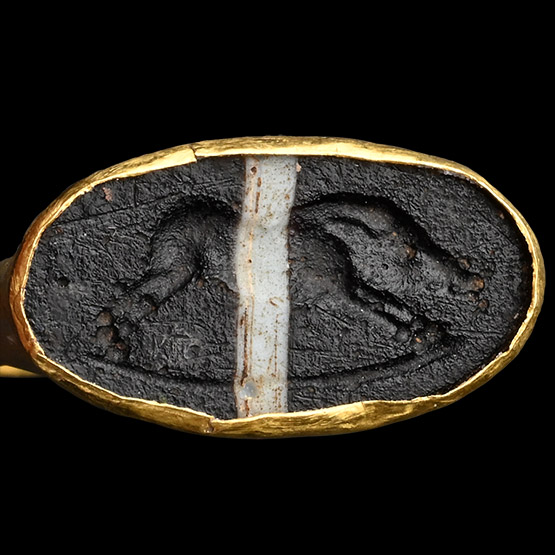
Roman Gold Ring with Glass Boar Intaglio
1st century B.C.Estimate: £800 - 1,000 (‡+bp*)
Opening Bid: £400
Hollow-formed and widening at the shoulders to a high elliptical bezel set with a black and white banded glass intaglio depicting a running boar in profile on a baseline; supplied with a museum-quality impression. 1.93 grams, 22.40 mm overall, 15.77 mm internal diameter (approximate size British J, USA 4 3/4, Europe 8.69, Japan 8)
Ex private collection, Contessa L.G., since the 1980s. Private collection, acquired in 1997. -

Roman Iridescent Glass Cosmetic Flask with Spiral Trail
3rd-4th century A.D.Sold for (Inc. bp): £234
Bulbous body with long funicular neck and everted rim, applied strap handles to the top, applied spiral decoration to the body. 14.6 grams, 76 mm
Ex London gallery, UK, 1986. Ex private UK collection.
Small cosmetic flasks with tubular bodies, conical feet and trailed decoration were a common product of the Syro-Palestinian workshops in the Eastern Roman Empire, during the 4th-5th century A.D. Many such vessels had elaborate basket-handles, from which they could be suspended.
