
Loading, please wait...
LOT 0901
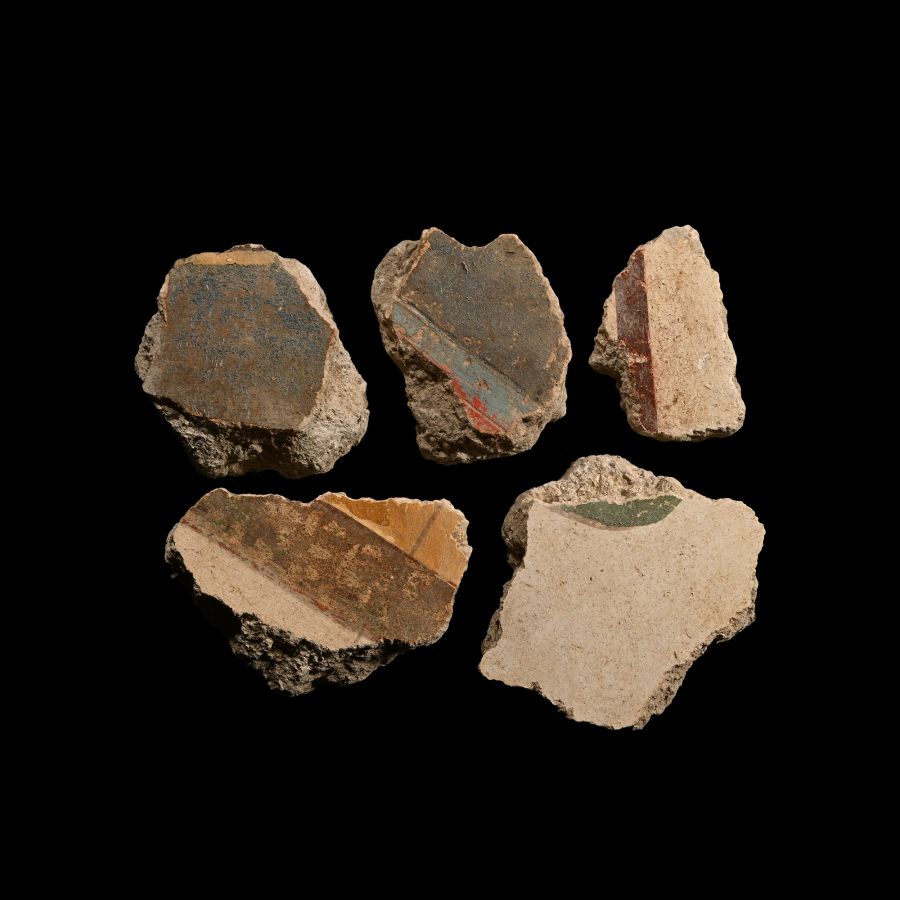
Roman Fresco Wall Plaster Collection
1ST CENTURY A.D.
3 1/8 - 4 3/8 in. (882 grams total, 8-11.3 cm).
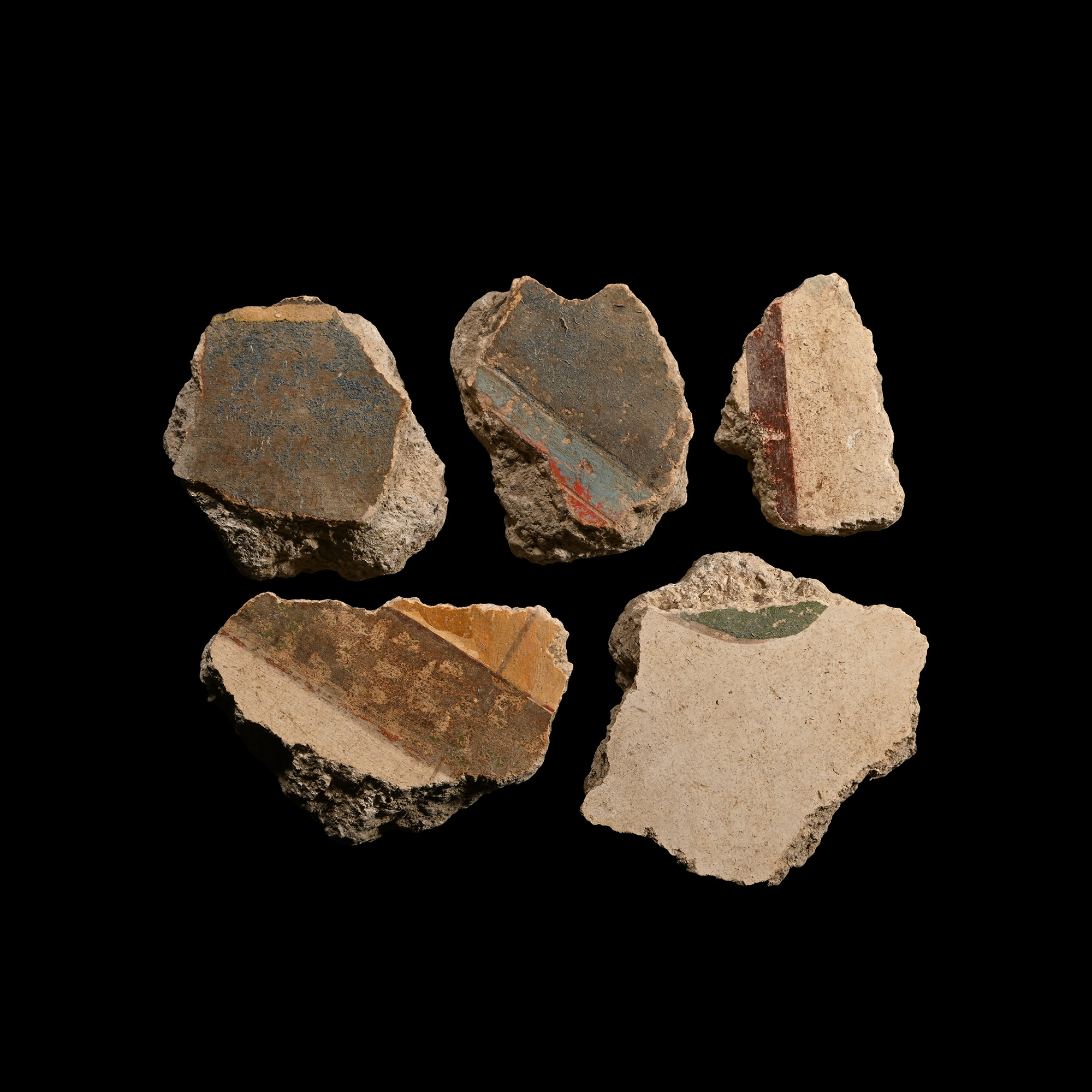
Fragments of wall plaster with rendered surface painted with mainly red, pale blue and white detailing; some with impression of timber laths to the reverse. [5, No Reserve]
ProvenanceAcquired in the 19th century.
Ex Jeger collection, Switzerland.
UK gallery, early 2000s.
This lot is accompanied by an illustrated lot declaration signed by the Head of the Antiquities Department, Dr Raffaele D'Amato.
Cf. Hakanen, V., 'VI Wall Plaster Fragments' in Berg, R., Kuivalainen, I., Domus Pompeiana M. Lucretii, IX,3, 5.24, The inscriptions, Works of Art and Finds from the Old and New Excavations, Vantaa, 2019, pp.196-224, figs.3-4.
FootnotesThese small fragments, for analogies with the fragments of Pompeii, seem to belong to the second style of Roman painting, red panels representing highlight and shadow, decorated with vegetal interlaces. Some panels were probably framed by a red grenade fillet. A fragment shows alternate blue and red colour over a cream background, maybe pertinent to a socle.
CONDITIONTimeLine Auctions follows a vetting process to ensure the authenticity and legality of all items, reinforcing our commitment to integrity and responsible trading. Each antiquity, antique, and coin lot undergoes thorough examination by a vetting committee of at least ten external specialists, professional trade association members, scientists, and archaeologists: Our Vetting Process
AUCTIONS:
TimeLine is a leading auction house specialising in antiquities, ancient art, collectables, natural history, coins, medals, and books. Our auctions offer museums, collectors, historians, and enthusiasts the opportunity to acquire unique and historically significant pieces.
-
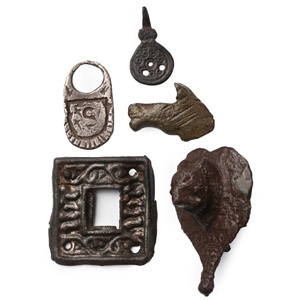
Roman to Tudor Bronze Artefact Group
2nd-16th century A.D.Sold for (Inc. bp): £78
Comprising: a heart-shaped mount with a central lion-head; a rectangular mount with decorative border in low-relief; a horse head modelled in the round; an oval silver pendant with S and stars; hooked tag with ring-and-dot motifs. 38.7 grams total, 23-42 mm
Acquired on the UK art market in the 1970s-1990s. Property of a Nottinghamshire, UK, gentleman. This lot is accompanied by an illustrated lot declaration signed by the Head of the Antiquities Department, Dr Raffaele D'Amato.
The use of hooked tags for fastening first became fashionable during the Anglo-Saxon period. They are usually triangular or circular in shape, of sheet metal (normally bronze or occasionally in silver) and have two or three attachment holes at the widest end. -
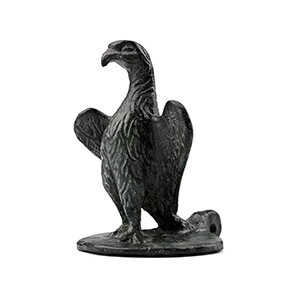
Roman Bronze Vessel Lid with Eagle
1st-4th century A.D.Estimate: £400 - 600 (+bp*)
Opening Bid: £200
The majestic predator standing on a discoid lid with its wings slightly opened, curved beak and expressive facial detailing, intricate feather detailing on the body and wings. 137 grams total, 63 mm
Ex German art market, 2000s. Acquired from an EU collector living in London. From the collection of a Surrey, UK, gentleman. This lot is accompanied by an illustrated lot declaration signed by the Head of the Antiquities Department, Dr Raffaele D'Amato. -
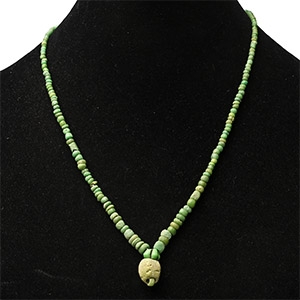
Roman Green Glass Bead Necklace String
1st-4th century A.D. and laterSold for (Inc. bp): £72
Composed of graduated oblate and annular beads, central feature a larger facetted bead with a melon bead above; restrung. 14.8 grams, 46 cm
From the London, UK, art market in the 1990s. This lot is accompanied by an illustrated lot declaration signed by the Head of the Antiquities Department, Dr Raffaele D'Amato.
In the Roman period there was a strong formal and chromatic diversity of glass beads used for necklaces and bracelets. The most common beads in forms were small biconical (lenticular), barrel-shaped, spherical and annular; the most common colours were dark blue, followed by green and yellow. The succession of glass beads often imitates jewellery made of costly materials (gold, silver, semi-precious and precious stones).
