
Loading, please wait...
LOT 0612
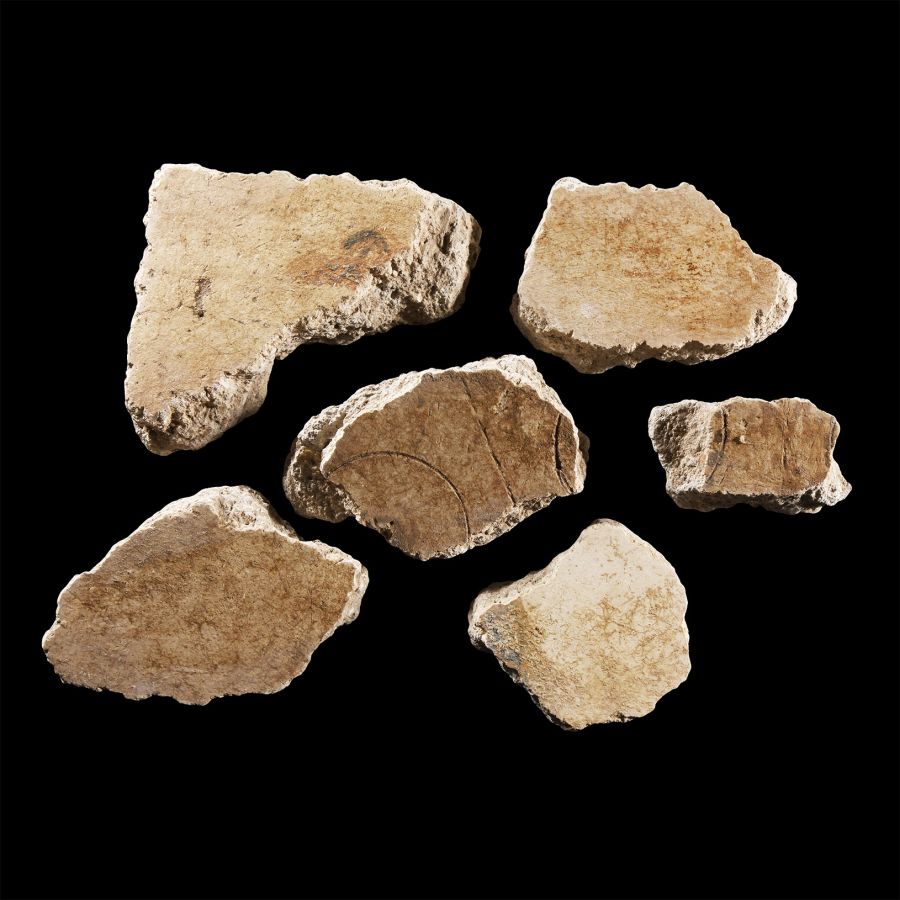
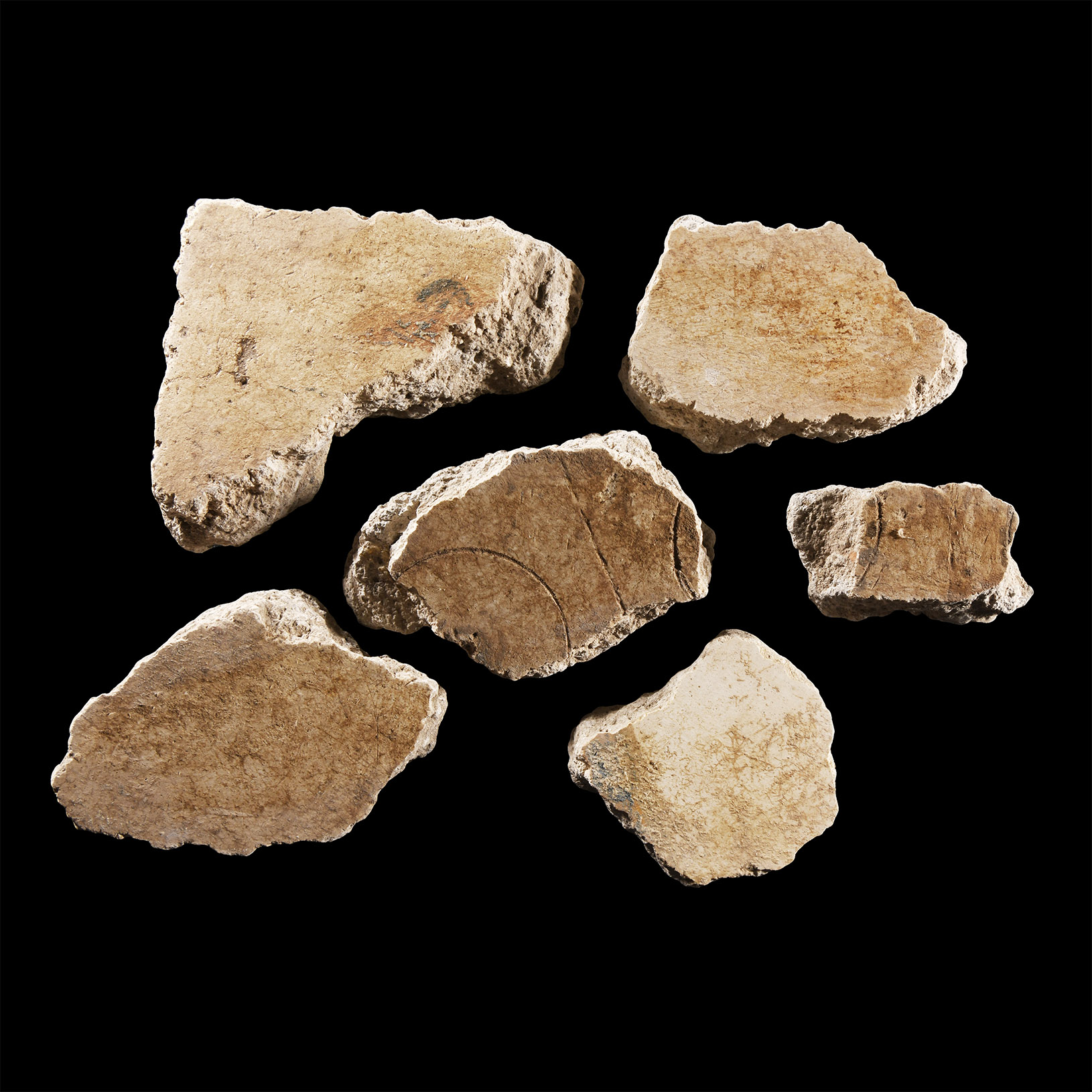
Roman Fresco Painted Wall Plaster Collection
1ST CENTURY A.D.
2 1/2 - 4 5/8 in. (896 grams total, 6.2-11.7 cm).
Mixed group of fresco fragments with pigment and geometric layout lines in place; reverse with stepped profile where attached to the structure. [6]
ProvenanceEx Swiss family collection, 1990s.
CONDITIONTimeLine Auctions follows a vetting process to ensure the authenticity and legality of all items, reinforcing our commitment to integrity and responsible trading. Each antiquity, antique, and coin lot undergoes thorough examination by a vetting committee of at least ten external specialists, professional trade association members, scientists, and archaeologists: Our Vetting Process
AUCTIONS:
TimeLine is a leading auction house specialising in antiquities, ancient art, collectables, natural history, coins, medals, and books. Our auctions offer museums, collectors, historians, and enthusiasts the opportunity to acquire unique and historically significant pieces.
-
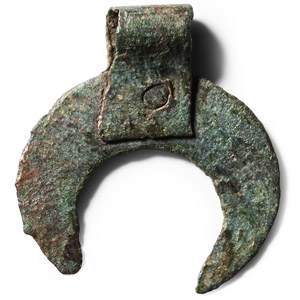
Roman Bronze Lunar Pendant
Circa 1st-3rd century A.D.Sold for (Inc. bp): £91
With flat-section body, separate loop attached to the main body with a rivet. 1.8 grams, 24 mm
Acquired on the UK art market before 2000. Property of a Surrey, UK, collector. -
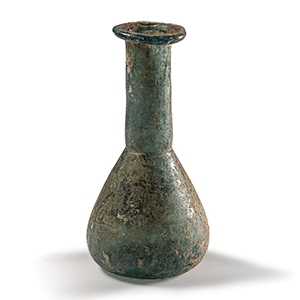
Roman Blue-Green Glass Ampulla
1st-2nd century A.D.Sold for (Inc. bp): £117
Slightly concave base, a piriform body with tapered shoulders, a lightly corseted neckline beneath a cylindrical neck, and a splayed rim with an in-folded lip. 81 grams, 11.6 cm high
Acquired 1980-2015. Ex Abelita family collection.
The ampulla was, in Ancient Rome, a small round vessel, usually made of glass and used for sacred purposes. The term can also refer to later flasks, often flatter and without handles, typically used as pilgrim souvenirs. Materials include glass, ceramics and metal. An unguentarium is a bottle believed to have been used to store perfume. Such vessels were often produced in Gaul. -
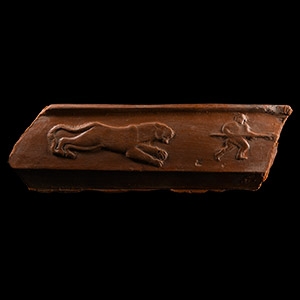
Roman North African Redware Shard with Lion and Bestiarius
4th-5th century A.D.Estimate: £250 - 350 (+bp*)
Opening Bid: £125
Of fine deep red clay, thin smooth slip on top, a large lioness leaping to right towards a bestiarius (animal fighter) armed with a hunting spear. 274 grams, 22 cm
Acquired 1960s-1990s. Late Alison Barker collection, a retired London barrister.
Possibly representing a hunt in the circus, i.e. a gladiatorial combat where bestiarii or venatores attacked wild animals.
