
Loading, please wait...
LOT 0723
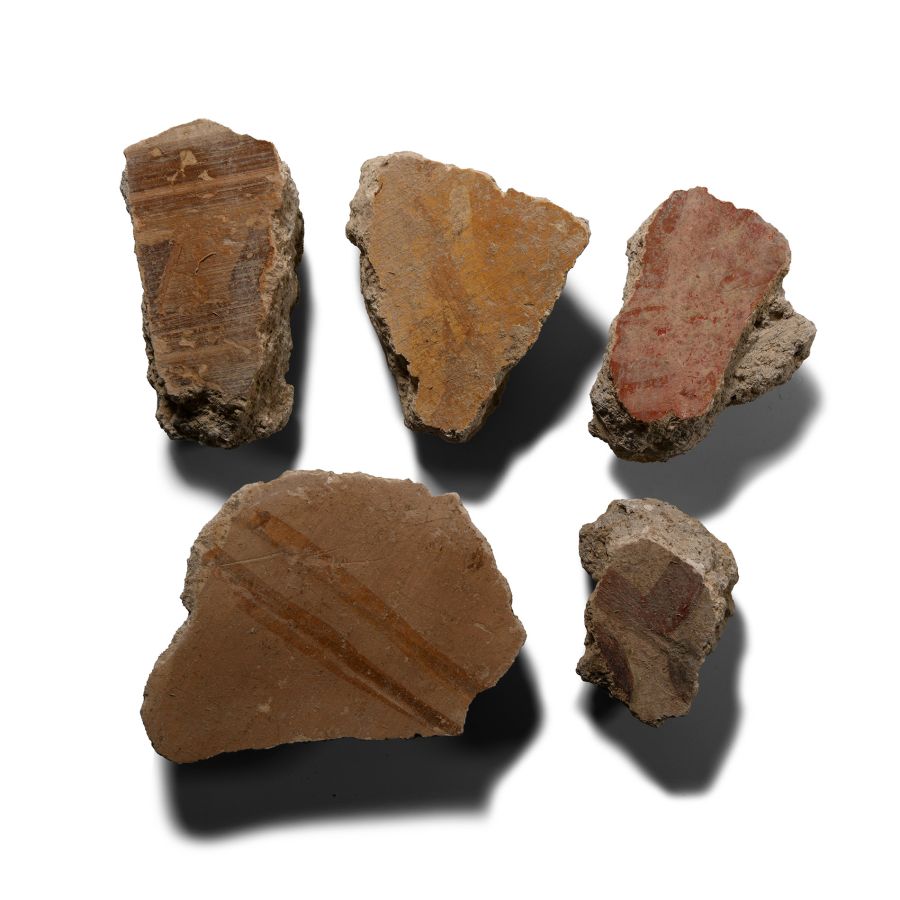
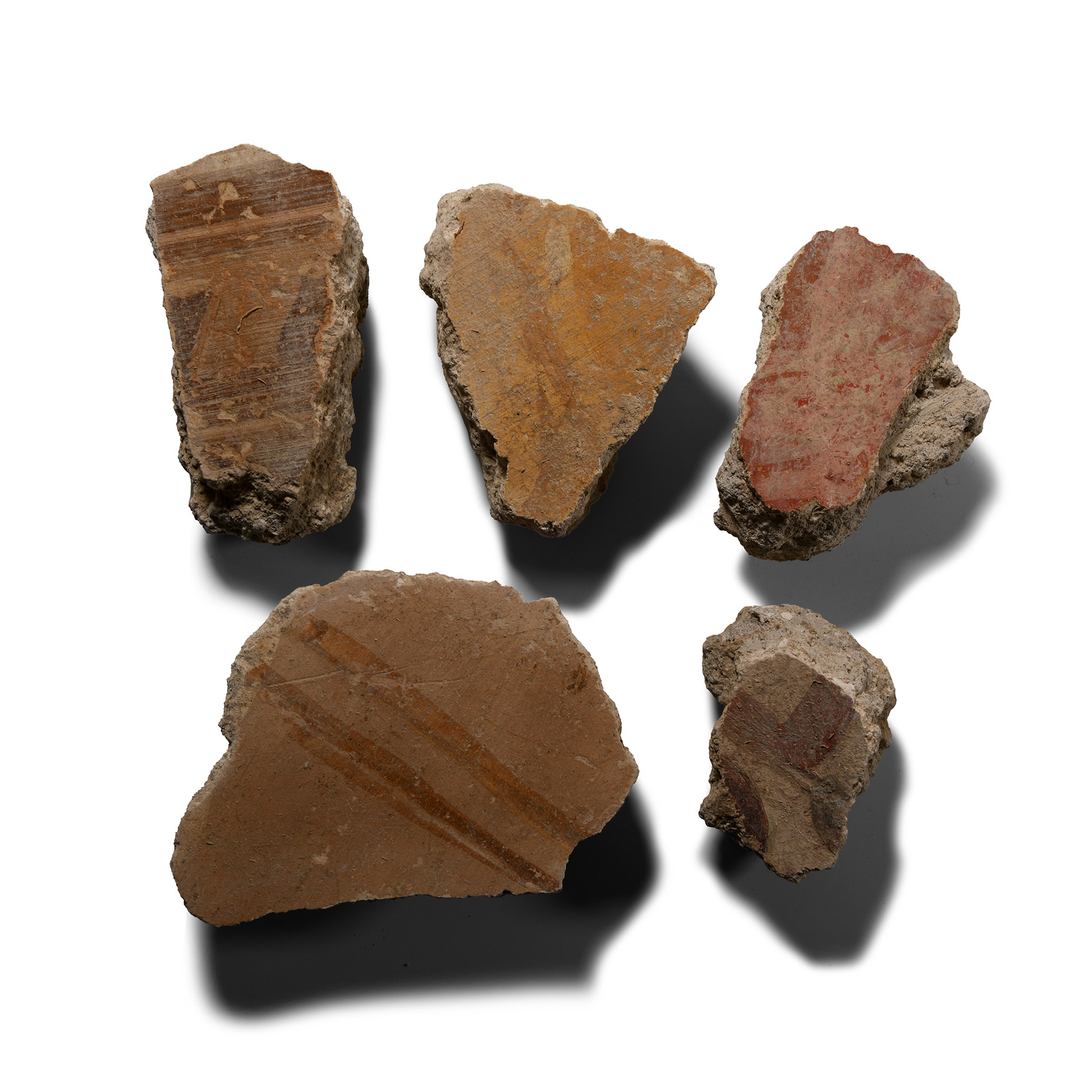
Roman Fresco Painted Wall Plaster Collection
1ST CENTURY A.D.
2 3/8 - 4 1/2 in. (531 grams total, 6-11.4 cm).
With painted designs in white, ochre, claret, crimson and brown. [5, No Reserve]
ProvenanceAcquired in the 19th century.
Ex Jeger collection, Switzerland.
TimeLine Auctions follows a vetting process to ensure the authenticity and legality of all items, reinforcing our commitment to integrity and responsible trading. Each antiquity, antique, and coin lot undergoes thorough examination by a vetting committee of at least ten external specialists, professional trade association members, scientists, and archaeologists: Our Vetting Process
AUCTIONS:
TimeLine is a leading auction house specialising in antiquities, ancient art, collectables, natural history, coins, medals, and books. Our auctions offer museums, collectors, historians, and enthusiasts the opportunity to acquire unique and historically significant pieces.
-
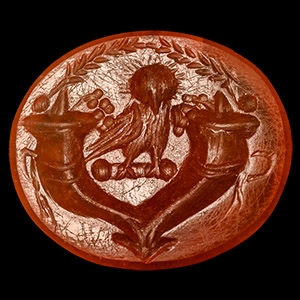
Roman Carnelian Gemstone with Owl Between Cornucopiae
1st century A.D.Sold for (Inc. bp): £975
The oval intaglio engraved with the bird facing, flanked by two opposing cornucopiae. 0.65 grams, 13 mm
Acquired in the late 1980s-early 1990s. Important North West London collection.
According to Greek mythology, the cornucopia was the horn lost by the Achelous river in the fight with Hercules for Deianeira and filled by the Naiads with flowers and fruit as a symbol of abundance, thus alluding to the fertility of the valley where the Achelous flowed. The owl, symbol of Athena, flanked by cornucopiae, evoked the abundance asked from the goddess by the wearer of the gemstone. -
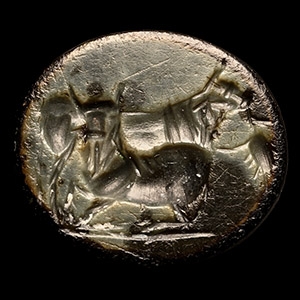
Roman Black Onyx Gemstone with Oxen
1st-2nd century A.D.Estimate: £500 - 700 (+bp*)
Opening Bid: £278
Engraved with two bulls lying side by side, one with the head in profile, the other facing, tree to the field. 0.62 grams, 11 mm
Acquired in the late 1980s-early 1990s. Important North West London collection.
The iconography of two bulls derives already from Achaean models, like the black onyx example in the Metropolitan Museum (Richter, 1920, pl.2,no.3). The model was inherited by the classical world, and inherited from the Greeks by the Romans (Furtwängler mentions gemstones in carnelian, nos.5547-5548-5549 at the Berlin Museum). -
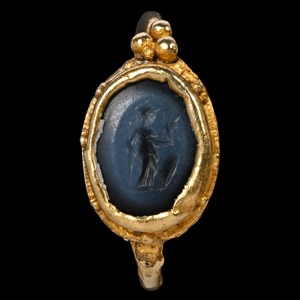
Roman Gold Ring with Minerva Gemstone
Circa 3rd century A.D.Estimate: £1,500 - 2,000 (+bp*)
Opening Bid: £667
With granule cluster to one shoulder, drum-shaped bezel with inset nicolo intaglio of Minerva helmetted with shield, axe and spear; restored. 7.24 grams, 26.31 mm overall, 20.51 mm internal diameter (approximate size British V, USA 10 1/2, Europe 23.77, Japan 22)
Acquired on the UK art market before 2000. Rogers collection, Suffolk, UK.
