
Loading, please wait...
LOT 0585
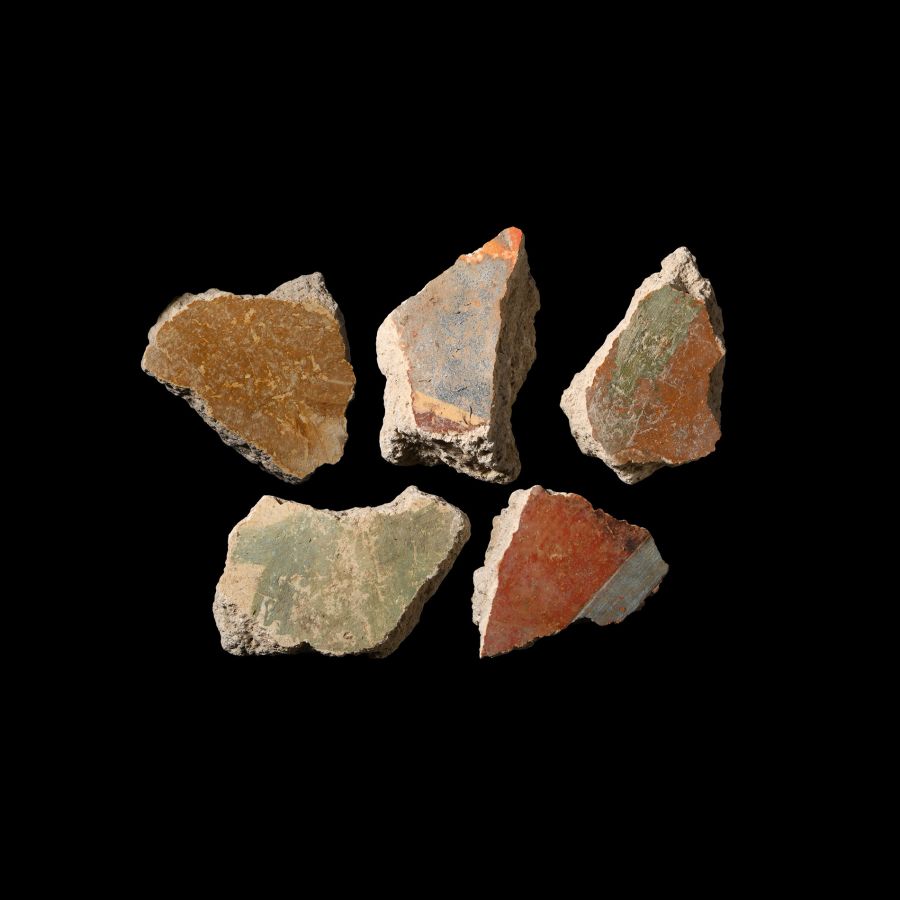
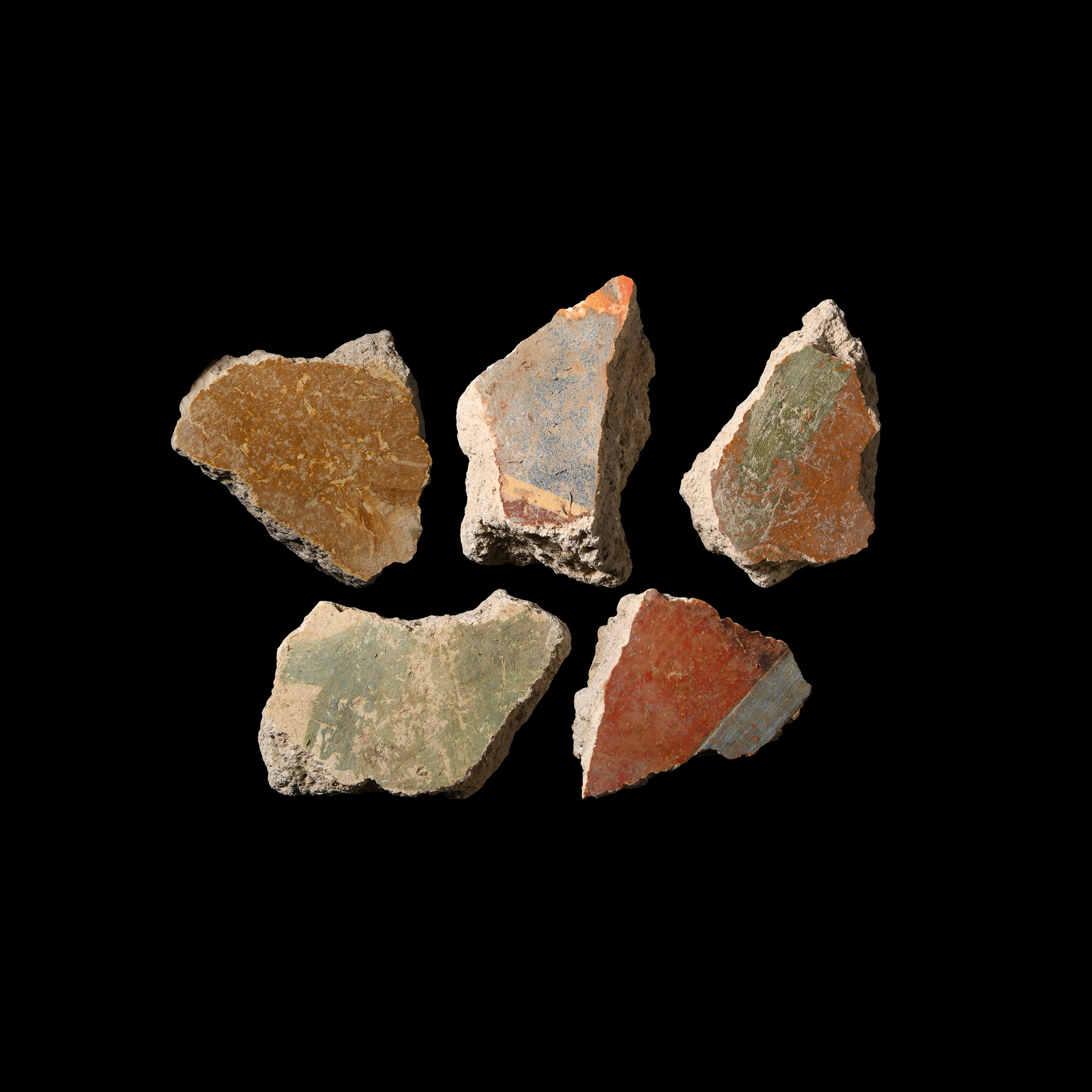
Roman Fresco Painted Wall Plaster Collection
1ST CENTURY A.D.
2 7/8 - 3 1/2 in. (600 grams total, 73-89 mm).
A mixed group of coarse white wall plaster fragments from a fresco, with painted designs in white, ochre, claret, crimson and blue. [5, No Reserve]
ProvenanceAcquired in the 19th century.
Jeger collection, Switzerland.
Property of an English gentleman.
See Casa Dell’Ara Massima or House of Pinarius or Casa di Narcisso, VI.16.15 Pompeii, excavated 1903.
CONDITIONTimeLine Auctions follows a vetting process to ensure the authenticity and legality of all items, reinforcing our commitment to integrity and responsible trading. Each antiquity, antique, and coin lot undergoes thorough examination by a vetting committee of at least ten external specialists, professional trade association members, scientists, and archaeologists: Our Vetting Process
AUCTIONS:
TimeLine is a leading auction house specialising in antiquities, ancient art, collectables, natural history, coins, medals, and books. Our auctions offer museums, collectors, historians, and enthusiasts the opportunity to acquire unique and historically significant pieces.
-
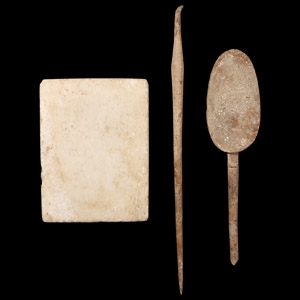
Roman Palette and Bone Implement Group
1st-4th century A.D.Estimate: £200 - 300 (‡+bp*)
Opening Bid: £100
A rectangular stone palette with bevelled edges, accompanied by a bone spoon and probe implement. 152 grams total, 7.5-15.5 cm
Acquired early 1990s. Ex private American collection; thence by descent. Private collection since 1998. -
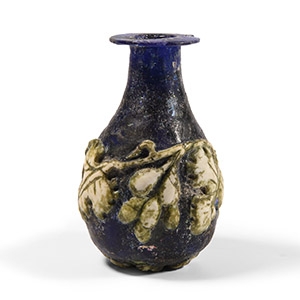
Roman Blue Glass Vessel with Vine Leaf Design
Early 1st century A.D. and laterEstimate: £800 - 1,000 (+bp*)
Opening Bid: £400
A blue glass bottle of piriform shape with iridescent surfaces, decorated with later applied fruiting vines in high-relief, a stylised leaf to the vessel base; restored; rim chipped. 189 grams, 12 cm high
Acquired in the 1970s. English private collection. -
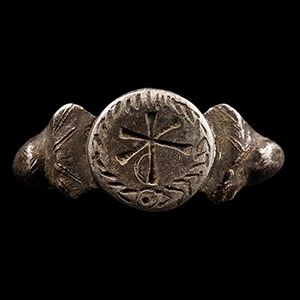
Late Roman Silver Ring with Cross
4th-5th century A.D.Sold for (Inc. bp): £286
A silver ring with carinated hoop, shaped shoulders, discoid bezel engraved with a Chi Rho cross within a dashed roundel. 5.33 grams, 24.90 mm overall, 18.81 mm internal diameter (approximate size British J, USA 4 3/4, Europe 8.69, Japan 8)
Acquired before 2000. From the collection of a European gentleman living in the UK.
