
Loading, please wait...
LOT 0153
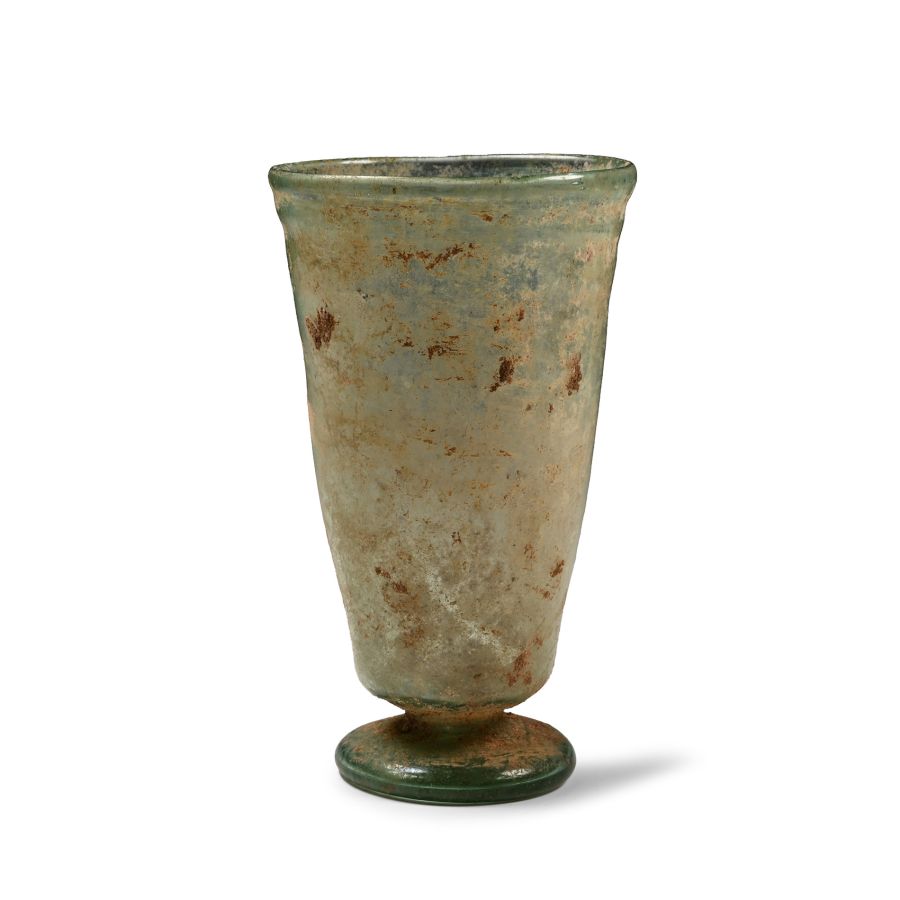
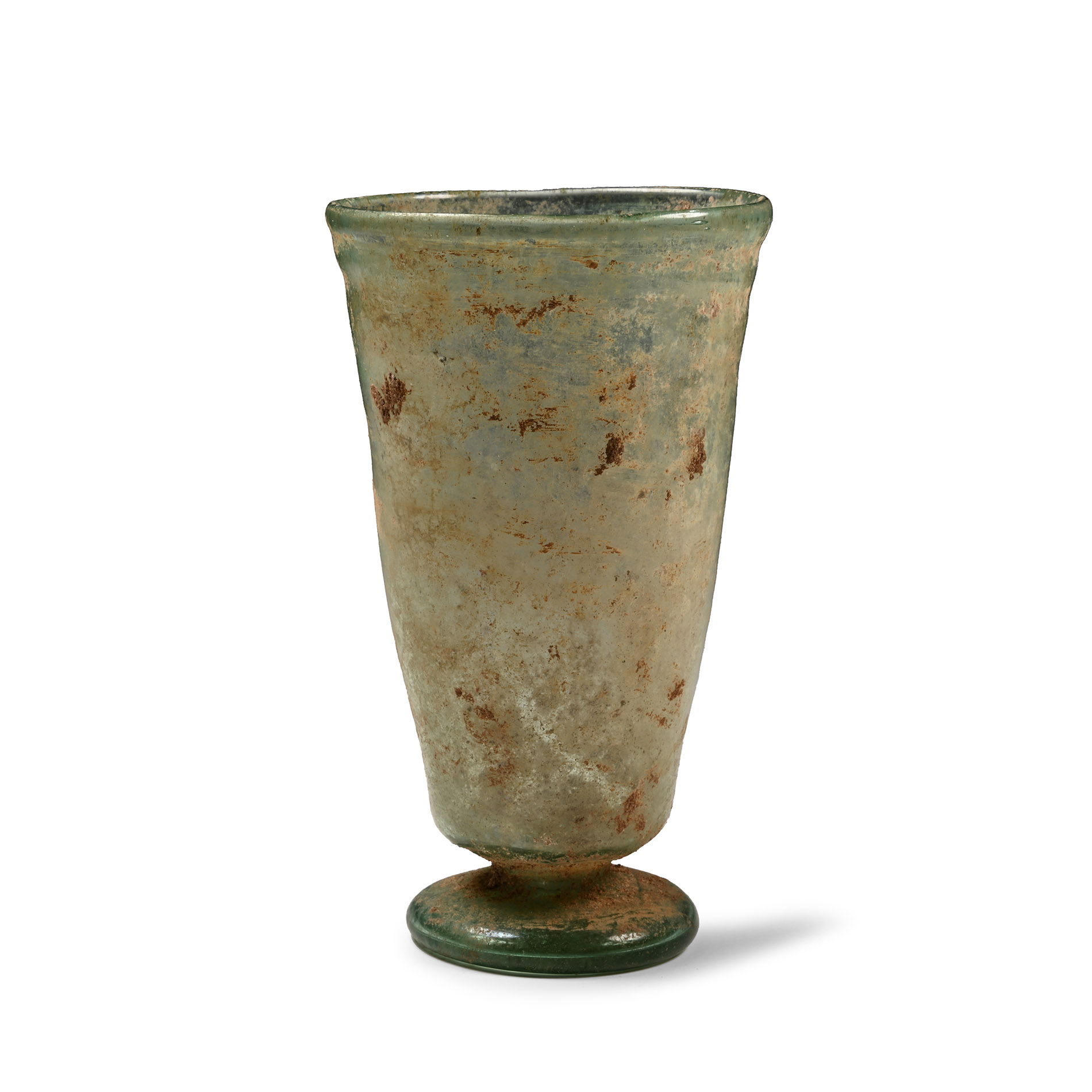
Roman Footed Glass Cup
3RD-4TH CENTURY A.D.
4 1/2 in. (75 grams, 11.3 cm).
Conical profile with slight waisted and integral foot, chamfered rim.
ProvenanceFrom a London, UK, collection, 1990s.
CONDITIONTimeLine Auctions follows a vetting process to ensure the authenticity and legality of all items, reinforcing our commitment to integrity and responsible trading. Each antiquity, antique, and coin lot undergoes thorough examination by a vetting committee of at least ten external specialists, professional trade association members, scientists, and archaeologists: Our Vetting Process
AUCTIONS:
TimeLine is a leading auction house specialising in antiquities, ancient art, collectables, natural history, coins, medals, and books. Our auctions offer museums, collectors, historians, and enthusiasts the opportunity to acquire unique and historically significant pieces.
LOT 0153
Roman Footed Glass Cup
Estimate £400 - 600€460 - 700 (for guidance only)$540 - 810 (for guidance only)
-
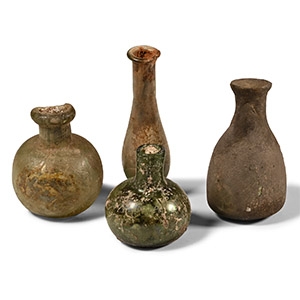
Late Roman Cosmetic Glass Bottle Collection
4th-5th century A.D.Sold for (Inc. bp): £130
Comprising: a piriform unguentarium with rolled rim; two squat jars with basal ring; globular jar with dimple base. 90 grams total, 41-70 mm
Acquired 1980-2015. Ex Abelita family collection. Ex London, UK, gallery. -
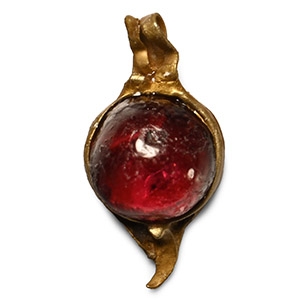
Roman Gold and Garnet Pendant
1st-4th century A.D.Sold for (Inc. bp): £111
Comprising a gold dangle with applied garnet cabochon. 0.17 grams, 8 mm
Ex property of a late Japanese collector, 1970s-2000s. -
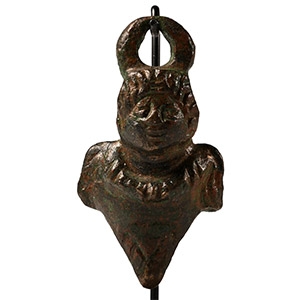
Roman Bronze Figural Pendant
2nd-3rd century A.D.Sold for (Inc. bp): £59
Amuletic bust of a bare-chested youth with abundant hair and prominent torc to the neck, suspension loop above; usage wear; mounted on a custom-made stand. 56 grams, 61 mm (80 grams total, 96 mm including stand)
From a collection acquired on the UK art market from various auction houses and collections mostly before 2000. From an important Cambridgeshire estate; thence by descent.
