
Loading, please wait...
LOT 0788
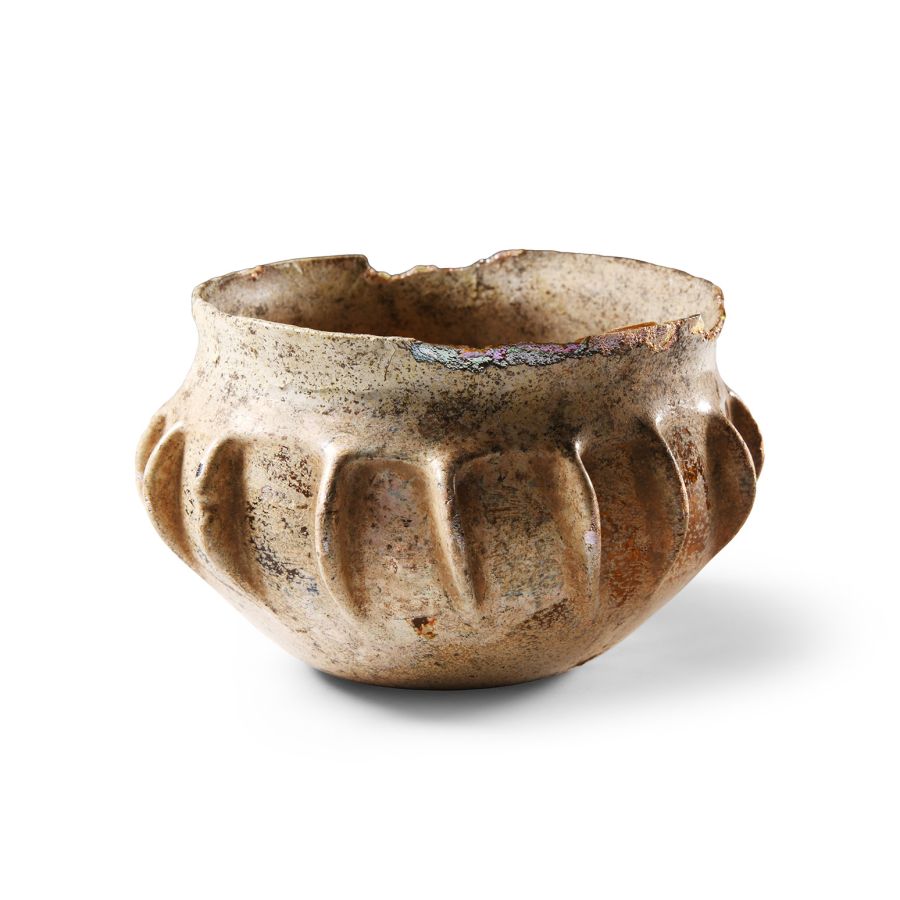
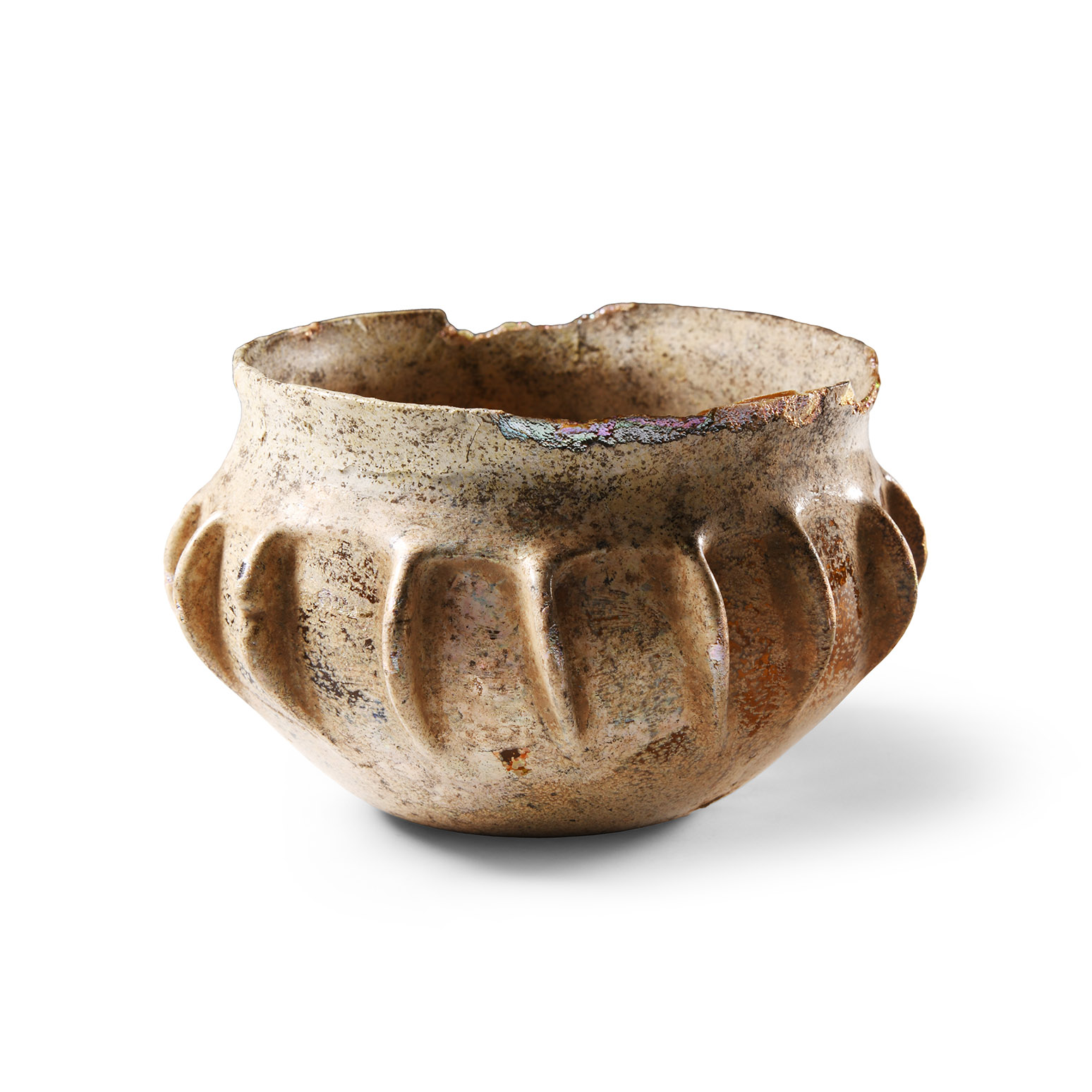
Roman Fluted Iridescent Amber Glass Cup
3RD-4TH CENTURY A.D.
4 in. (88 grams, 98 mm wide).
With iridescent surface, flat bottom, vertical ribbed segmentation, slightly everted chipped rim. [No Reserve]
ProvenanceAcquired 1970s-1996.
Property of a North American collector, with numbered reference G.31.
London collection, 2016.
Cf. Whitehouse, D., Roman Glass in the Corning Museum of Glass, vol.2, New York, 2001, item 603.
CONDITIONTimeLine Auctions follows a vetting process to ensure the authenticity and legality of all items, reinforcing our commitment to integrity and responsible trading. Each antiquity, antique, and coin lot undergoes thorough examination by a vetting committee of at least ten external specialists, professional trade association members, scientists, and archaeologists: Our Vetting Process
AUCTIONS:
TimeLine is a leading auction house specialising in antiquities, ancient art, collectables, natural history, coins, medals, and books. Our auctions offer museums, collectors, historians, and enthusiasts the opportunity to acquire unique and historically significant pieces.
-
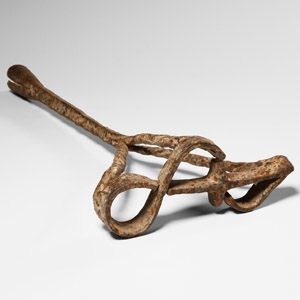
Late Roman Iron Branding Signaculum
5th-6th century A.D.Estimate: £80 - 100 (+bp*)
Opening Bid: £40
Featuring an elaborate monogram composed of Greek letters M and O, supported by decoratively twisted prongs; tapering cylindrical socket. 521 grams, 37.5 cm
Acquired 1990s-early 2000s. East Anglian private collection.
Branding stamps or signacula, in particular those with large single letters, were used for marking livestock to identify the ownership, the breed, the quality and other features of the animal. The signacula were usually made in bronze, but iron examples are also preserved. -
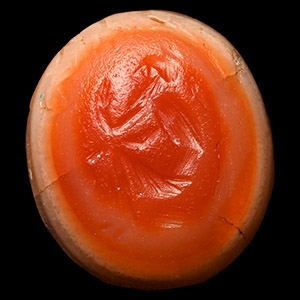
Roman Inscribed Orange Sardonyx Gemstone with Philosopher Seated Under a Tree
1st century A.D.Estimate: £600 - 800 (+bp*)
Opening Bid: £333
The oval stone engraved with an old man (a philosopher?) seated on a stone, wearing a low cap, half naked and with the cloak covering his leg; his right hand resting beside him, and his left hand raised in the act of speaking; a tree behind, inscription in Greek letters 'ψίω' (= eat). 1.01 grams, 13 mm
Acquired in the late 1980s-early 1990s. Important North West London collection.
A particularly recognisable representation in Graeco-Roman art was that of a male character, with a bald head and a slightly pointed beard, seated in profile on a simple seat or on a rock. It represents the philosopher, who often has his hand raised in the gesture of speaking or holds a volume in his hands, characterised according to the rules of cynicism, by the bare torso and the cloak that covers his legs. The inscription refers to the imperative to 'feed' on knowledge. -
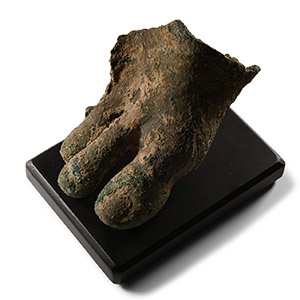
Roman Bronze Lower Part of a Right Foot
1st-3rd century A.D.Sold for (Inc. bp): £1,690
With finely modelled anatomical details, the second toe longer to emphasise the physical perfection of the physique. 627 grams, 13 cm
Acquired in Europe before 2001. Private collection, Europe.
