
Loading, please wait...
LOT 0861
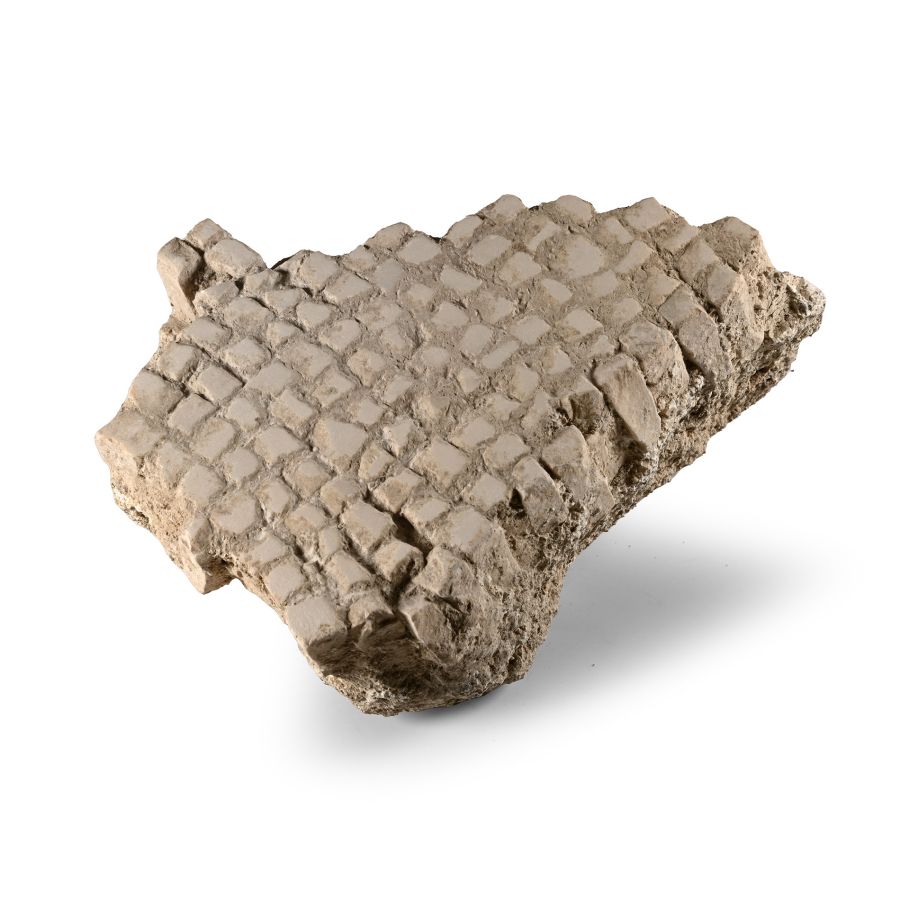
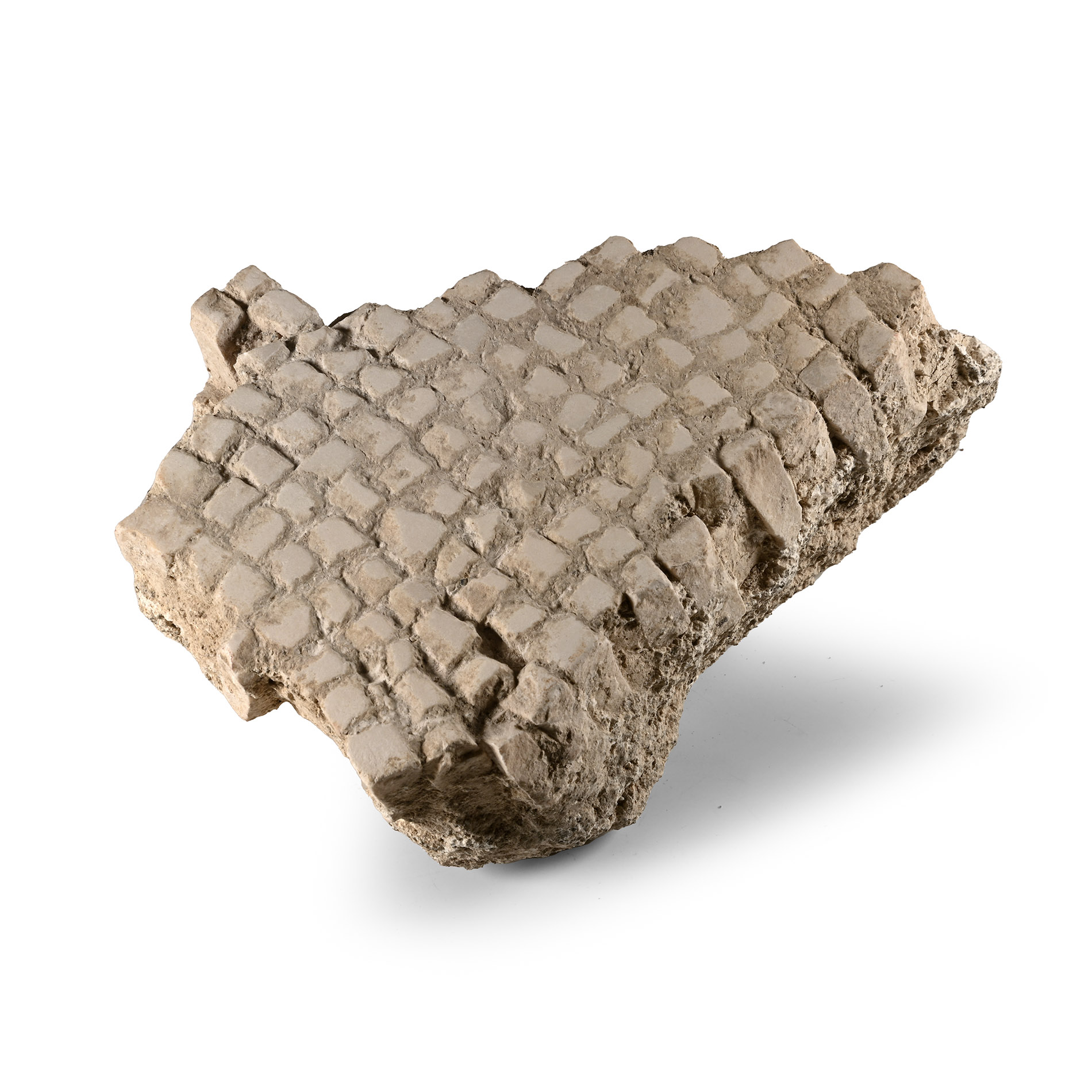
Roman Floor Mosaic Section
1ST-4TH CENTURY A.D.
6 1/2 in. (856 grams, 16.5 cm).
An irregular panel of floor with opus caementicium substrate and white stone tesserae embedded in horizontal rows in the upper layer. [No Reserve]
ProvenanceFrom the collection of a late East Anglian teacher and antiquarian who retired to the Isle of Wight in Hampshire, UK.
He amassed a large collection of objects between the 1960s-1980s.
TimeLine Auctions follows a vetting process to ensure the authenticity and legality of all items, reinforcing our commitment to integrity and responsible trading. Each antiquity, antique, and coin lot undergoes thorough examination by a vetting committee of at least ten external specialists, professional trade association members, scientists, and archaeologists: Our Vetting Process
AUCTIONS:
TimeLine is a leading auction house specialising in antiquities, ancient art, collectables, natural history, coins, medals, and books. Our auctions offer museums, collectors, historians, and enthusiasts the opportunity to acquire unique and historically significant pieces.
-
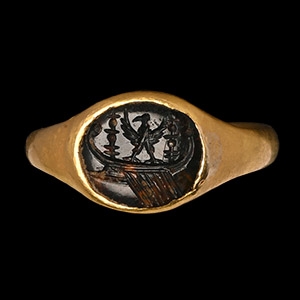
Roman Gold Ring with Jasper Bireme Gemstone
1st-2nd century A.D.Sold for (Inc. bp): £3,120
With discoid bezel and inset intaglio of a bireme with two military standards on deck flanking an eagle; supplied with a museum-quality impression. 4.62 grams, 21.78 mm overall, 19.26 mm internal diameter (approximate size British M, USA 6, Europe 12.46, Japan 12)
Acquired on the London art market in the late 1980s-1990s. From the family collection of an East London, UK, gentleman. -
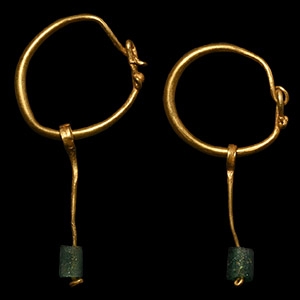
Roman Gold Earrings
4th century A.D.Sold for (Inc. bp): £351
Matched pair, each a slender hoop with hook-and-eye closure, dangle with green glass tubular bead and provision for another similar bead. 3.6 grams total, 35-38 mm
Acquired on the London art market in the late 1980s-1990s. From the family collection of an East London, UK, gentleman. -
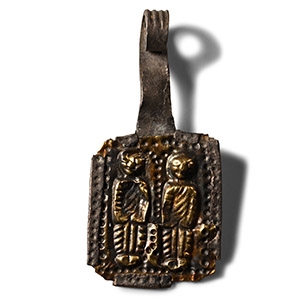
East Roman Silver-Gilt Votive Pendant
2nd-3rd century A.D.Sold for (Inc. bp): £46
An amuletic pendant with rectangular plaque and flat-section suspension coil; pointillé detailing to the surface, two reserved facing figures in ankle-length robes, parcel-gilt. 2.04 grams, 36 mm
From the collection of a London antiquarian, formed since the 1980s.
