
Loading, please wait...
LOT 0162
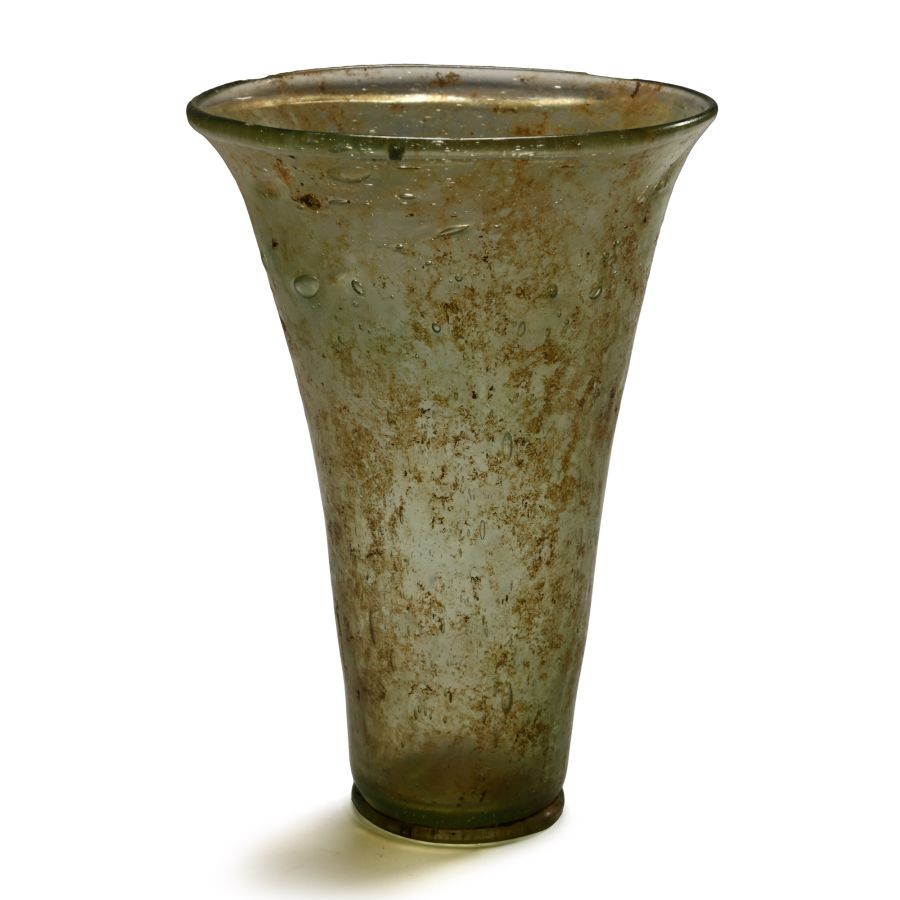
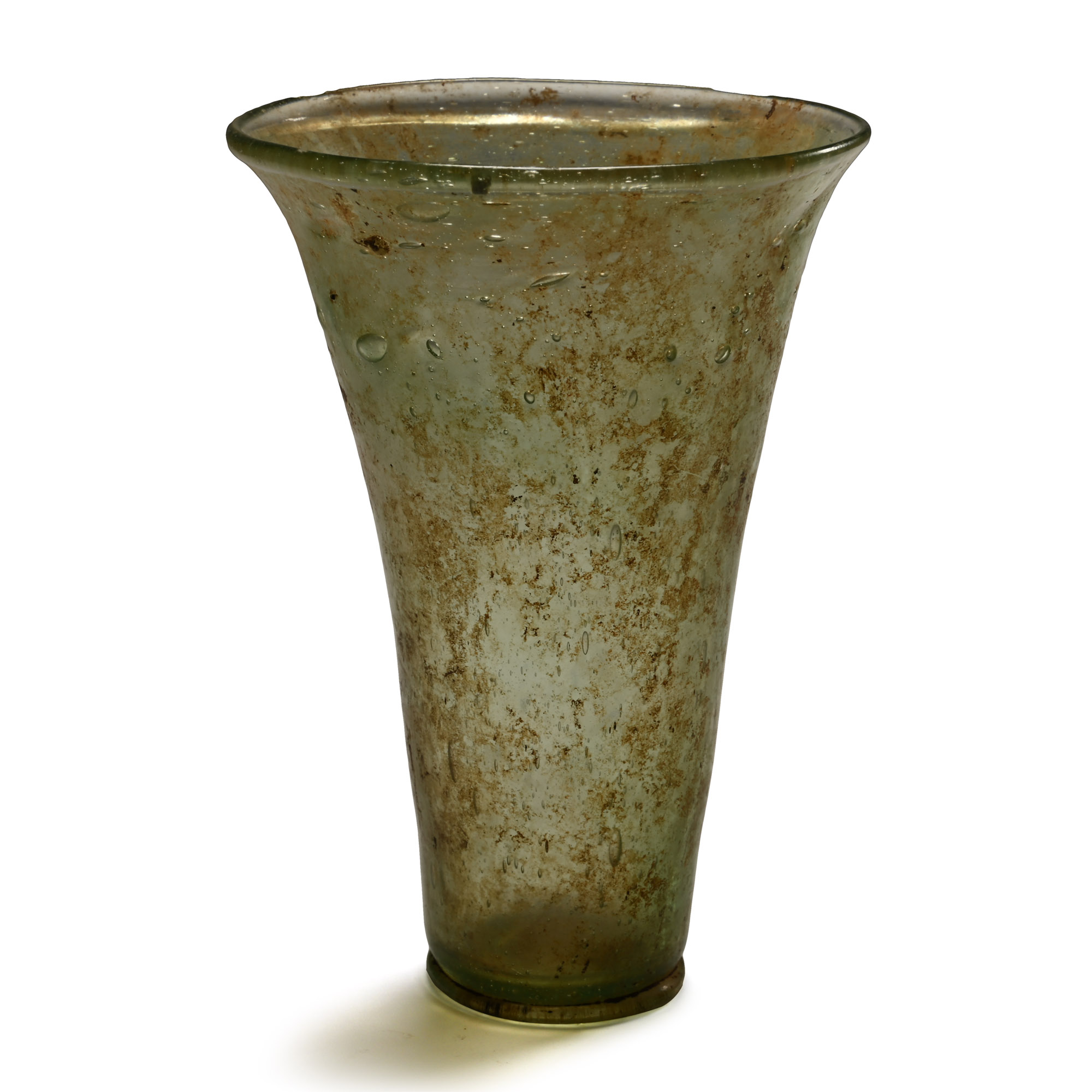
Roman Flared Glass Beaker
1ST-2ND CENTURY A.D.
4 1/2 in. (117 grams, 11.5 cm).
A 'lotus bud' style beaker with tapering cylindrical body, everted rim and shallow pontil with applied rim to base (partly absent).
ProvenanceFrom an important glass collection, London, UK, 1980-1990.
This lot is accompanied by an illustrated lot declaration signed by the Head of the Antiquities Department, Dr Raffaele D’Amato.
Cf. The Metropolitan Museum, accession number 29.100.80, for comparable vessel.
CONDITIONTimeLine Auctions follows a vetting process to ensure the authenticity and legality of all items, reinforcing our commitment to integrity and responsible trading. Each antiquity, antique, and coin lot undergoes thorough examination by a vetting committee of at least ten external specialists, professional trade association members, scientists, and archaeologists: Our Vetting Process
AUCTIONS:
TimeLine is a leading auction house specialising in antiquities, ancient art, collectables, natural history, coins, medals, and books. Our auctions offer museums, collectors, historians, and enthusiasts the opportunity to acquire unique and historically significant pieces.
-
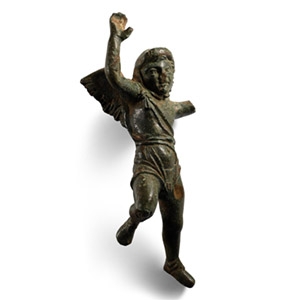
Large Gallo-Roman Bronze Statuette of Cupid, God of Love
1st-3rd century A.D.Estimate: £3,000 - 4,000 (‡+bp*)
Opening Bid: £1,500
Modelled in the round leaping and winged, his right hand reaching above his head seemingly gesturing to retrieve arrows from a quiver once carried on his back, dressed in an exomis tunic leaving him naked below the torso, wearing a helmet or cap and ankle boots. 403 grams, 16 cm high
Acquired in Europe before 1994. Private collection, Europe. Accompanied by an academic report by Dr Raffaele D’Amato. This lot has been checked against the Interpol Database of stolen works of art and is accompanied by search certificate no.11808-206795. This lot has been cleared against the Art Loss Register database, and is accompanied by an illustrated lot declaration signed by the Head of the Antiquities Department, Dr Raffaele D’Amato.
Often the statues of puttos or amorini (small loves) depicting personifications of Eros were covered with gold leaf. This was a frequent practice and the figures, when represented with wings, were known as chrysopteroi, meaning 'with golden wings'. -
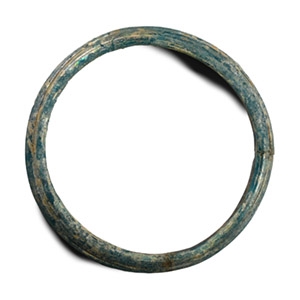
Very Large Roman Blue Glass Arm-Ring Bangle
Circa 4th century A.D.Sold for (Inc. bp): £124
D-shaped in section with slightly ribbed outer face. 31 grams, 92 mm
From an old English collection. Acquired from Alan Cherry, Bournemouth, UK, circa 2004. Ian Wilkinson collection, Nottinghamshire, UK, formed since 1985. This lot is accompanied by an illustrated lot declaration signed by the Head of the Antiquities Department, Dr Raffaele D’Amato.
The mass production of glass in ancient Rome prompted the development of glass jewellery of unique qualities. The ancient Romans considered jewellery to be an essential accessory, being a public display of the wealth of high social classes. Recent excavations have provided better information on the use of glass for necklaces and bracelets, and in some cases it has been possible to understand the exact arrangement of the jewellery. -
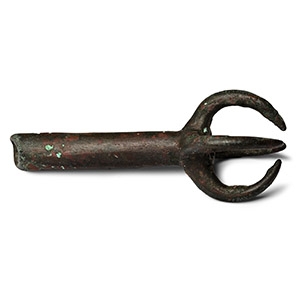
Roman Bronze Sceptre Head
1st-4th century A.D.Sold for (Inc. bp): £98
With tapering tubular shank, pierced at the open end, four tapering integral hooks forming a claw-setting; possibly from a statue, having once held amber. 18.5 grams, 63 mm
Acquired from a UK dealer circa 2004. Ian Wilkinson collection, Nottinghamshire, UK, formed since 1985. Accompanied by a laminated identification label. This lot is accompanied by an illustrated lot declaration signed by the Head of the Antiquities Department, Dr Raffaele D’Amato.
