
Loading, please wait...
LOT 0732
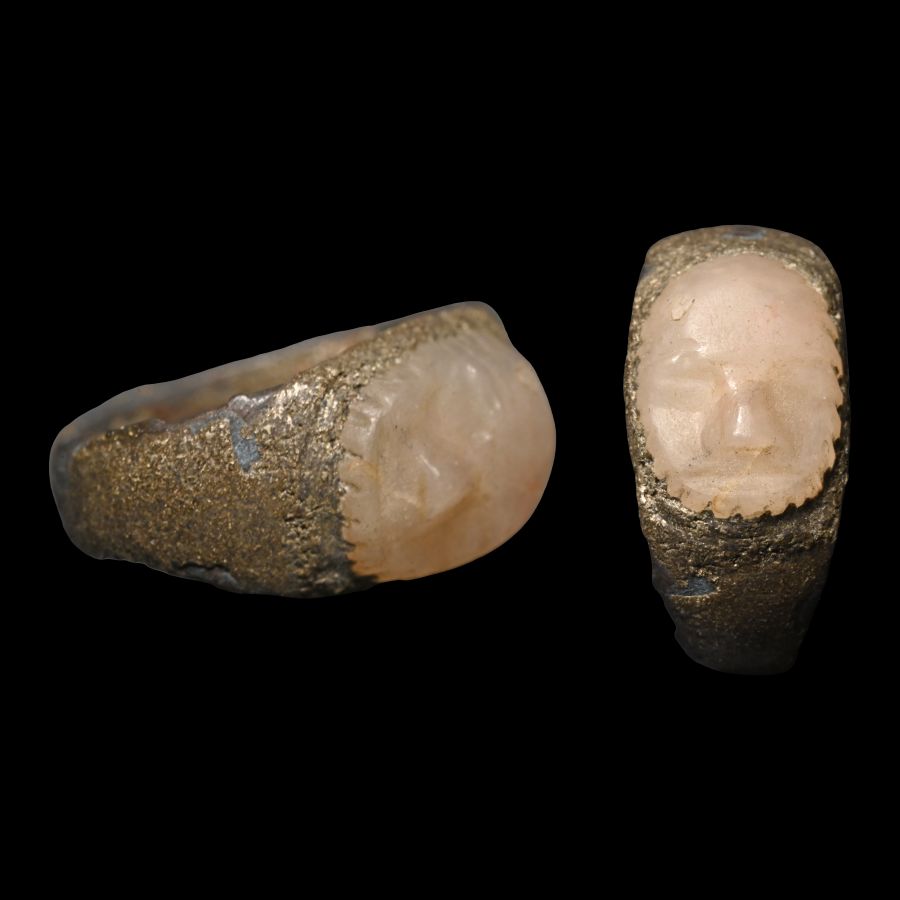
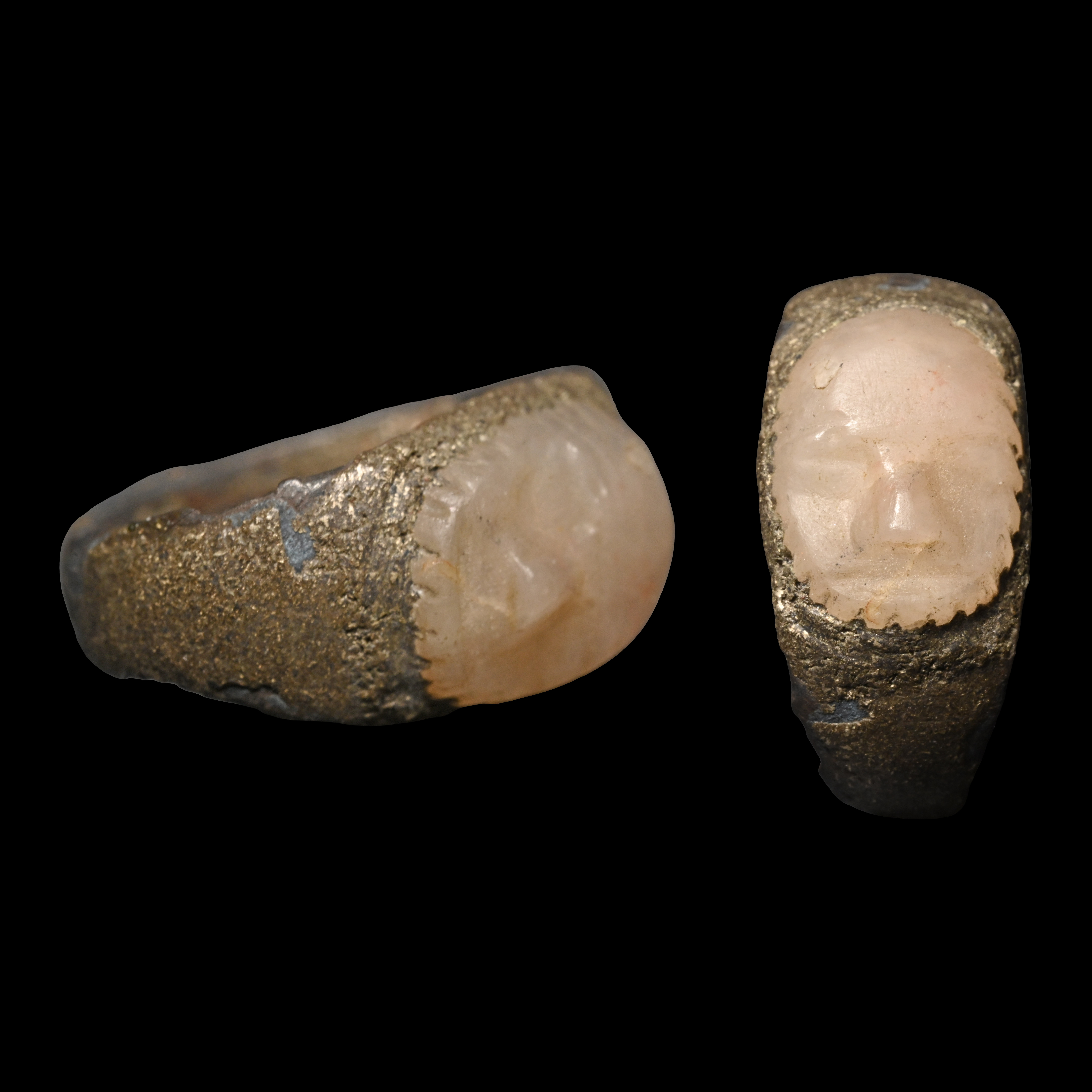
Roman Face Intaglio in Bronze Ring
CIRCA 2ND CENTURY A.D.
7/8 in. (4.26 grams, 23.50 mm overall, 14.08 x 19.53 mm internal diameter (approximate size British I 1/2, USA 4 1/2, Europe 8.07, Japan 7)).
D-section hoop with expanding shoulders, set with an agate intaglio carved as a face in three-quarter view. [No Reserve]
ProvenanceFrom the private collection of a European gentleman (1942-2024), formed since the 1970s.
CONDITIONTimeLine Auctions follows a vetting process to ensure the authenticity and legality of all items, reinforcing our commitment to integrity and responsible trading. Each antiquity, antique, and coin lot undergoes thorough examination by a vetting committee of at least ten external specialists, professional trade association members, scientists, and archaeologists: Our Vetting Process
AUCTIONS:
TimeLine is a leading auction house specialising in antiquities, ancient art, collectables, natural history, coins, medals, and books. Our auctions offer museums, collectors, historians, and enthusiasts the opportunity to acquire unique and historically significant pieces.
-
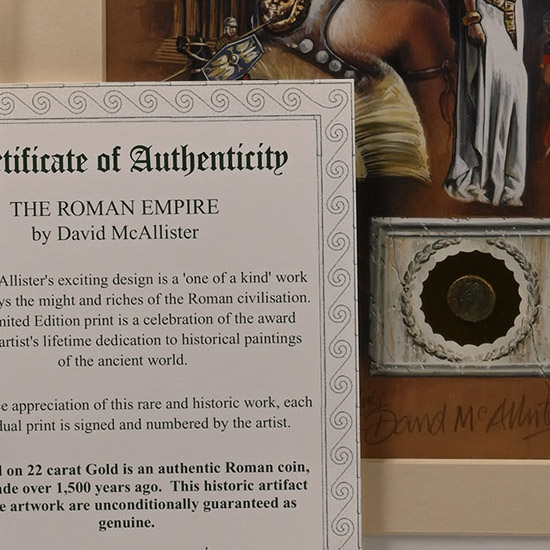
Bronze Roman Coin and Framed Limited Edition Print
3rd century A.D. and laterSold for (Inc. bp): £20
The coin of Constantine the Great (272-337 A.D.) mounted on 22 carat gold foil, framed with an art print signed by the artist David McAllister, depicting scenes of Roman military activity; limited edition number 169/1150. 1.26 kg, 49.5 x 37.5 cm
UK gallery, early 2000s. Accompanied by a previous certificate of authenticity.
David McAllister's exciting design is a 'one of a kind' work that portrays the might and riches of the Roman civilisation. This limited edition print is a celebration of the award winning artist's lifetime dedication to historical paintings of the ancient world. To enhance appreciation of this rare and historic work, each individual print is signed and numbered by the artist. -
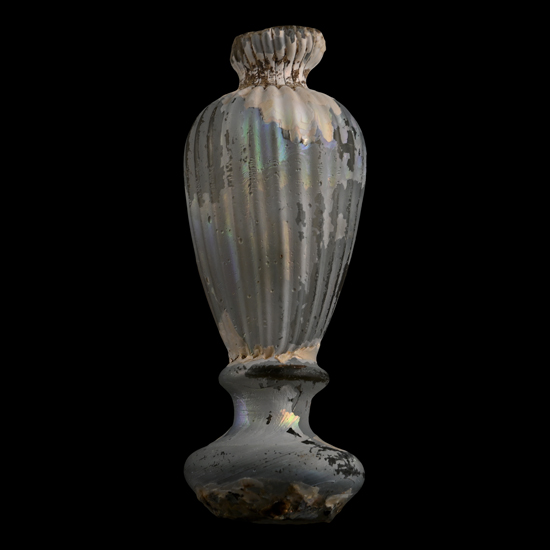
Roman Iridescent Moulded Fluted Glass Perfume Bottle
Cyprus, circa 1st century A.D.Sold for (Inc. bp): £247
Piriform fluted body with narrow neck and everted rim, flared base. 19.7 grams, 60 mm
Private collection, Oxfordshire, UK, by direct descent from the collection of Judge George Cyril Griffith-Williams (1893-1983), Supreme Court Judge of the Colony of Cyprus; items having been collected in the 1930s and 1940s in Cyprus during his tenure there. -
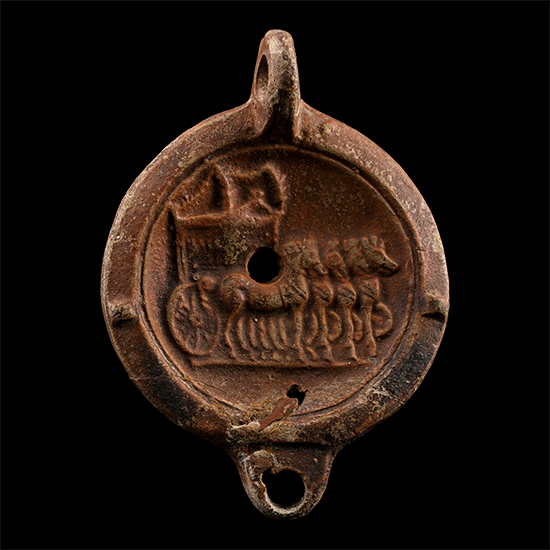
Roman Terracotta Oil Lamp with Victory Quadriga
1st-2nd century A.D.Sold for (Inc. bp): £715
Squat and shallow with broad base; pierced lug handle to rear and small stub nozzle; lateral spurs to shoulder; discus with low-relief quadriga; underside with 'CCLOD' maker's mark. 77 grams, 11.2 cm
From the private collection of Mr Brian Edwards, New Malden, Surrey, UK, formed from the late 1970s-early 1980s; thence by descent.
The mark 'CCLOD' appears in the Index of Signatures and Inscriptions for the J. Paul Getty Museum on a late 1st century lamp (Accession No. 83.AQ.377.96).
