Loading, please wait...

Roman 'Essex' Bronze Lion Brooch Roman 'Essex' Bronze Lion Brooch Roman 'Essex' Bronze Lion Brooch
Use mousewheel to zoom in and out, click to enlarge
Details

LOT 0732

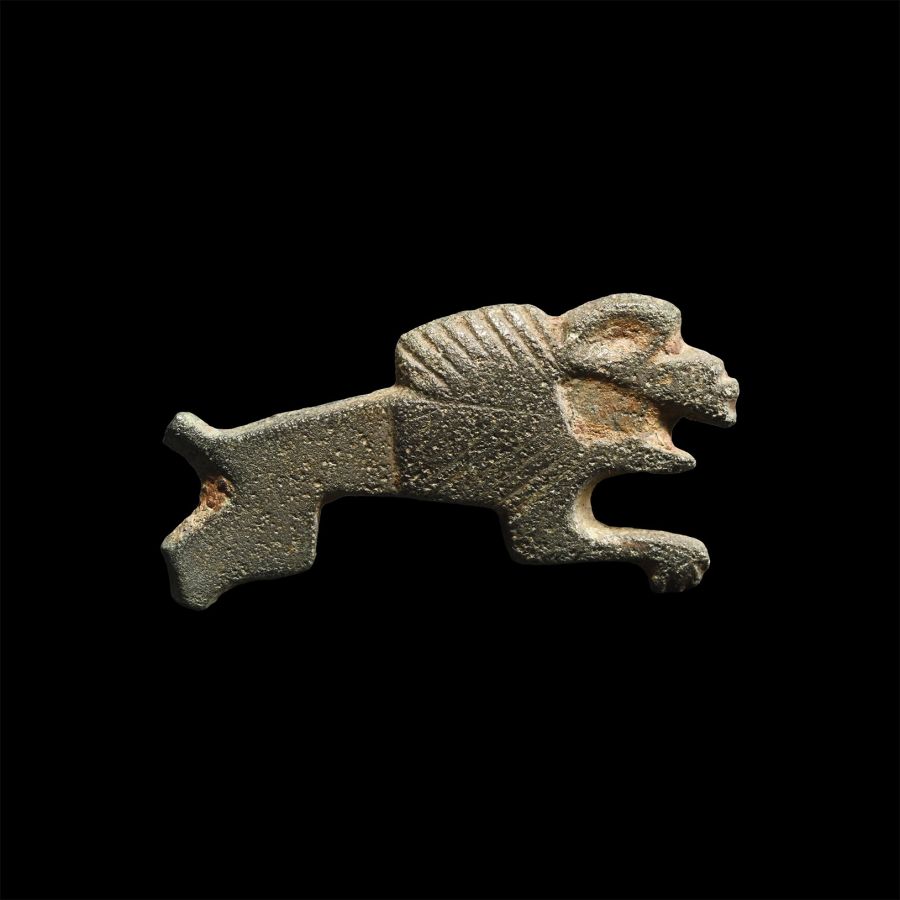
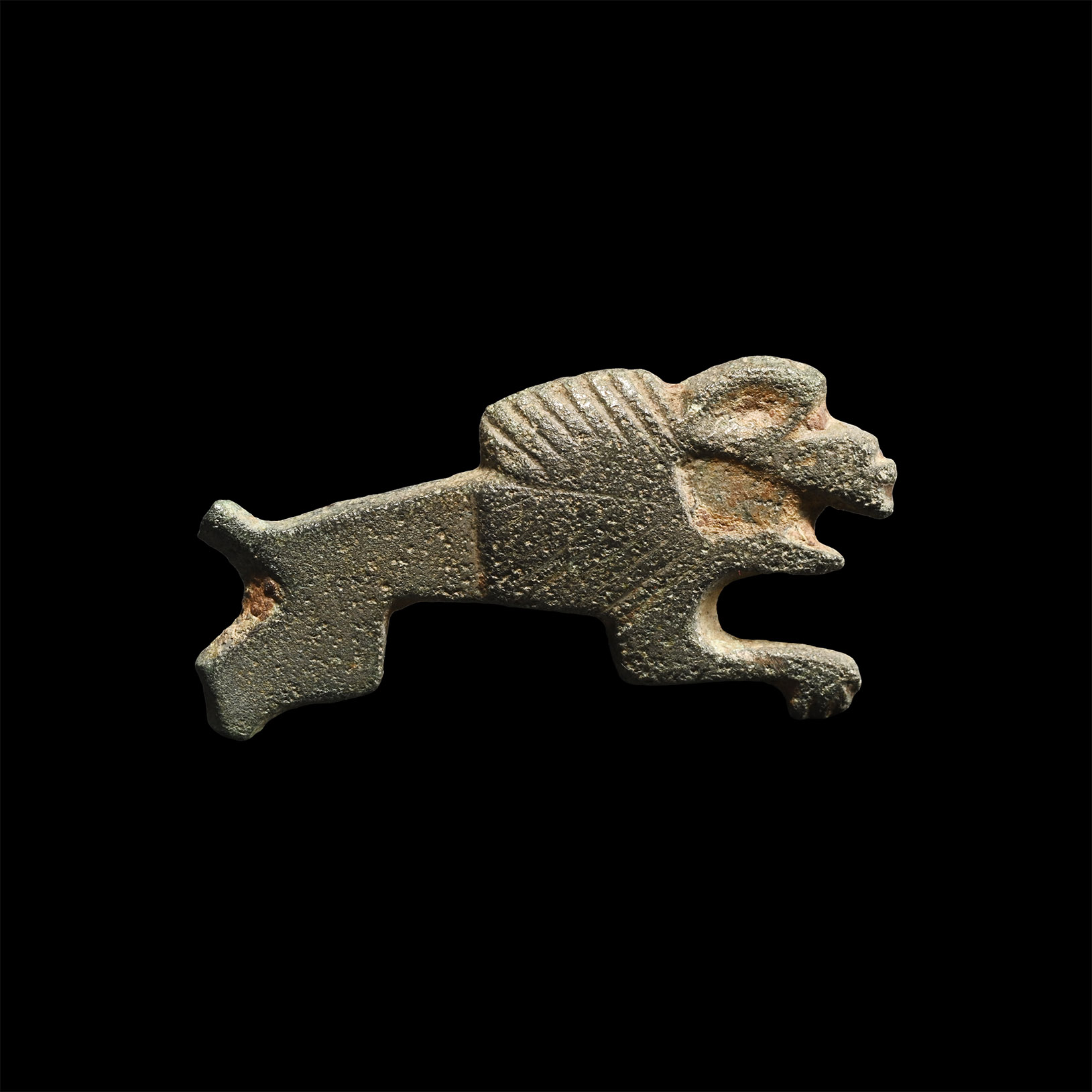
Roman 'Essex' Bronze Lion Brooch

CIRCA 2ND CENTURY A.D.

1 3/8 in. (8.13 grams, 36 mm).

Plate brooch formed as a leaping lion with hatched mane; pin-lugs and catch to the reverse. [No Reserve]

Provenance

Found Essex, UK, in the 1980s.
Property of an Essex collector.

Literature

Cf. Hattatt, R., Brooches of Antiquity, Oxford, 1987, item 1193.

CONDITION
VETTING:

TimeLine Auctions follows a vetting process to ensure the authenticity and legality of all items, reinforcing our commitment to integrity and responsible trading. Each antiquity, antique, and coin lot undergoes thorough examination by a vetting committee of at least ten external specialists, professional trade association members, scientists, and archaeologists: Our Vetting Process


AUCTIONS:

TimeLine is a leading auction house specialising in antiquities, ancient art, collectables, natural history, coins, medals, and books. Our auctions offer museums, collectors, historians, and enthusiasts the opportunity to acquire unique and historically significant pieces.

LOT 0732

Roman 'Essex' Bronze Lion Brooch

Sold for (Inc. bp): £85

Print page

RELATED LOTS
  • Roman Lead Coffin Panel with Sphinx, Medusa and Dolphins
    Roman Lead Coffin Panel with Sphinx, Medusa and Dolphins
    2nd-3rd century A.D.

    Sold for (Inc. bp): £1,820

    Decorated with patterns comprising sphinxes, dolphins, and masks of Medusa in fields between columns, and floral border strips with laurel leaves. 19.75 kg, 90 cm


    Acquired 1970s-early 1990s. Property of a North American collector. London collection, 2016. This lot has been checked against the Interpol Database of stolen works of art and is accompanied by search certificate no.11993-209841.

    There were many ways of burying bodies during the Roman Empire. Although the majority were buried without coffins, there is evidence for wooden coffins, lead-framed wooden coffins, tile burials and lead and stone coffins. This item belongs to types widespread in the Eastern Mediterranean. The panel is decorated with a columned structure, and within each section are symbols of the outer-world, including gorgons, sphinx and dolphins. The sphinx, having a human head and breasts, legs and paws of a lion, and wings of a bird, was generally associated with protecting imperial tombs and temples. The roundels featuring the head of Medusa, known for her potent gazes that could turn one to stone, was favoured on sarcophagi and architectural ornaments because it was believed that her image would protect those within. The dolphin was considered to ferry the souls of the dead to the afterlife. Very often these sarcophagi were connected by a pipe to the ground above so that mourners could pour in offerings into the grave.

    Lot Details

  • Roman Gold Ring with Fortuna Gemstone
    Roman Gold Ring with Fortuna Gemstone
    1st-2nd century A.D.

    Estimate: £1,500 - 2,000 (‡+bp*)

    Opening Bid: £750

    Hollow-formed with inset banded agate cabochon, intaglio standing Fortuna. 2.22 grams, 21.90 mm overall, 15.21 mm internal diameter (approximate size British E 1/2, USA 2 1/2, Europe 3, Japan 3)


    Acquired early 1990s. Ex private American collection; thence by descent. Private Swiss collection since 1998. This lot has been checked against the Interpol Database of stolen works of art and is accompanied by search certificate no.11619-199018.

    Lot Details

  • Roman Bronze Pan with Handle
    Roman Bronze Pan with Handle
    1st century B.C.-1st century A.D.

    Estimate: £1,200 - 1,700 (+bp*)

    Opening Bid: £667

    The bowl with a wide flat bottom and convex sides; the inside with incised concentric circles; flat handle with raised edges and hooked finial for suspension. 483 grams, 39.5 cm


    German private collection, Mr O., collecting in the 1950s-1960s; thence by descent. with Bonhams, London, 7 July 2016, lot 191. Accompanied by an academic report by Dr Raffaele D’Amato. This lot has been checked against the Interpol Database of stolen works of art and is accompanied by search certificate number no.11735-201189.

    This vessel was part of Roman and provincial bronze instrumentum domesticum, i.e. culinary or domestic utility ware. Such cooking vessels are rare: some are found in central and northern Italy, in Pannonia, Germany and in Britain. The Aylesford Pan, today in the British Museum (inventory no.1886.1112.1), is one of the most important finds. This specimen (Eggers type 130), probably pre-Caesarian or Caesarian, was found in a grave together with a Celtic bucket and a jug.

    Lot Details

Stay up-to-date with the latest from TimeLine Auctions by joining our mailing list