
Loading, please wait...
LOT 0575
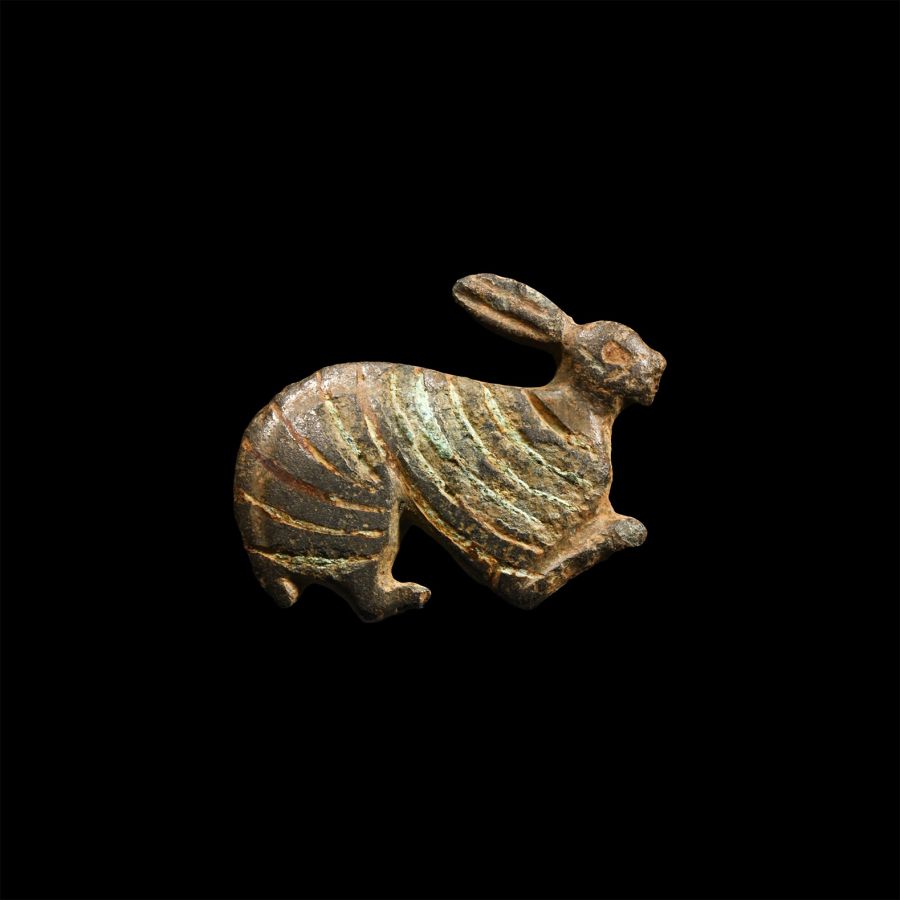
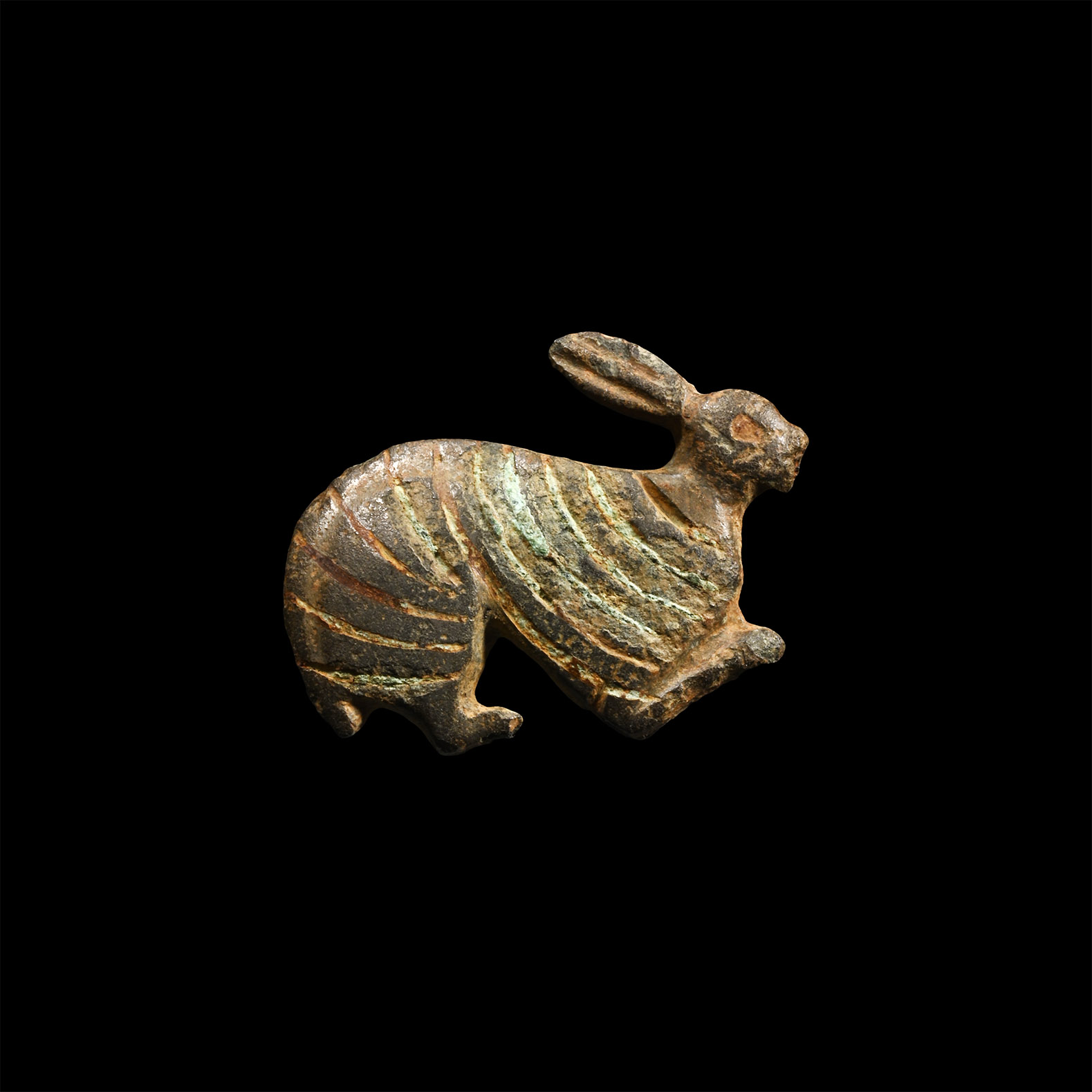
Roman 'Essex' Bronze Hare Brooch
CIRCA 2ND CENTURY A.D.
3/4 in. (2.89 grams, 21 mm).
Bronze plate brooch in the form of a hare with remains of enamel stripes to the body; pin-lugs and catch to the reverse. [No Reserve]
ProvenanceFound Essex, UK, in the 1980s.
Property of an Essex collector.
Hattatt, R., Brooches of Antiquity, Oxford, 1987, item 1192.
CONDITIONTimeLine Auctions follows a vetting process to ensure the authenticity and legality of all items, reinforcing our commitment to integrity and responsible trading. Each antiquity, antique, and coin lot undergoes thorough examination by a vetting committee of at least ten external specialists, professional trade association members, scientists, and archaeologists: Our Vetting Process
AUCTIONS:
TimeLine is a leading auction house specialising in antiquities, ancient art, collectables, natural history, coins, medals, and books. Our auctions offer museums, collectors, historians, and enthusiasts the opportunity to acquire unique and historically significant pieces.
-
Roman Bronze Pan with Handle
1st century B.C.-1st century A.D.Estimate: £1,200 - 1,700 (+bp*)
Opening Bid: £667
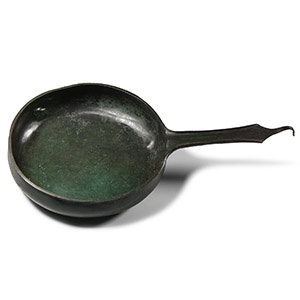
The bowl with a wide flat bottom and convex sides; the inside with incised concentric circles; flat handle with raised edges and hooked finial for suspension. 483 grams, 39.5 cm
German private collection, Mr O., collecting in the 1950s-1960s; thence by descent. with Bonhams, London, 7 July 2016, lot 191. Accompanied by an academic report by Dr Raffaele D’Amato. This lot has been checked against the Interpol Database of stolen works of art and is accompanied by search certificate number no.11735-201189.
This vessel was part of Roman and provincial bronze instrumentum domesticum, i.e. culinary or domestic utility ware. Such cooking vessels are rare: some are found in central and northern Italy, in Pannonia, Germany and in Britain. The Aylesford Pan, today in the British Museum (inventory no.1886.1112.1), is one of the most important finds. This specimen (Eggers type 130), probably pre-Caesarian or Caesarian, was found in a grave together with a Celtic bucket and a jug. -
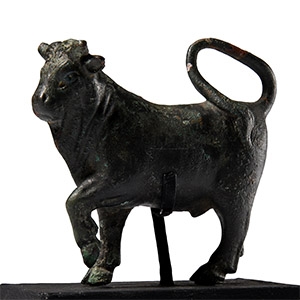
Roman Apis Bull Statuette
Circa 2nd century A.D.Sold for (Inc. bp): £624
Standing with its left foreleg raised, the head held high and turned slightly left with a full, fleshy dewlap cascading to the brisket; the tail looping over the rump, with its end adhering to the left flank; wide-open eyes and flaring nostrils; accompanied by a custom-made display stand. 106 grams, 72 mm wide (207 grams total, 91 mm high including stand)
Acquired from Charles Ede Ltd., London, UK, in 2004. From the collection of a South West London, UK, collector.
After the Roman annexation of Egypt, Egyptian cults such as that of the Apis bull were syncretised, becoming part of a distinctively Egyptian form of Roman polytheism. Representations of prancing Apis bulls, turned either left or right, have been found throughout the Roman empire. Various parallels can be found in the Cincinnati Art Museum (inv.1956.13), in Walters Art Gallery (inv.54.1565) and in the British Museum. -
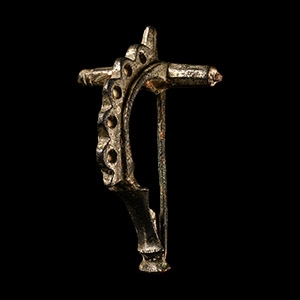
Roman Tinned Bronze Boar Brooch
3rd-4th century A.D.Sold for (Inc. bp): £176
With a deep bow, the footplate formed as the stylised snout of a boar, the neck bristles formed as a band of openwork loops on the bow; hinged pin. 14.7 grams, 51 mm
Found Essex. Property of an Essex, UK, detectorist.
