
Loading, please wait...
LOT 0653
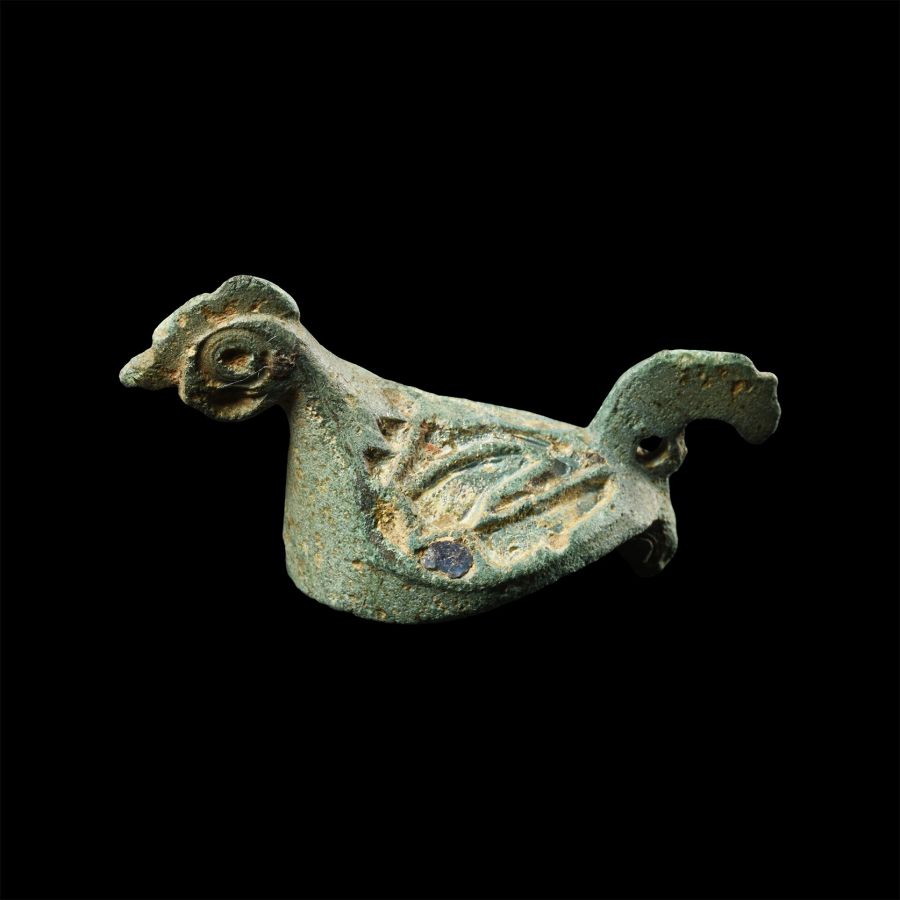
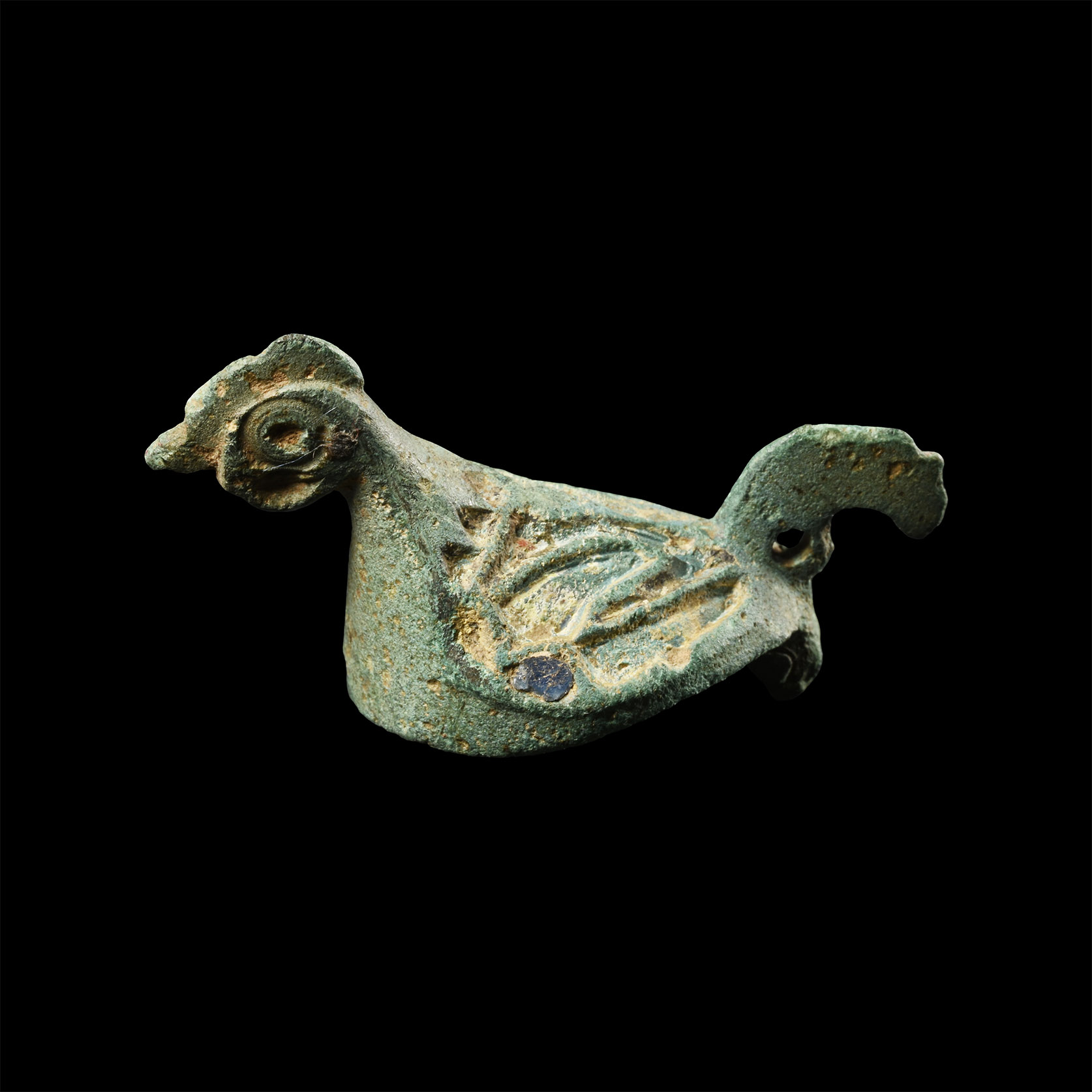
Roman 'Essex' Bronze Cockerel Brooch
CIRCA 2ND CENTURY A.D.
1 1/2 in. (8.59 grams, 38 mm).
Modelled in the haf-round with hollow underside, pin-lugs at the tail and pierced lug for attachment of a securing chain or thong. [No Reserve]
ProvenanceFound Essex, UK, in the 1980s.
Property of an Essex collector.
Cf. Hattatt, R., Brooches of Antiquity, Oxford, 1987, item 1164; Hattatt, R., Ancient and Romano-British Brooches, Sherborne, 1982, item 167.
CONDITIONTimeLine Auctions follows a vetting process to ensure the authenticity and legality of all items, reinforcing our commitment to integrity and responsible trading. Each antiquity, antique, and coin lot undergoes thorough examination by a vetting committee of at least ten external specialists, professional trade association members, scientists, and archaeologists: Our Vetting Process
AUCTIONS:
TimeLine is a leading auction house specialising in antiquities, ancient art, collectables, natural history, coins, medals, and books. Our auctions offer museums, collectors, historians, and enthusiasts the opportunity to acquire unique and historically significant pieces.
-
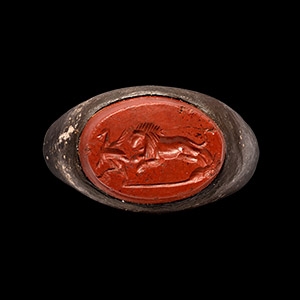
Roman Silver Ring with Lion Attacking a Bird Gemstone
Circa 2nd-3rd century A.D.Estimate: £1,000 - 1,400 (+bp*)
Opening Bid: £550
Rounded bezel with inset jasper gemstone, intaglio scene of a lion pouncing upon a goose taking flight; possibly a marriage or the stone has been displaced due to corrosion in the socket. 7.73 grams, 25.14 mm overall, 18.22 mm internal diameter (approximate size British Q, USA 8, Europe 17.49, Japan 16)
From a collection of a London lady, acquired annually during 1990s-2000s. -
.jpg)
Roman Carnelian Figural Gemstone
Circa 2nd-3rd century A.D.Estimate: £300 - 400 (+bp*)
Opening Bid: £150
With a seated female and goat, tree to the rear, all on a baseline; supplied with a museum-quality impression. 0.58 grams, 12 mm
From the collection of a Swiss gentleman formed in Europe from 1970-1980s; thence by descent from the family in London. -
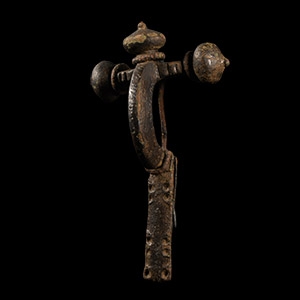
Roman 'Midlands' Bronze Decorated Crossbow Brooch
4th-5th century A.D.Sold for (Inc. bp): £169
With onion-knop terminals, carinated bow with linear decoration and a separate collar to the base of the bow; wide footplate with pellet decoration; catch-plate and repaired pin to the reverse. 78.6 grams, 92 mm
Found UK. Acquired from Stonegate Antiques, York, 2008. Property of a Nottinghamshire gentleman.
