
Loading, please wait...
LOT 0754
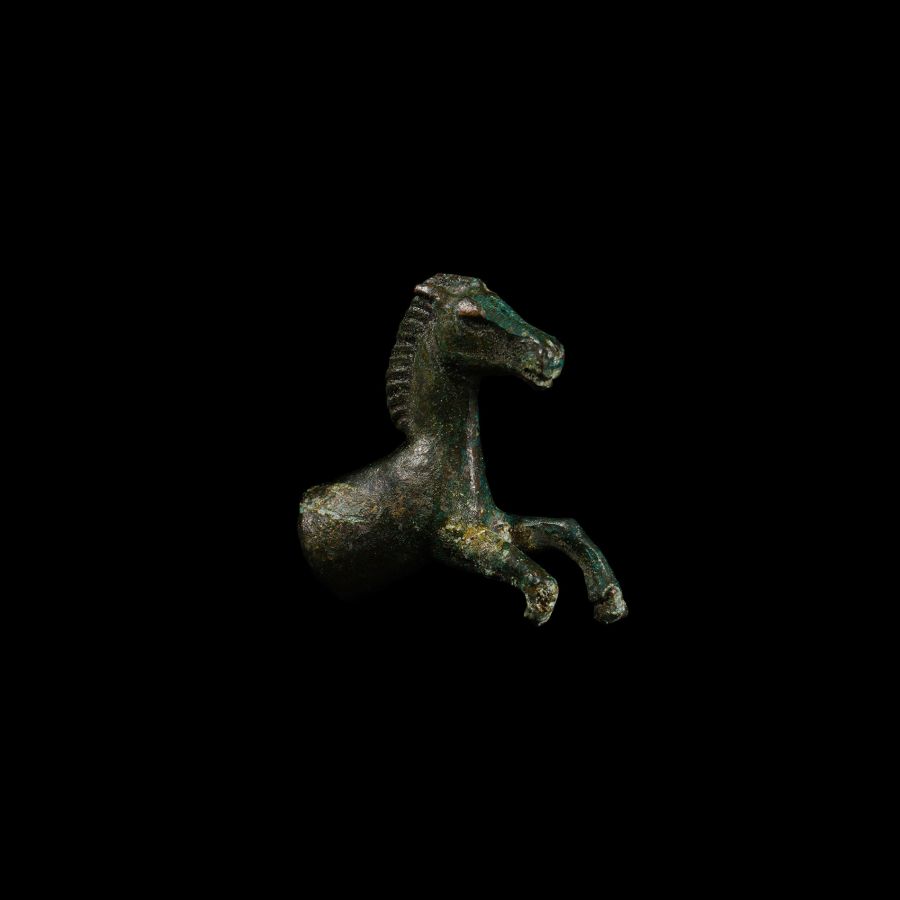
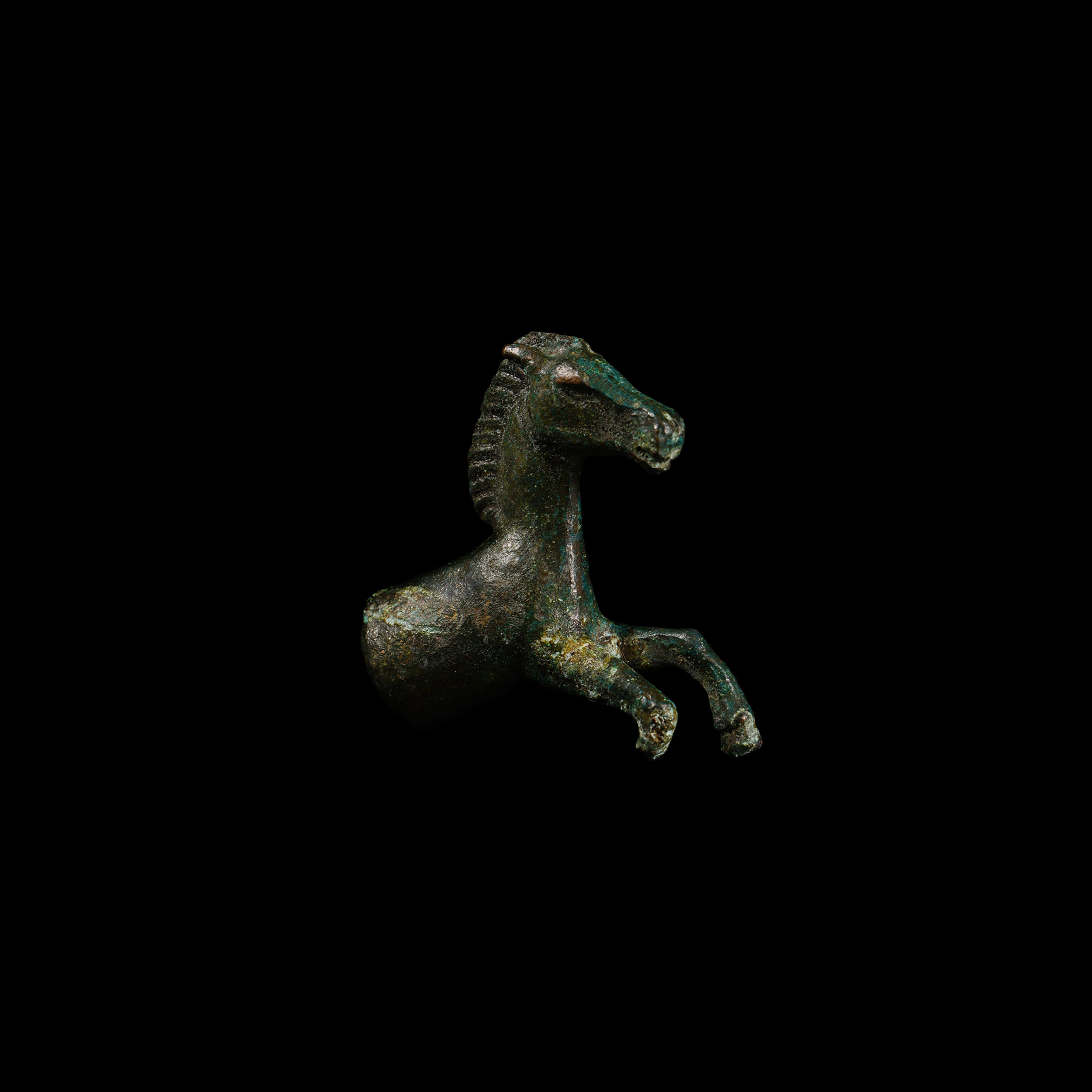
Roman Equine Protome
2ND-4TH CENTURY A.D.
2 1/4 in. (55 grams, 57 mm).
A bronze zoomorphic equine protome formed as the forequarters of a galloping horse, with a round-section body and semi-naturalistic detailing to the head and mane; perforation to the upper edge of the body for attachment.
ProvenanceFound UK.
Acquired in the 1970s, Yorkshire, UK.
Property of a Bedfordshire, UK, gentleman.
See Rolland, H., Bronzes Antiques De Haute Provence, Paris, 1965, items 400-401, for comparable examples.
FootnotesThe bronze equine protome belongs to a well-known category of objects used to fasten caskets or furniture with animal protomes, especially panthers and horses, animals connected to the procession of the god Dionysus.
CONDITIONTimeLine Auctions follows a vetting process to ensure the authenticity and legality of all items, reinforcing our commitment to integrity and responsible trading. Each antiquity, antique, and coin lot undergoes thorough examination by a vetting committee of at least ten external specialists, professional trade association members, scientists, and archaeologists: Our Vetting Process
AUCTIONS:
TimeLine is a leading auction house specialising in antiquities, ancient art, collectables, natural history, coins, medals, and books. Our auctions offer museums, collectors, historians, and enthusiasts the opportunity to acquire unique and historically significant pieces.
-
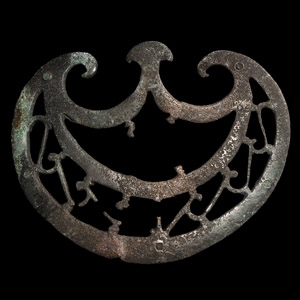
Roman Military Baldric Fitting
3rd century A.D.Sold for (Inc. bp): £72
A copper-alloy military baldric phalera of crescentic form, with scrolled terminals and openwork centre; remains of mounting lugs to reverse. 25.2 grams, 75 mm
Acquired before 2000. From the collection of a European gentleman living in the UK. -
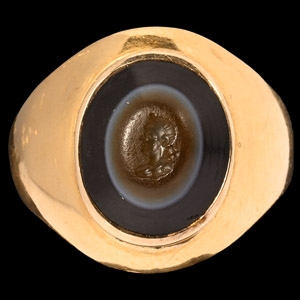
Roman Portrait Gemstone in Gold Ring
2nd-3rd century A.D. and laterSold for (Inc. bp): £1,690
A sardonyx cabochon gemstone with intaglio portrait bust of a male wearing a diadem, possibly Apollo; set in a later gold ring. 12.89 grams, 30.12 mm overall, 22.07 mm internal diameter (approximate size British X, USA 11 1/2, Europe 26.29, Japan 25)
Ex Dr. A.R., Leipzig, 1980-1980s. with Gorny and Mosch, 13 December 2017, lot 424. English private collection. -
.jpg)
Roman Gold Ring with Hermes Gemstone
Late 2nd-early 3rd century A.D.Sold for (Inc. bp): £650
A hollow-formed gold finger ring with inset jasper intaglio of Mercury (Hermes) standing wearing a cloak, holding a caduceus in one hand and a coin-purse in the other. 3.88 grams, 25.81 mm overall, 16.69 mm internal diameter (approximate size British H 1/2, USA 4, Europe 6.81, Japan 6)
Swiss private collection. with Geneve Encheres, Switzerland, 14 December 2017, lot 853. English private collection.
