
Loading, please wait...
LOT 0844
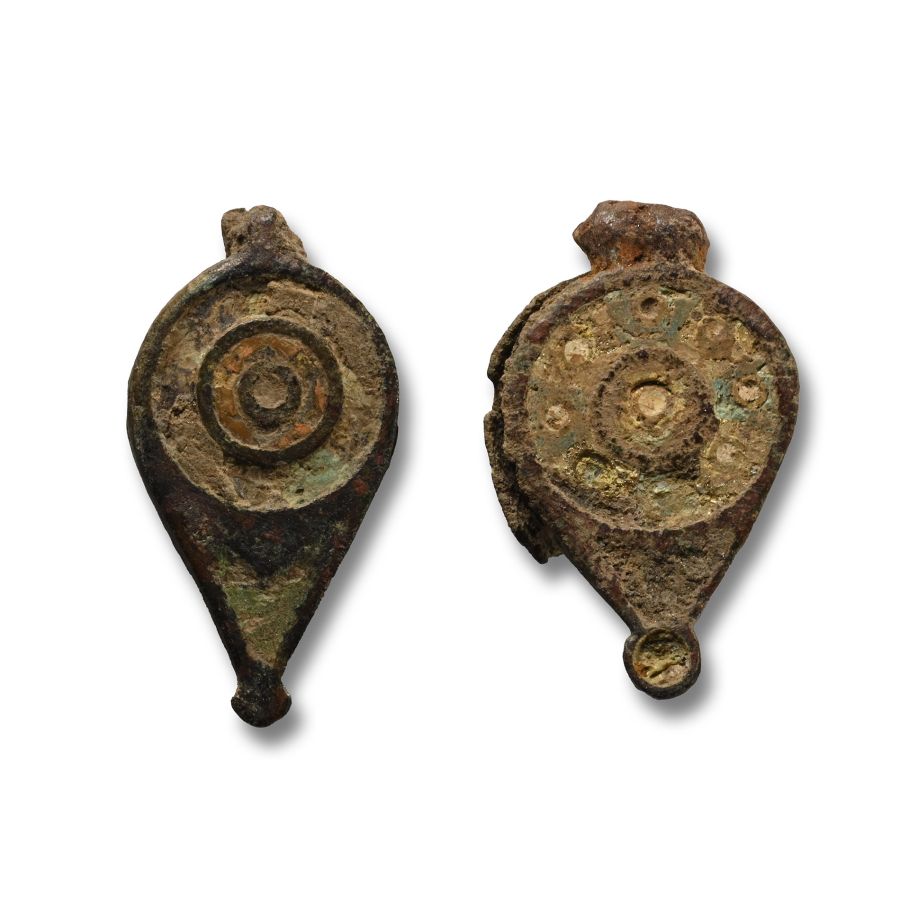
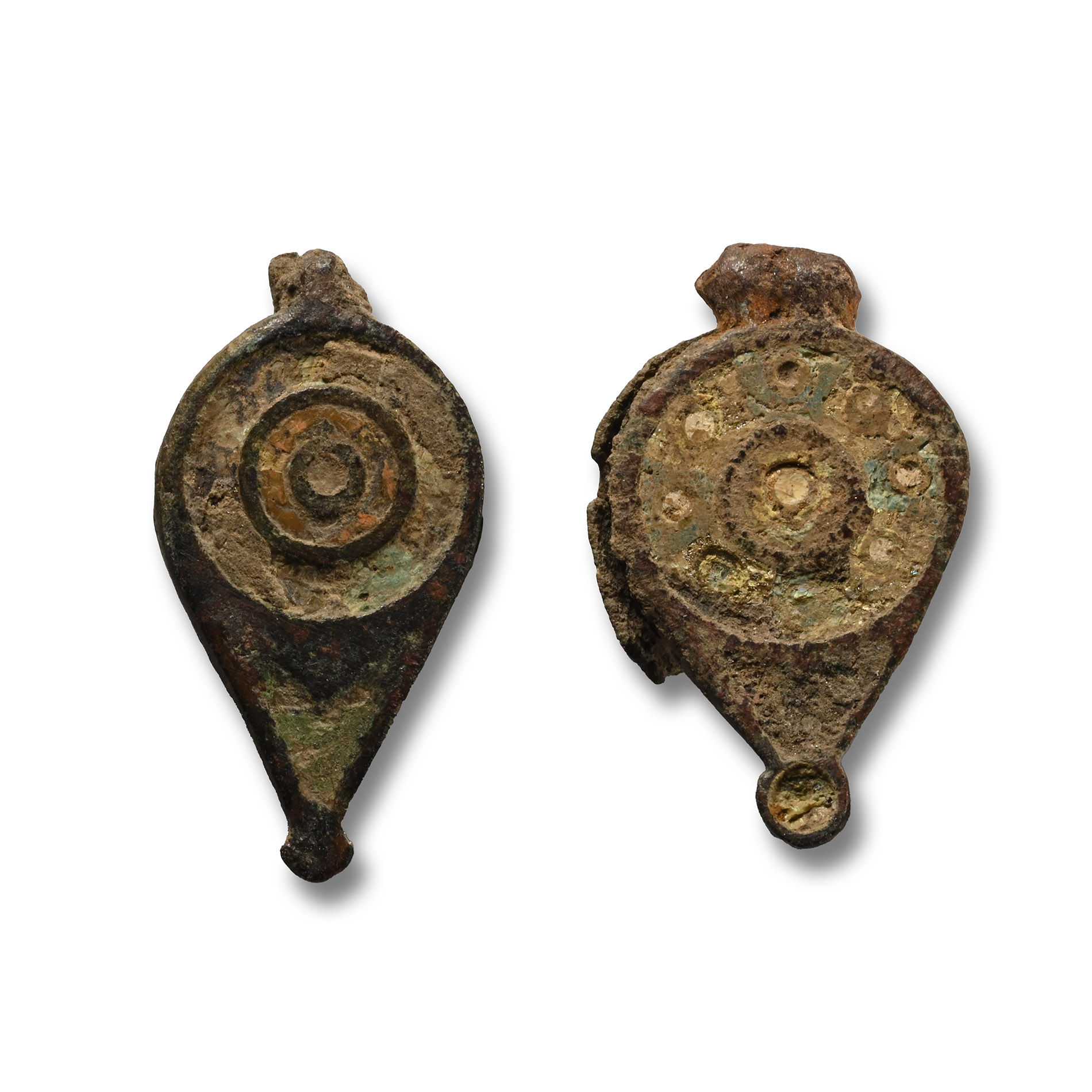
Roman Enamelled Bronze Seal Box Group
2ND CENTURY A.D.
1 1/8 in. (12.7 grams total, 30.4-31.2 mm).
Comprising two piriform boxes with circular lids decorated with concentric cells of enamelling, circular enamelled disc to the tip; holes to the reverse, one fragmentary. [2]
ProvenanceEx German art market, 2000s.
Acquired from an EU collector living in London.
From the collection of Surrey, UK, gentleman.
This lot is accompanied by an illustrated lot declaration signed by the Head of the Antiquities Department, Dr Raffaele D’Amato.
Seal boxes were small hinged boxes, mostly made of bronze. They consisted of a lid, often decorated with enamel inlays, and a perforated recess to accommodate the seal.
CONDITIONTimeLine Auctions follows a vetting process to ensure the authenticity and legality of all items, reinforcing our commitment to integrity and responsible trading. Each antiquity, antique, and coin lot undergoes thorough examination by a vetting committee of at least ten external specialists, professional trade association members, scientists, and archaeologists: Our Vetting Process
AUCTIONS:
TimeLine is a leading auction house specialising in antiquities, ancient art, collectables, natural history, coins, medals, and books. Our auctions offer museums, collectors, historians, and enthusiasts the opportunity to acquire unique and historically significant pieces.
-
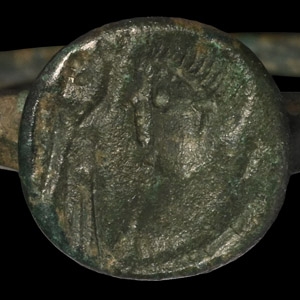
Large Roman Bronze Ring with Bust of Lucinius
3rd century A.D.Sold for (Inc. bp): £195
With cup-bezel, incuse profile bust. 4.45 grams, 26.66 mm overall, 21.00 mm internal diameter (approximate size British T 1/2, USA 9 3/4, Europe 21.89, Japan 21)
Ex German art market, 2000s. Acquired from an EU collector living in London. From the collection of Surrey, UK, gentleman. This lot is accompanied by an illustrated lot declaration signed by the Head of the Antiquities Department, Dr Raffaele D’Amato. -
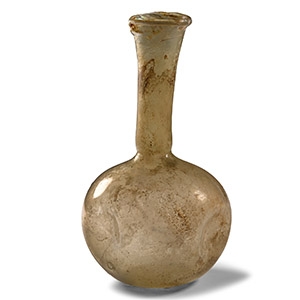
Roman Glass Spherical Bottle
3rd century A.D.Estimate: £400 - 600 (‡+bp*)
Opening Bid: £180
A globular glass vessel with dimple base and five impressed dimples to the equator, tubular neck with flared and rolled rim. 74.5 grams, 15.2 cm
Ex W. Kern, Zurich, 1950s-1970s (d.1980s). Accompanied by a copy of an Art Loss Register certificate no.S00086750. This lot is accompanied by an illustrated lot declaration signed by the Head of the Antiquities Department, Dr Raffaele D’Amato. -
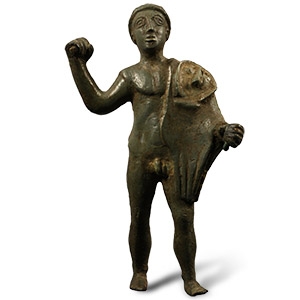
Etrusco-Italic Bronze Figure of Young Hercules
Archaic Style, circa 4th-3rd century B.C.Estimate: £6,000 - 8,000 (‡+bp*)
Opening Bid: £3,000
Modelled in the round figure standing in advancing pose with the right hand raised and fist clenched; left shoulder and arm covered with the skin of the Nemean lion and left hand modelled hollow; hair cut short and textured. 307 grams, 12cm
Acquired in the mid 1980s-1990s. Private collection, Switzerland, thence by descent. Private collection, since the late 1990s. Accompanied by an academic report by Dr Raffaele D'Amato. This lot has been checked against the Interpol Database of stolen works of art and is accompanied by a search certificate number no.12515-232159. This lot has been cleared against the Art Loss Register database, and is accompanied by an illustrated lot declaration signed by the Head of the Antiquities Department, Dr Raffaele D’Amato.
