
Loading, please wait...
LOT 0963
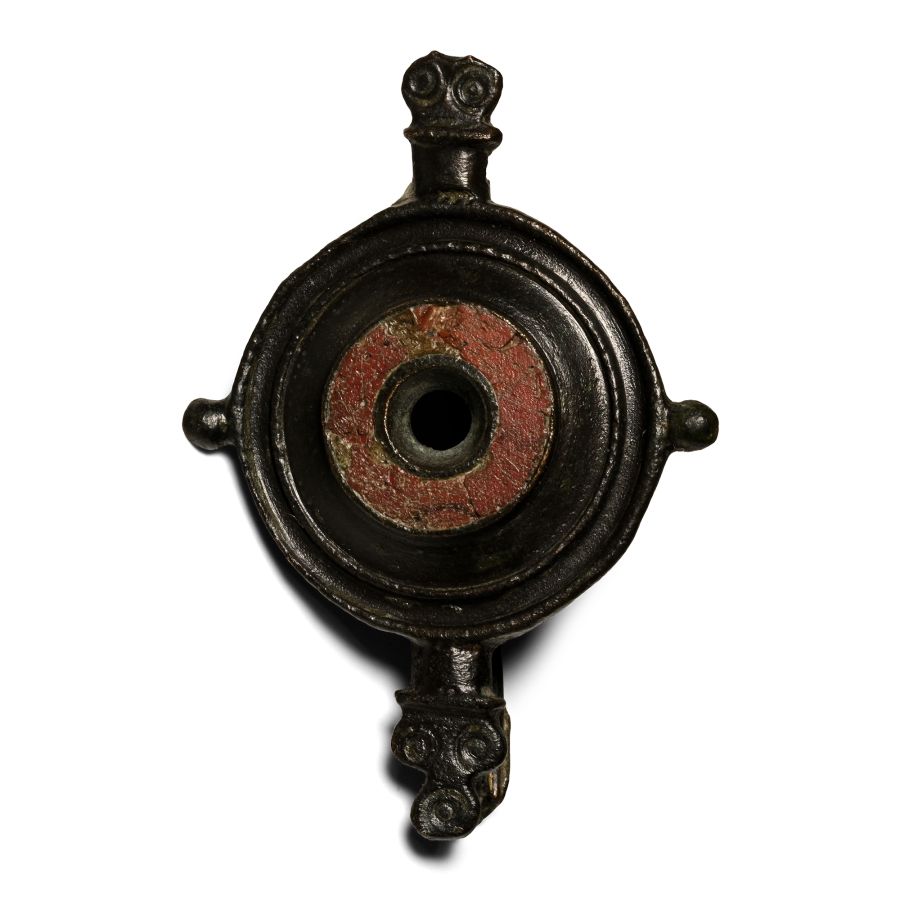
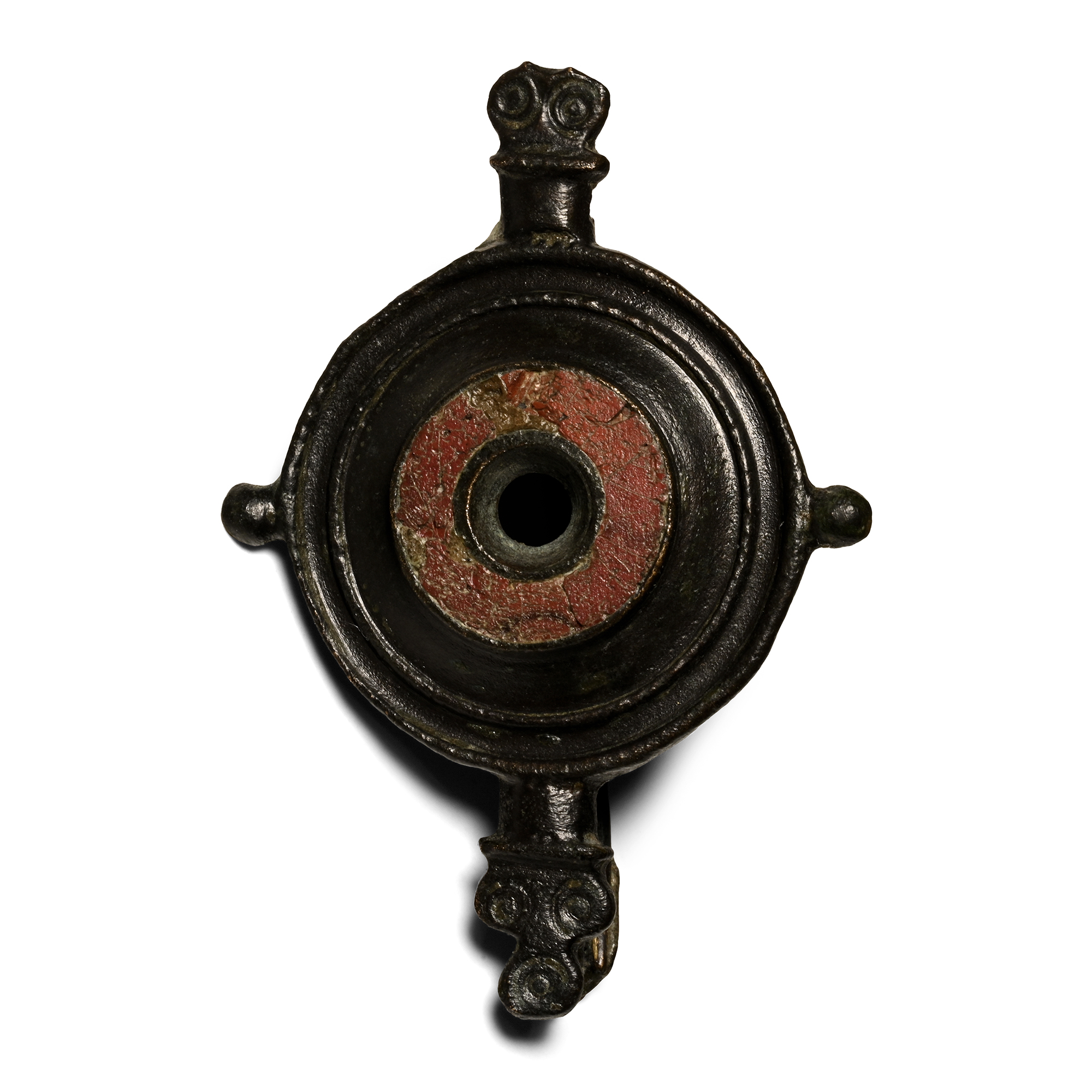
Roman Enamelled Bronze Plate Brooch
CIRCA 2ND CENTURY A.D.
1 3/4 in. (7.68 grams, 46 mm).
Comprising a stepped disc with carination and enamelled ring and socket to accept a stud (absent), lateral spurs; above and below a short arm with trefoil finial; pin-lugs, pin and catch to reverse.
ProvenanceEx German art market, 2000s.
Acquired from an EU collector living in London.
From the collection of a Surrey, UK, gentleman.
Cf. Hattatt, R., Iron Age and Roman Brooches, Oxford, 1985, item 538, for type.
CONDITIONTimeLine Auctions follows a vetting process to ensure the authenticity and legality of all items, reinforcing our commitment to integrity and responsible trading. Each antiquity, antique, and coin lot undergoes thorough examination by a vetting committee of at least ten external specialists, professional trade association members, scientists, and archaeologists: Our Vetting Process
AUCTIONS:
TimeLine is a leading auction house specialising in antiquities, ancient art, collectables, natural history, coins, medals, and books. Our auctions offer museums, collectors, historians, and enthusiasts the opportunity to acquire unique and historically significant pieces.
-
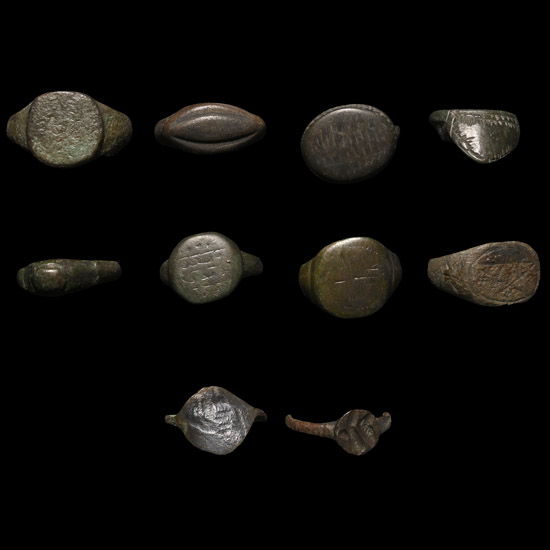
Roman to Medieval Bronze Ring Collection
1st-16th century A.D.Sold for (Inc. bp): £169
Mixed group of rings, including an archer's ring and a ring with a cross motif. 49 grams, 18-25.6 mm
Ex German art market, 2000s. Acquired from an EU collector living in London. From the collection of a Surrey, UK, gentleman. -
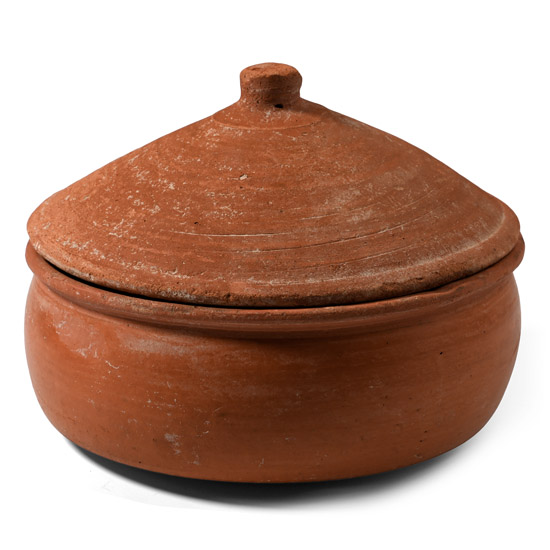
Roman Red Ware Lidded Bowl
Circa 3rd-4th century A.D.Sold for (Inc. bp): £208
Squat ceramic bowl with slightly domed base, rounded rim; domed lid with knop handle to apex. 845 grams total, lid: 17.3 cm wide
From the private collection of Mr Brian Edwards, New Malden, Surrey, UK, formed from the late 1970s-early 1980s; thence by descent, with collector's reference no.A34. -
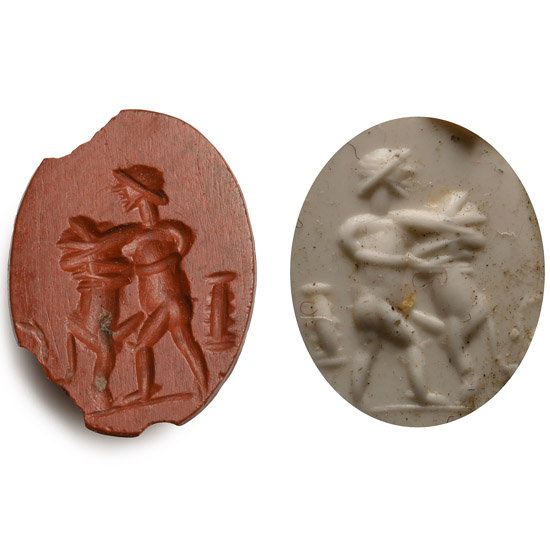
Roman Red Jasper Gemstone with Gladiator Fighting a Lion
2nd-3rd century A.D.Sold for (Inc. bp): £208
With intaglio scene of a gladiator fighting a lion; supplied with a museum-quality impression. 0.69 grams, 14.25 mm
From the private collection of a European gentleman (1942-2024), formed since the 1970s.
