
Loading, please wait...

LOT 0714
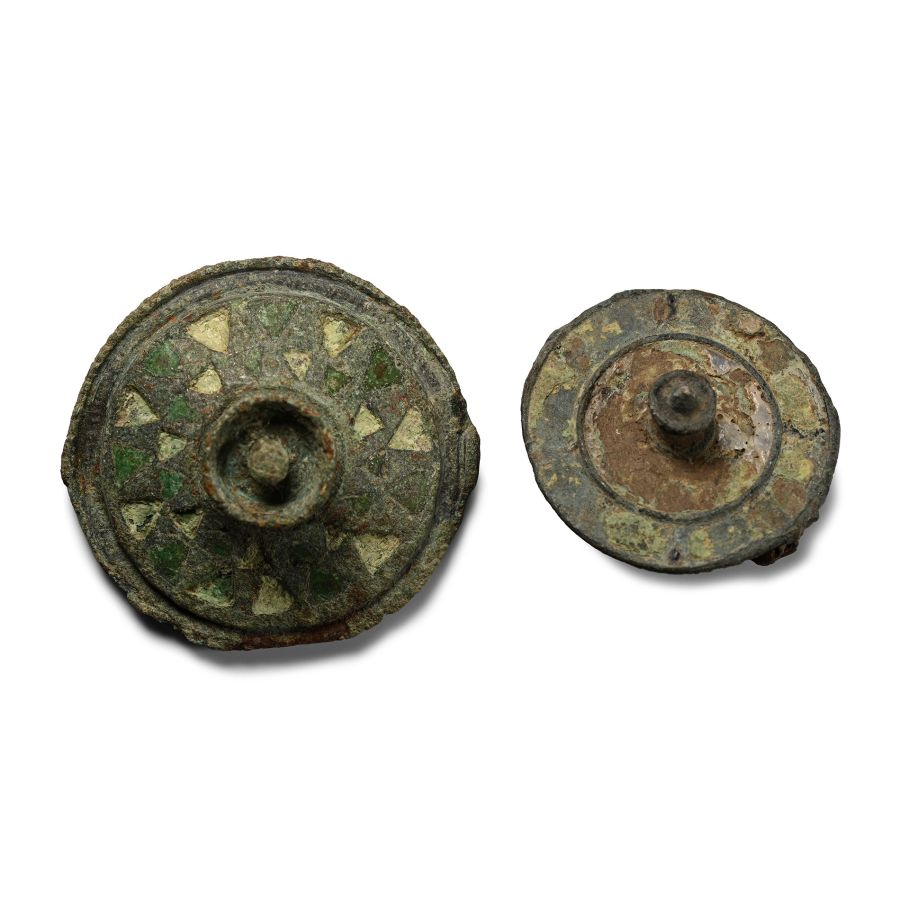
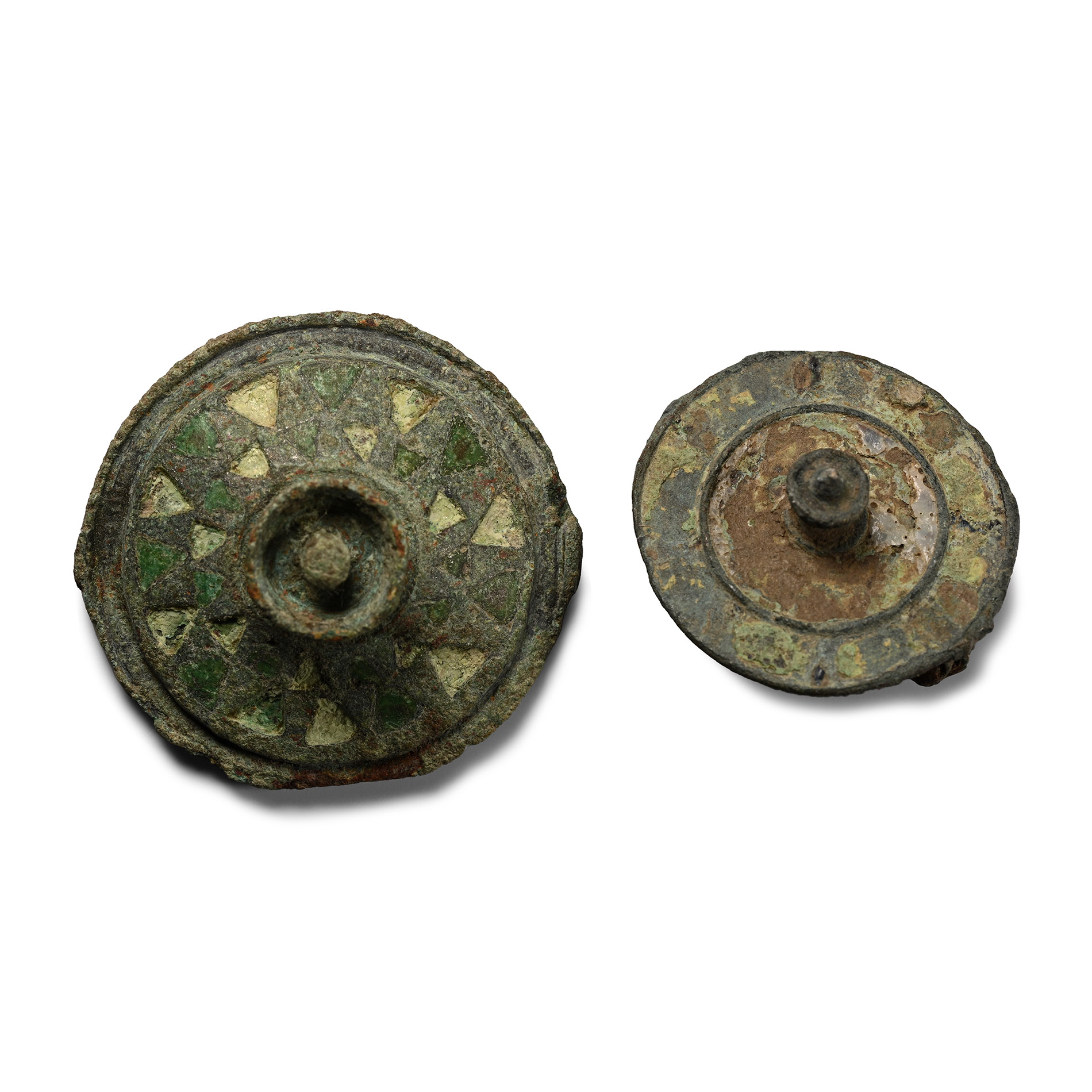
Roman Enamelled Bronze Plate Brooch Group
2ND CENTURY A.D.
1 1/8 - 1 3/8 in. (20.45 grams total, 27-34 mm).
Comprising: discoid type with central trumpet-shaped stud, enamelled cells, pin and catch to reverse; conical type with carinated rim, central stud, triangular cells for enamel inlay. [2]
ProvenanceAcquired on the London art market in the late 1980s-1990s.
From the family collection of an East London, UK, gentleman.
This lot is accompanied by an illustrated lot declaration signed by the Head of the Antiquities Department, Dr Raffaele D’Amato.
Cf.Hattatt, R., Brooches of Antiquity, Oxford, 1987, items 1039, 1069, for type.
CONDITIONTimeLine Auctions follows a vetting process to ensure the authenticity and legality of all items, reinforcing our commitment to integrity and responsible trading. Each antiquity, antique, and coin lot undergoes thorough examination by a vetting committee of at least ten external specialists, professional trade association members, scientists, and archaeologists: Our Vetting Process
AUCTIONS:
TimeLine is a leading auction house specialising in antiquities, ancient art, collectables, natural history, coins, medals, and books. Our auctions offer museums, collectors, historians, and enthusiasts the opportunity to acquire unique and historically significant pieces.
LOT 0714
Roman Enamelled Bronze Plate Brooch Group
Estimate £100 - 140€120 - 160 (for guidance only)$140 - 190 (for guidance only)
-
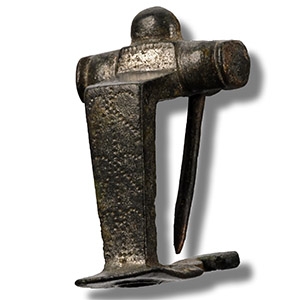
Romano-British Decorated Bronze Knee Brooch
2nd century A.D.Sold for (Inc. bp): £59
Comprising a chord housed with a horizontal sleeve with median lug above and pin to the rear; right-angled bow with pointillé detailing, perpendicular lower end and square foot with concentric rings to underside, hooked catch to reverse. 17 grams, 35 mm
Found near Gloucester, UK, in the 1970s. Acquired from Spinks, The Shambles, York, 2011. Ian Wilkinson collection, Nottinghamshire, UK, formed since 1985. Accompanied by an old handwritten dealer's ticket. This lot is accompanied by an illustrated lot declaration signed by the Head of the Antiquities Department, Dr Raffaele D’Amato. -

Roman Lead Dice Group
1st-2nd century A.D.Sold for (Inc. bp): £85
Roughly cuboid in form with traces of impressed dot markings, surface accretion. 42 grams total, 10-13 mm
From the private collection of Colin Narbeth, UK, 1990s, with collection reference no.75? This lot is accompanied by an illustrated lot declaration signed by the Head of the Antiquities Department, Dr Raffaele D’Amato. -
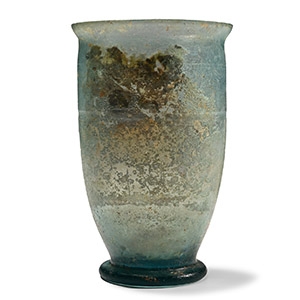
Roman Glass Goblet with Cut Design
Circa 100-300 A.D.Estimate: £700 - 900 (+bp*)
Opening Bid: £350
Translucent with straight sides narrowing to the dimpled base, flared and rolled rim, the body decorated with two horizontal ribbed lines. 104 grams, 10.5 cm
Swiss private collection, Basel. Before that in a Swiss private collection, Bern. Previously with Sayd & Fayez Barakat & Sons, Bethlehem and Jerusalem. Accompanied by a certificate of authenticity from Shaher Barakat, Jerusalem. This lot is accompanied by an illustrated lot declaration signed by the Head of the Antiquities Department, Dr Raffaele D’Amato.
The Hebrew word 'zekhukhith' (glass) appeared in the Old Testament, but it was frequently used in the Mishnaic Hebrew and in correlation with the Aramaic 'zegugita'. In the Talmudic times white and coloured, transparent glasses were very valuable. This magnificent goblet was found on Mons Scopus, in Jerusalem and it shows the skill and the capacity of the Roman glass blowers of the time. After the establishment and unification of the Roman Empire under Augustus (27 B.C.), glass manufacturing quickly travelled throughout the Empire, and with the ease of production, glass entered the same sphere of use and popularity as metal and clay vessels.
