
Loading, please wait...
LOT 0913
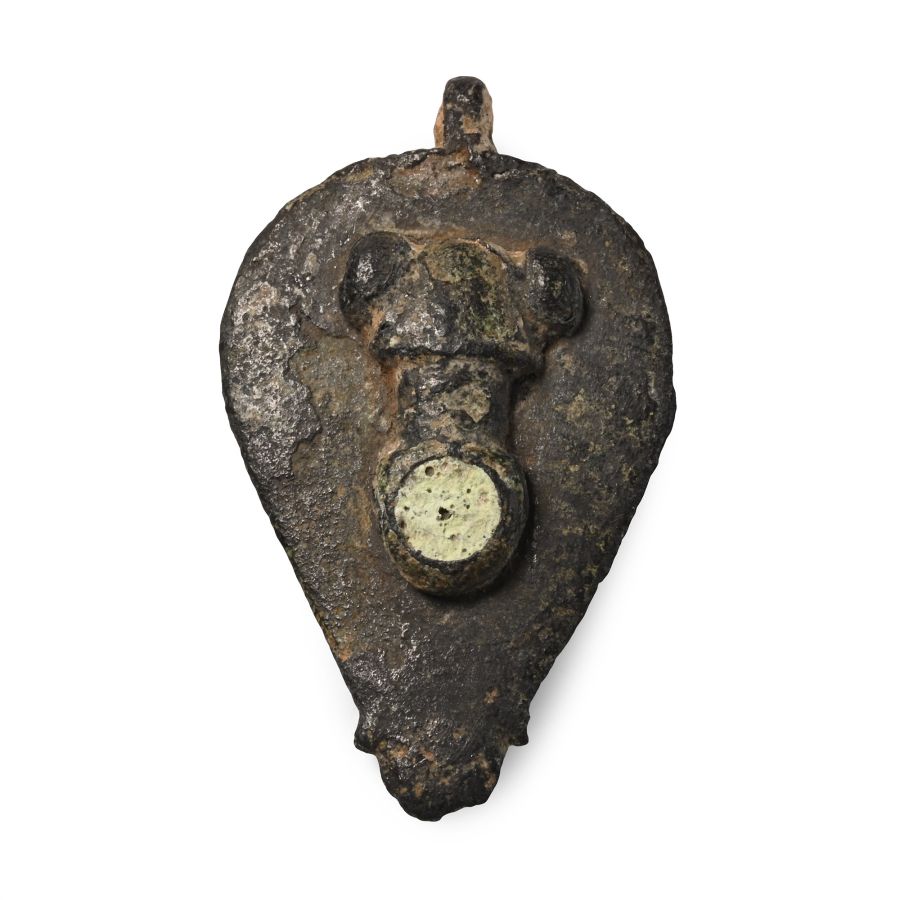
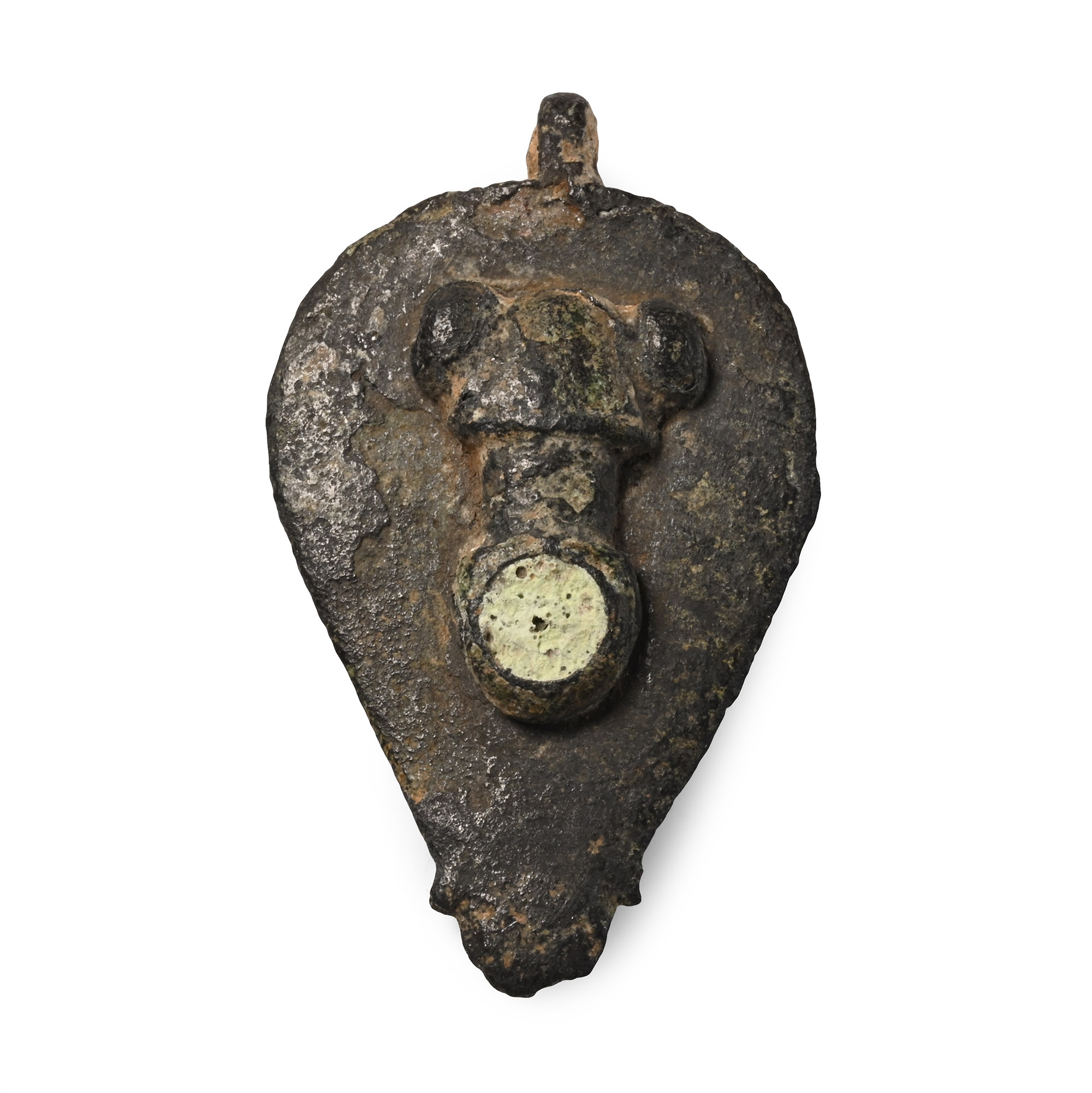
Roman Enamelled Bronze Phallic Seal Box Lid
CIRCA 2ND CENTURY A.D.
1 1/2 in. (6.16 grams, 38 mm).
Teardrop-shaped in plan with a low-relief phallic motif, glans hollow to accept enamel.
ProvenanceEx London, UK, gentleman's collection, 1990s.
CONDITIONTimeLine Auctions follows a vetting process to ensure the authenticity and legality of all items, reinforcing our commitment to integrity and responsible trading. Each antiquity, antique, and coin lot undergoes thorough examination by a vetting committee of at least ten external specialists, professional trade association members, scientists, and archaeologists: Our Vetting Process
AUCTIONS:
TimeLine is a leading auction house specialising in antiquities, ancient art, collectables, natural history, coins, medals, and books. Our auctions offer museums, collectors, historians, and enthusiasts the opportunity to acquire unique and historically significant pieces.
LOT 0913
Roman Enamelled Bronze Phallic Seal Box Lid
Estimate £100 - 140€120 - 160 (for guidance only)$140 - 190 (for guidance only)
-
.jpg)
Roman Agate Gemstone with Minerva Holding Nike in Gold Ring
2nd century A.D.Sold for (Inc. bp): £1,300
Intaglio image of Minerva standing on a baseline holding spear and shield, supporting a victoriola in her extended hand; set into a later gold ring; supplied with a museum-quality impression. 7.59 grams, 27.22 mm overall, 18.18 mm internal diameter (approximate size British P, USA 7 1/2, Europe 16.23, Japan 15)
Private collection, Europe. Acquired on the English art market.
The specimen of agate used by the engraver was undoubtedly used for its apotropaic ‘eye’ like qualities, which were used as amulets for protection against the evil eye. -
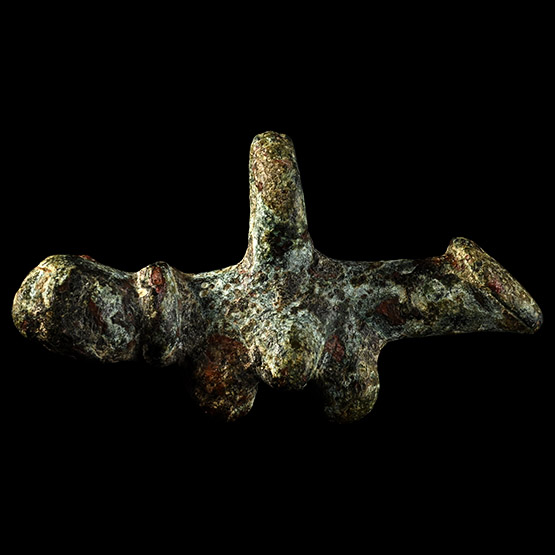
Roman Bronze Phallic Pendant
1st-3rd century A.D.Estimate: £300 - 400 (+bp*)
Opening Bid: £150
Modelled in the round pendant with male genitals flanked by a phallus and a hand in the fica gesture. 19.4 grams, 44 mm
UK private collection before 2000. Acquired on the UK art market. Private collection, London, UK. -
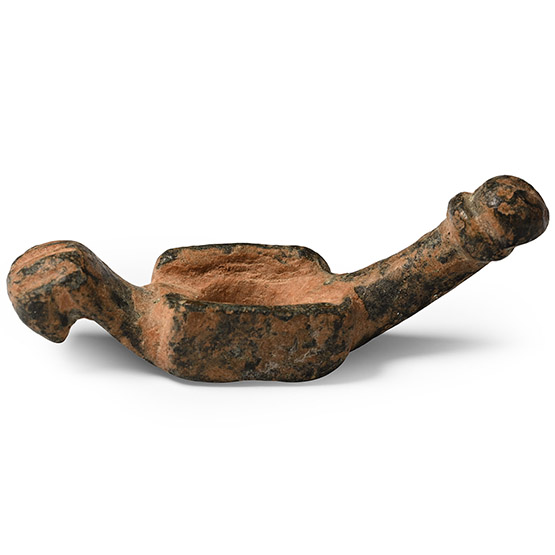
Roman Bronze Phallic Dagger Quillon or Pendant
1st-2nd century A.D.Sold for (Inc. bp): £65
With a rectangular plaque with central void, phallus to one short edge and a stylised fist to the other. 25.5 grams, 55 mm
Acquired 1980-2015. Ex Abelita family collection.
In the Roman world the phallus was symbol of luck or fertility, and it as well was believed to have apotropaic functions. Pendants, amulets and small objects were worn by all sorts of people as symbols of protection, especially from young children according to Varro and Pliny the Elder. The phallus is commonly found on reliefs, frescoes and lamps from the Graeco-Roman world. This object can have been the quillon of a small dagger, but also hung as a charm from a tintinnabulum, a wind chime adorned with bells and intended to ward off evil.
