
Loading, please wait...
LOT 0594
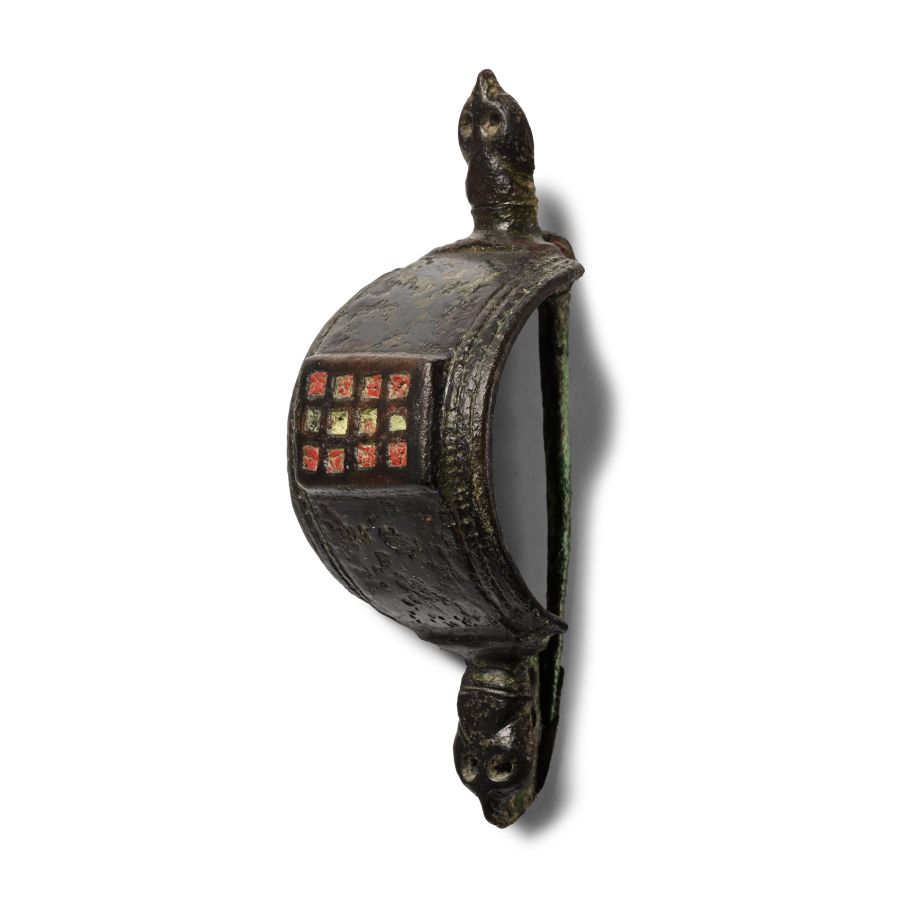
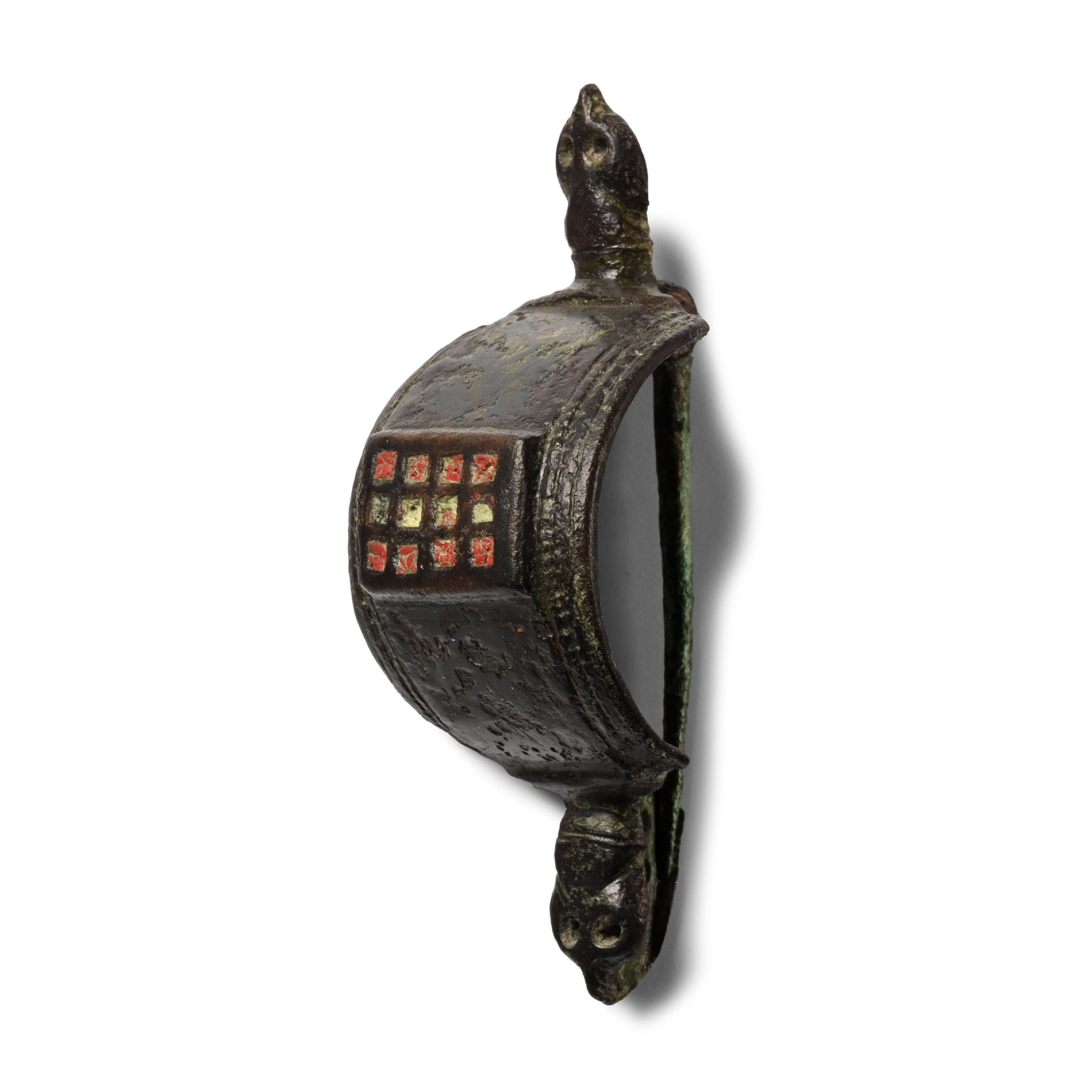
Roman Enamelled Bronze Equal-Arm Brooch
2ND CENTURY A.D.
2 1/2 in. (28.7 grams, 63 mm).
Comprising a wide flat-section bow with a raised enamelled grid to the top, notched edges, stylised beast head foot to each side; hinged pin and pierced catchplate to the reverse.
ProvenanceEx German art market, 2000s.
Acquired from an EU collector living in London.
From the collection of Surrey, UK, gentleman.
This lot is accompanied by an illustrated lot declaration signed by the Head of the Antiquities Department, Dr Raffaele D’Amato.
TimeLine Auctions follows a vetting process to ensure the authenticity and legality of all items, reinforcing our commitment to integrity and responsible trading. Each antiquity, antique, and coin lot undergoes thorough examination by a vetting committee of at least ten external specialists, professional trade association members, scientists, and archaeologists: Our Vetting Process
AUCTIONS:
TimeLine is a leading auction house specialising in antiquities, ancient art, collectables, natural history, coins, medals, and books. Our auctions offer museums, collectors, historians, and enthusiasts the opportunity to acquire unique and historically significant pieces.
-

Roman Bronze Statuette of Mars on Original Plinth
2nd-3rd century A.D.Sold for (Inc. bp): £572
Figurine of Mars finely modelled as a mature bearded male figure and clothed in a tunic and muscled cuirass (thorax statos); the right arm raised to strike with a weapon (absent) and the left, extended forward from the body, would have held a shield (absent); Pseudo-Corinthian helmet with a large double crest; the muscled cuirass worn over a padded garment (subarmalis) with two ranges of plates (pteryges); the legs bare; mounted on an integral socle base with stub feet; old collector's label stating 'Found at the site of a Roman Commandant's building, Roman fort near Munich. Bronze military votive altar statuette.' and 'Roman votive statuette of Mrs God of war on Orig plinth / found at fort site Munich, nr Commandant's building. Buried actual piece.'. 49.3 grams, 84 mm
Found Munich, Germany. Acquired from Brigantia Antiques, York, UK, circa 2007. Ian Wilkinson collection, Nottinghamshire, UK, formed since 1985. Accompanied by two old handwritten dealer's tickets. This lot is accompanied by an illustrated lot declaration signed by the Head of the Antiquities Department, Dr Raffaele D’Amato. -
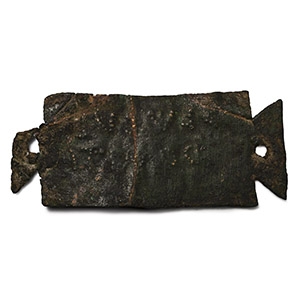
Roman Bronze Inscribed Tabula Ansata
1st-2nd century A.D.Sold for (Inc. bp): £416
A votive tablet with pierced dovetail handles, faint pointillé inscription in two lines, presumably the name of the dedicator. 4.75 grams, 62 mm
Acquired 1970-1999. London collection of the late Mr S.M., thence by descent. This lot is accompanied by an illustrated lot declaration signed by the Head of the Antiquities Department, Dr Raffaele D’Amato. -
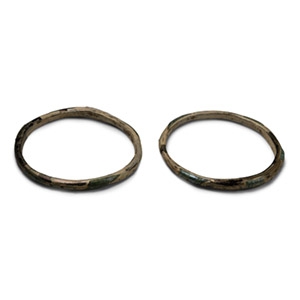
Roman Iridescent Glass Bangle Pair
3rd-4th century A.D.Sold for (Inc. bp): £85
Each a slender D-section hoop with some iridescent surface. 10.3 grams total, 60 mm each
From an old English collection. Acquired from Helios Gallery in 2011. Ian Wilkinson collection, Nottinghamshire, UK, formed since 1985. This lot is accompanied by an illustrated lot declaration signed by the Head of the Antiquities Department, Dr Raffaele D’Amato.
The mass production of glass in ancient Rome prompted the development of glass jewellery of unique qualities. The ancient Romans considered jewellery to be an essential accessory, being a public display of the wealth of high social classes. Recent excavations have provided better information on the use of glass for necklaces and bracelets, and in some cases it has been possible to understand the exact arrangement of the jewellery.
