
Loading, please wait...
LOT 0639
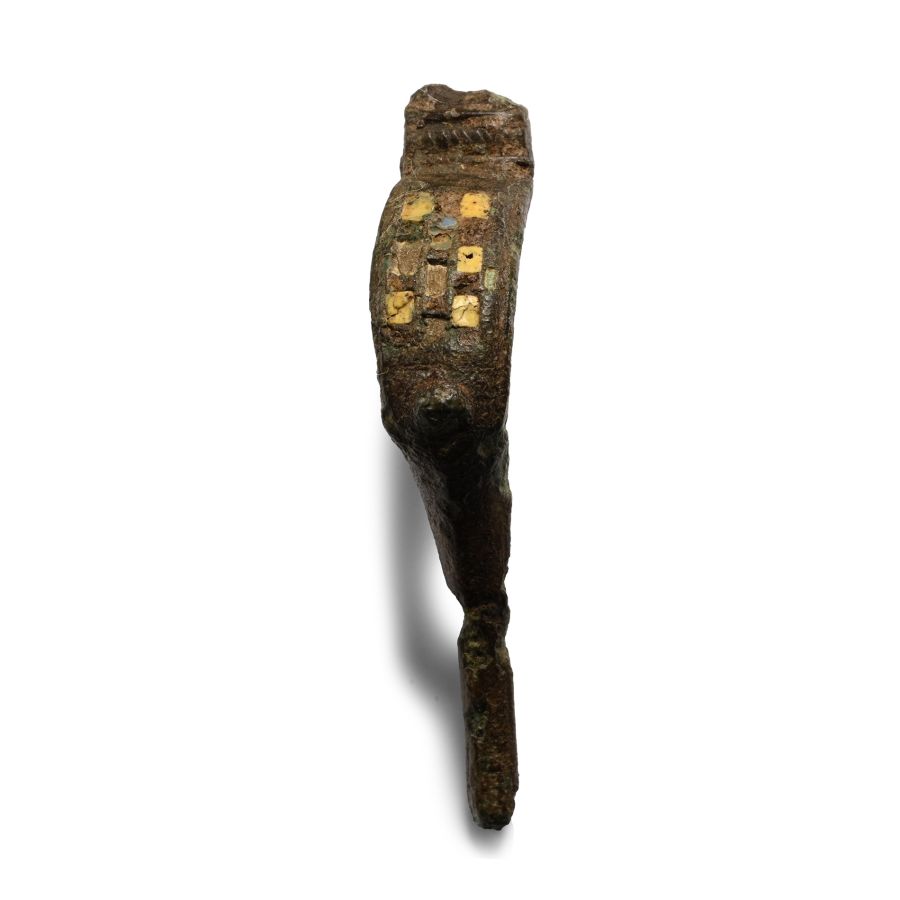
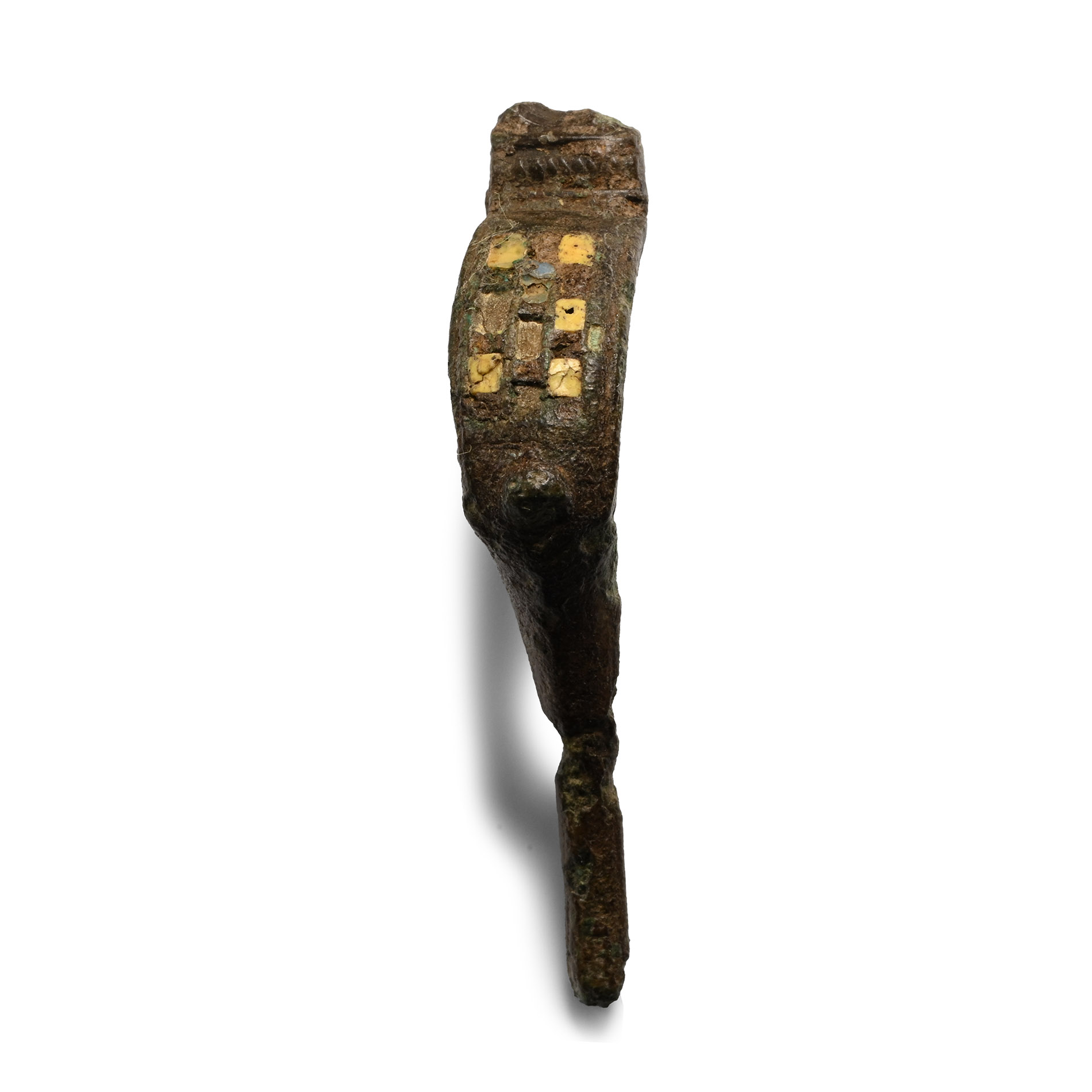
Roman Enamelled Bronze Brooch
2ND CENTURY A.D.
2 1/8 in. (13.09 grams, 54 mm).
Of Wirral type, the bow with three raised vertical panels with alternating enamelled cells in each panel, central panel with some blue enamel, the side panels with yellow enamel; rounded foot; pin and hinge absent. [No Reserve]
ProvenanceFound Thornton, Sefton, Merseyside, UK, in 2014.
Accompanied by a copy of the British Museum's Portable Antiquities Scheme (PAS) report no.LVPL-BFF3DB.
This lot is accompanied by an illustrated lot declaration signed by the Head of the Antiquities Department, Dr Raffaele D’Amato.
The Wirral brooch is thought to have been derived from the trumpet brooch, and is called such as the earliest discovery of this type was from the Wirral. It is now thought that the main, and possibly only, production site was based in Wirral.
CONDITIONTimeLine Auctions follows a vetting process to ensure the authenticity and legality of all items, reinforcing our commitment to integrity and responsible trading. Each antiquity, antique, and coin lot undergoes thorough examination by a vetting committee of at least ten external specialists, professional trade association members, scientists, and archaeologists: Our Vetting Process
AUCTIONS:
TimeLine is a leading auction house specialising in antiquities, ancient art, collectables, natural history, coins, medals, and books. Our auctions offer museums, collectors, historians, and enthusiasts the opportunity to acquire unique and historically significant pieces.
-
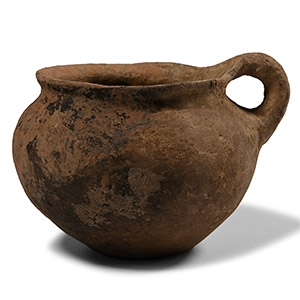
Roman Terracotta Single-Handled Jug
1st-4th century A.D.Sold for (Inc. bp): £65
With a squat bulbous body and flat base, everted rim and strap handle to the rear. 226 grams, 11.7 cm
Ex collection of a late London collector, 1989 onwards. This lot is accompanied by an illustrated lot declaration signed by the Head of the Antiquities Department, Dr Raffaele D’Amato. -
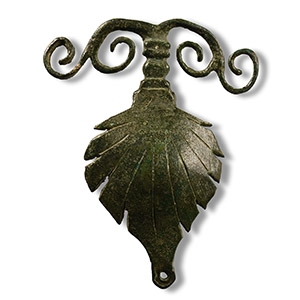
Roman Bronze Military Mount From a Pompeii Gladius Scabbard
1st century A.D.Sold for (Inc. bp): £130
Comprising a domed vine-leaf with notched edge and incised veins, finial with lateral scrolled tendrils; pierced for attachment. 6.12 grams, 50 mm
Acquired on the London art market in the late 1980s-1990s. From the family collection of an East London, UK, gentleman. This lot is accompanied by an illustrated lot declaration signed by the Head of the Antiquities Department, Dr Raffaele D’Amato.
The sword of Pompeii typology was the main side weapon of the Roman legionary from the second half of the 1st century A.D. until the end of the 2nd century A.D. In the Flavian Age, the scabbard was decorated with various bronze appliques: openwork decorated copper-alloy plates and chape, and over the chape, this distinctive bronze foliage mount, used only for these typologies of scabbards. -
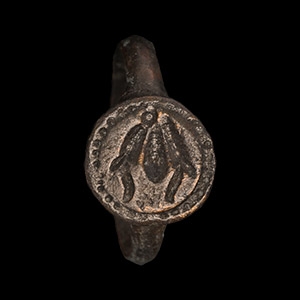
Roman Bronze Ring with Insect
3rd century A.D.Sold for (Inc. bp): £117
D-section hoop and discoid bezel with pelletted border enclosing a fly. 5.83 grams, 24.49 mm overall, 19.94 mm internal diameter (approximate size British R 1/2, USA 8 3/4, Europe 19.38, Japan 18)
Acquired on the London art market in the late 1980s-1990s. From the family collection of an East London, UK, gentleman. This lot is accompanied by an illustrated lot declaration signed by the Head of the Antiquities Department, Dr Raffaele D’Amato.
