
Loading, please wait...
LOT 0784
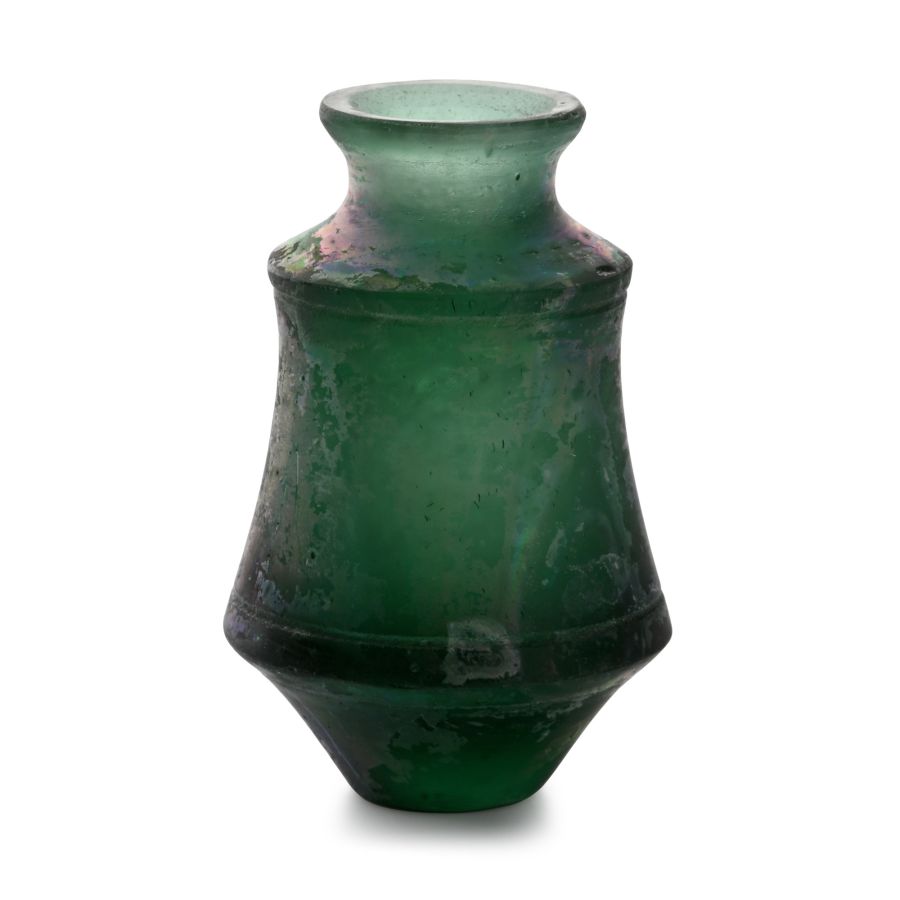
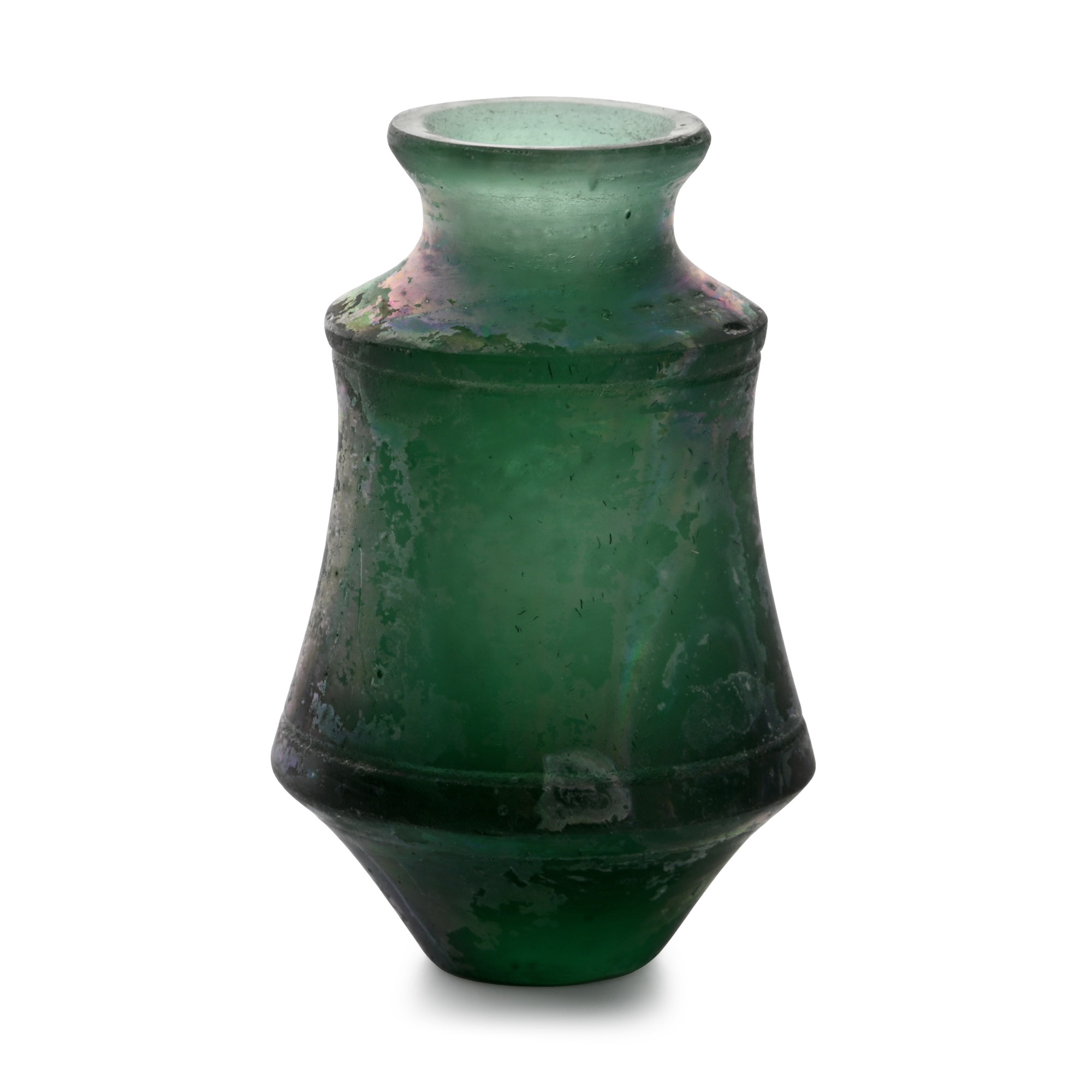
Roman Emerald Green Glass Vessel
1ST-3RD CENTURY A.D.
1 1/2 in. (19.2 grams, 39 mm).
Miniature bell-shaped flask with carinated foot and shoulder, everted rim.,
ProvenanceEx Mayfair, London, UK, gallery, 1990s-2000s.
From an important collection of glass, the property of a London gentleman.
This lot is accompanied by an illustrated lot declaration signed by the Head of the Antiquities Department, Dr Raffaele D'Amato.
TimeLine Auctions follows a vetting process to ensure the authenticity and legality of all items, reinforcing our commitment to integrity and responsible trading. Each antiquity, antique, and coin lot undergoes thorough examination by a vetting committee of at least ten external specialists, professional trade association members, scientists, and archaeologists: Our Vetting Process
AUCTIONS:
TimeLine is a leading auction house specialising in antiquities, ancient art, collectables, natural history, coins, medals, and books. Our auctions offer museums, collectors, historians, and enthusiasts the opportunity to acquire unique and historically significant pieces.
LOT 0784
Roman Emerald Green Glass Vessel
Estimate £400 - 600€460 - 700 (for guidance only)$540 - 810 (for guidance only)
-
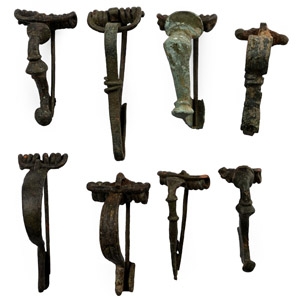
Roman Bronze Bow Brooch Collection
1st century-3rd century A.D.Sold for (Inc. bp): £176
Mainly Colchester-type and trumpet types. 45 grams total, 32-47 mm
From an English collection formed before 2000. This lot is accompanied by an illustrated lot declaration signed by the Head of the Antiquities Department, Dr Raffaele D'Amato. -
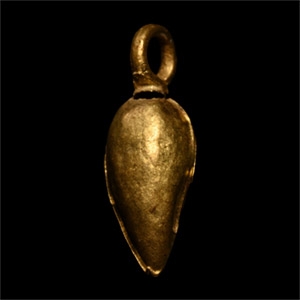
Roman Gold Teardrop Pendant
1st-4th century A.D.Sold for (Inc. bp): £234
A delicate pendant formed from sheet-gold with a loop above. 0.13 grams, 10 mm
From the collection of a late Japanese collector, 1970s. This lot is accompanied by an illustrated lot declaration signed by the Head of the Antiquities Department, Dr Raffaele D'Amato. -
.jpg)
Large Roman Green Glass Flask with Iridescence
2nd-3rd century A.D.Estimate: £5,000 - 7,000 (+bp*)
Opening Bid: £1,667
Thick conical body with short tubular neck, everted rim with bevelled lip, neck decorated with horizontally incised bands; some iridescence. 964 grams, 28.7 cm
From the Xavier Guerrand-Hermès private collection. with Artcurial, Paris, 25 March 2014, no.39. Private collection, London, UK. This lot has been checked against the Interpol Database of stolen works of art and is accompanied by a search certificate number no.12829-241333. This lot has been cleared against the Art Loss Register database, and is accompanied by an illustrated lot declaration signed by the Head of the Antiquities Department, Dr Raffaele D'Amato.
