
Loading, please wait...
LOT 0738
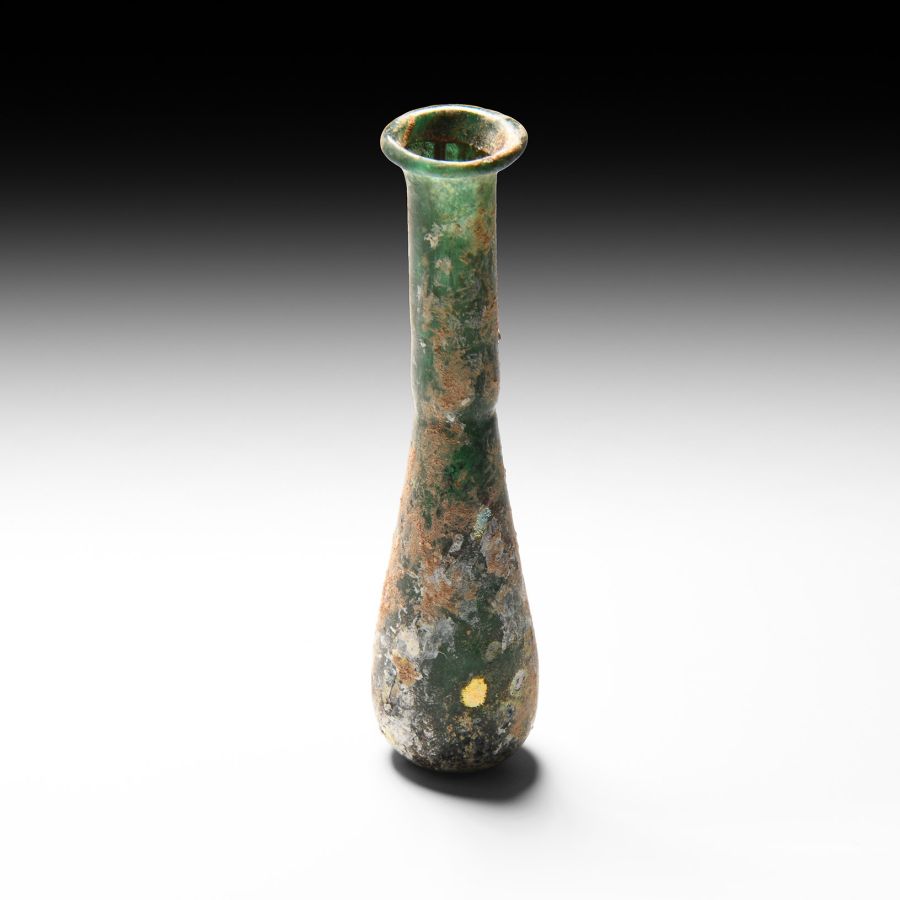
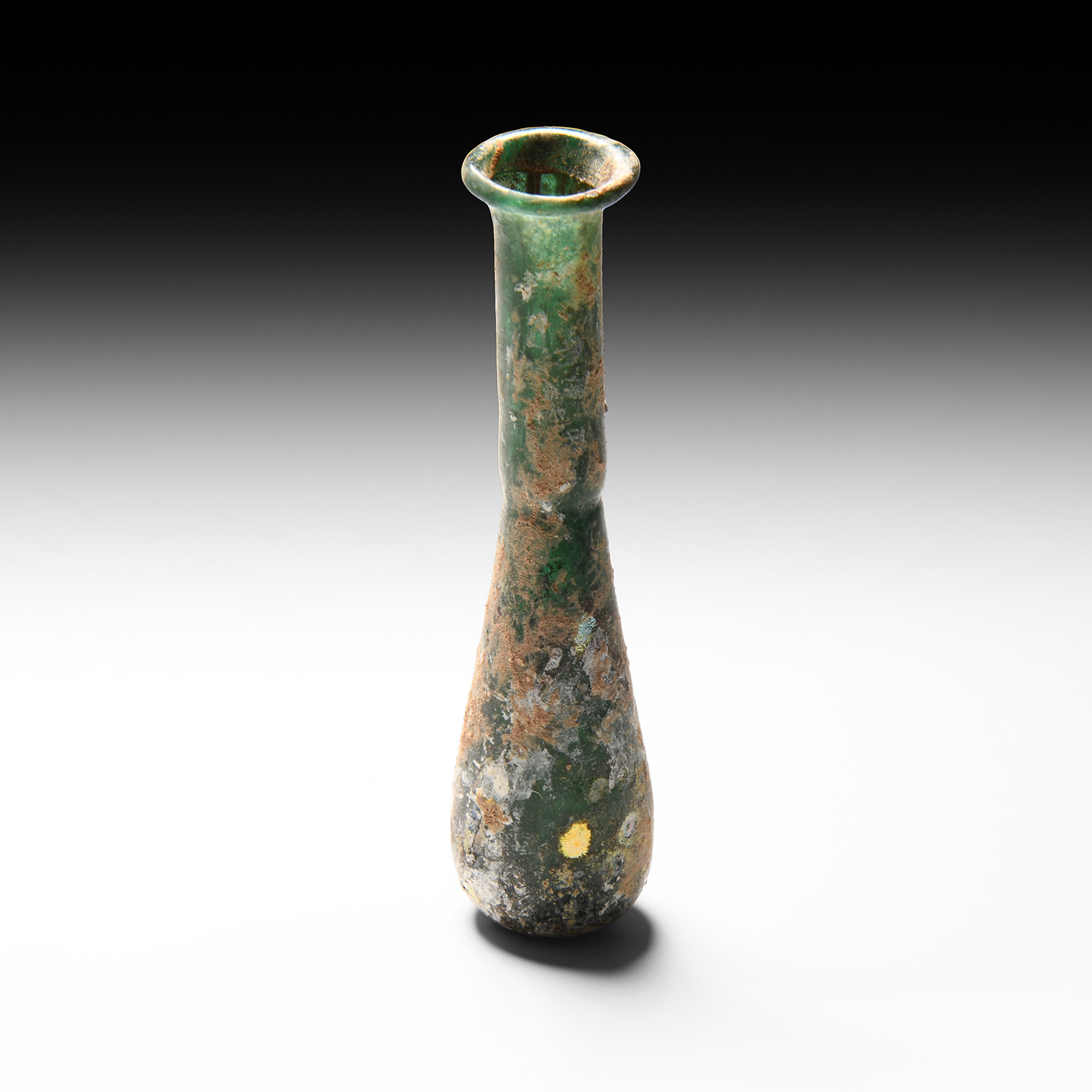
Roman Emerald Green Glass Unguentarium
2ND CENTURY A.D.
4 in. (21.3 grams, 10.1 cm).
An emerald green glass unguentarium with a slender piriform body and tubular neck with rolled rim; iridescent surfaces.
ProvenanceAcquired 1980-2015.
Ex Abelita family collection.
TimeLine Auctions follows a vetting process to ensure the authenticity and legality of all items, reinforcing our commitment to integrity and responsible trading. Each antiquity, antique, and coin lot undergoes thorough examination by a vetting committee of at least ten external specialists, professional trade association members, scientists, and archaeologists: Our Vetting Process
AUCTIONS:
TimeLine is a leading auction house specialising in antiquities, ancient art, collectables, natural history, coins, medals, and books. Our auctions offer museums, collectors, historians, and enthusiasts the opportunity to acquire unique and historically significant pieces.
-
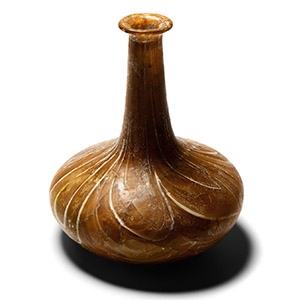
Roman Amber Marbled Glass Vase
4th century A.D.Estimate: £800 - 1,000 (‡+bp*)
Opening Bid: £200
A toffee-coloured glass vase of squat carinated form, slender tapering neck with everted rim, decorative white marbling over the body. 47 grams, 85 mm high
Acquired early 1990s. Ex private American collection; thence by descent. Private collection since 1998. -
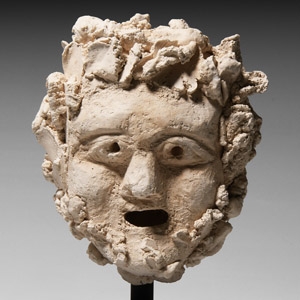
Roman Stucco Head of a Bearded Man
Provincial, 2nd-3rd century A.D.Sold for (Inc. bp): £195
A stucco head from a cornice modelled in the half-round as a mature male with full beard and short, tufted head of hair; mounted on a custom-made display stand. 623 grams total, 12.8 cm (16.5 cm high including stand)
Fair condition.
Acquired 1970s-1996. Property of a North American collector. London collection, 2016. -
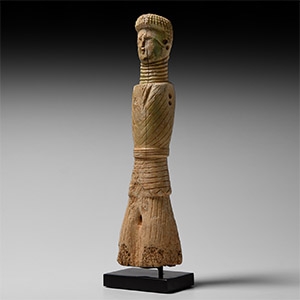
Roman Female Bone Doll
3rd-4th century A.D.Estimate: £500 - 700 (+bp*)
Opening Bid: £250
A Roman or Parthian bone figurine of a female with holes to accept pegs for separate articulated arms, hatching to the piled hairstyle, incised facial features, tiered collar, slender body with drape detailing to the bodice, belt and skirt; pierced ears to accept earrings; mounted on a custom-made stand. 214 grams total, 18 cm including stand
Fine condition.
Family collection since the 1960s. with Christie's, London, 29 April 2010, lot 373. Property of a Brussels gentleman. Accompanied by copies of the relevant Christie's catalogue pages.
The doll was made of a carved bone figure of woman with separate arms attached to the body, and pieces for the ears. All the surface shows extensive marks of working by a saw, knife or a file. The body is made from bone, and the style of the doll is typical of Roman Britain. The separate parts were attached with pins or string. On the doll are still visible the little holes for the connecting string.
