
Loading, please wait...
LOT 0675
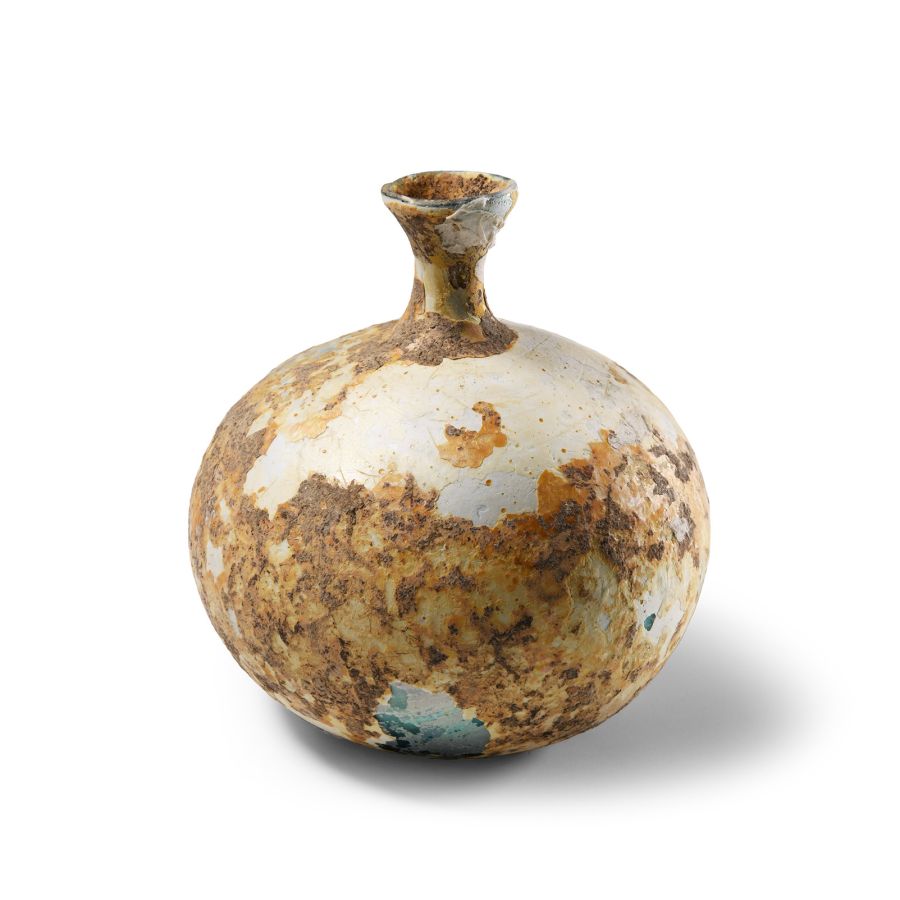
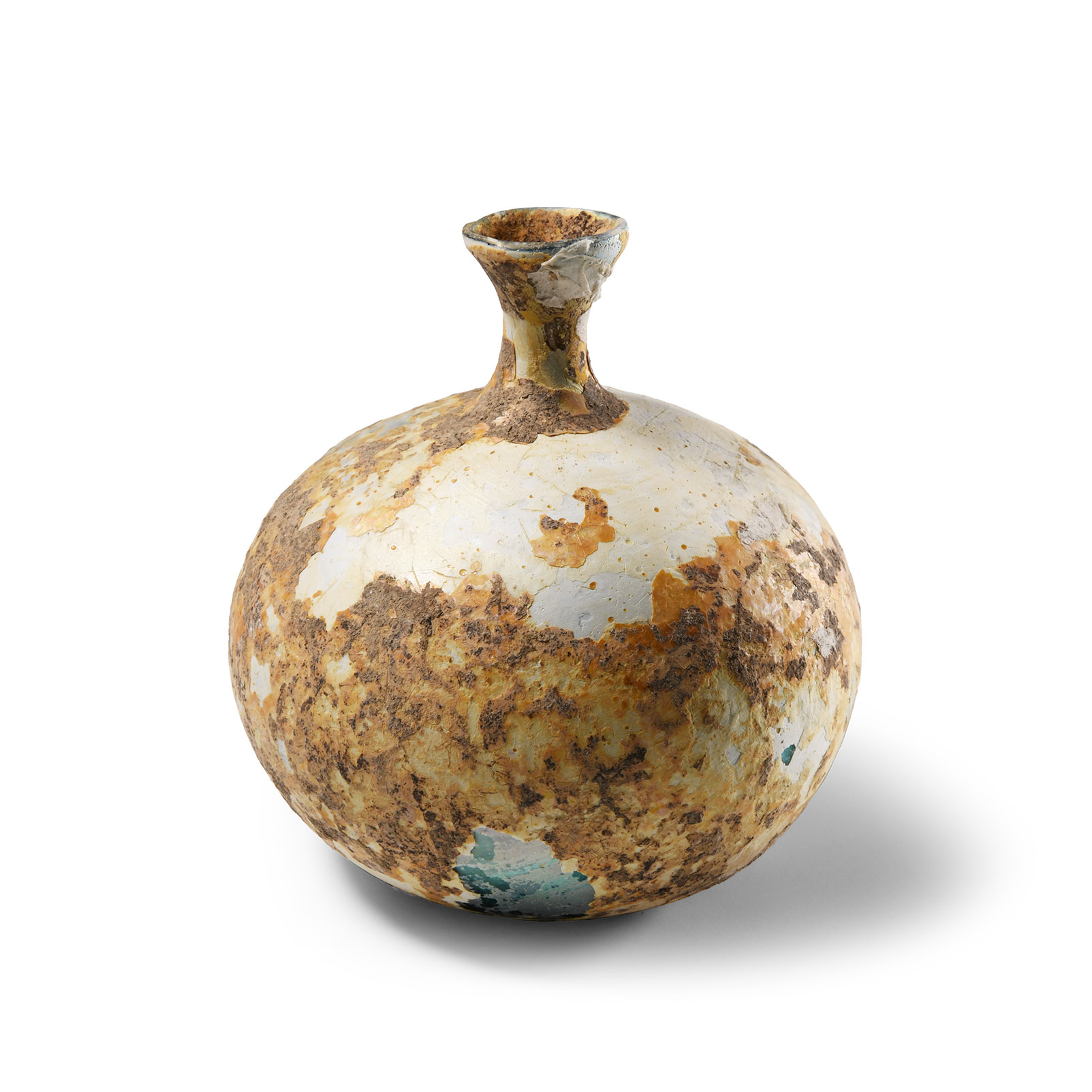
Roman Emerald Green Flask
CIRCA 1ST CENTURY A.D.
3 1/2 in. (59 grams, 89 mm high).
Squat bulbous flask with slightly dimpled base, short trumpet-shaped neck with everted rim.
ProvenanceAcquired 1980-2015.
Ex Abelita family collection.
Cf. Whitehouse, D., Roman Glass in the Corning Museum of Glass, vol.1, New York, 1997, item 203.
CONDITIONTimeLine Auctions follows a vetting process to ensure the authenticity and legality of all items, reinforcing our commitment to integrity and responsible trading. Each antiquity, antique, and coin lot undergoes thorough examination by a vetting committee of at least ten external specialists, professional trade association members, scientists, and archaeologists: Our Vetting Process
AUCTIONS:
TimeLine is a leading auction house specialising in antiquities, ancient art, collectables, natural history, coins, medals, and books. Our auctions offer museums, collectors, historians, and enthusiasts the opportunity to acquire unique and historically significant pieces.
-
Roman Samian Ware Dish Fragments one with Ancient Repairs
2nd century A.D.Sold for (Inc. bp): £124
One base and side wall, one base, each with sections of the foot; exhibiting examples of lead repairs. 128 grams total, 8-12.7 cm
Found Bedfordhire, 1980s. Property of a Kempston, UK gentleman. Accompanied by a copy of a letter from Peter Spencer dated 9 December 1980. -
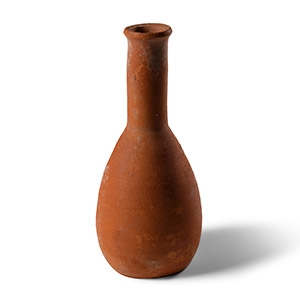
Roman Terracotta Vase with Spiral Decorated Base
1st-4th century A.D.Sold for (Inc. bp): £143
A fine flat bottomed flask with tall neck and rounded rim, the spiral design to the base surrounded by hatching. 67 grams, 12.7 cm
From the important family collection of the late M.N., pre 1992. -
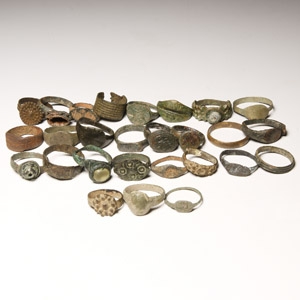
Roman and Later Bronze Ring Collection
1st-19th century A.D.Sold for (Inc. bp): £124
Featuring a range of ring sizes and types; the majority with decorative bezels displaying floral, geometric, buckle and other designs, including one inscribed 'TIT /TIT' over two lines. 75 grams total, 16-30 mm
Acquired on the UK art market. Property of a Ruislip, UK, gentleman, by inheritance.
