
Loading, please wait...


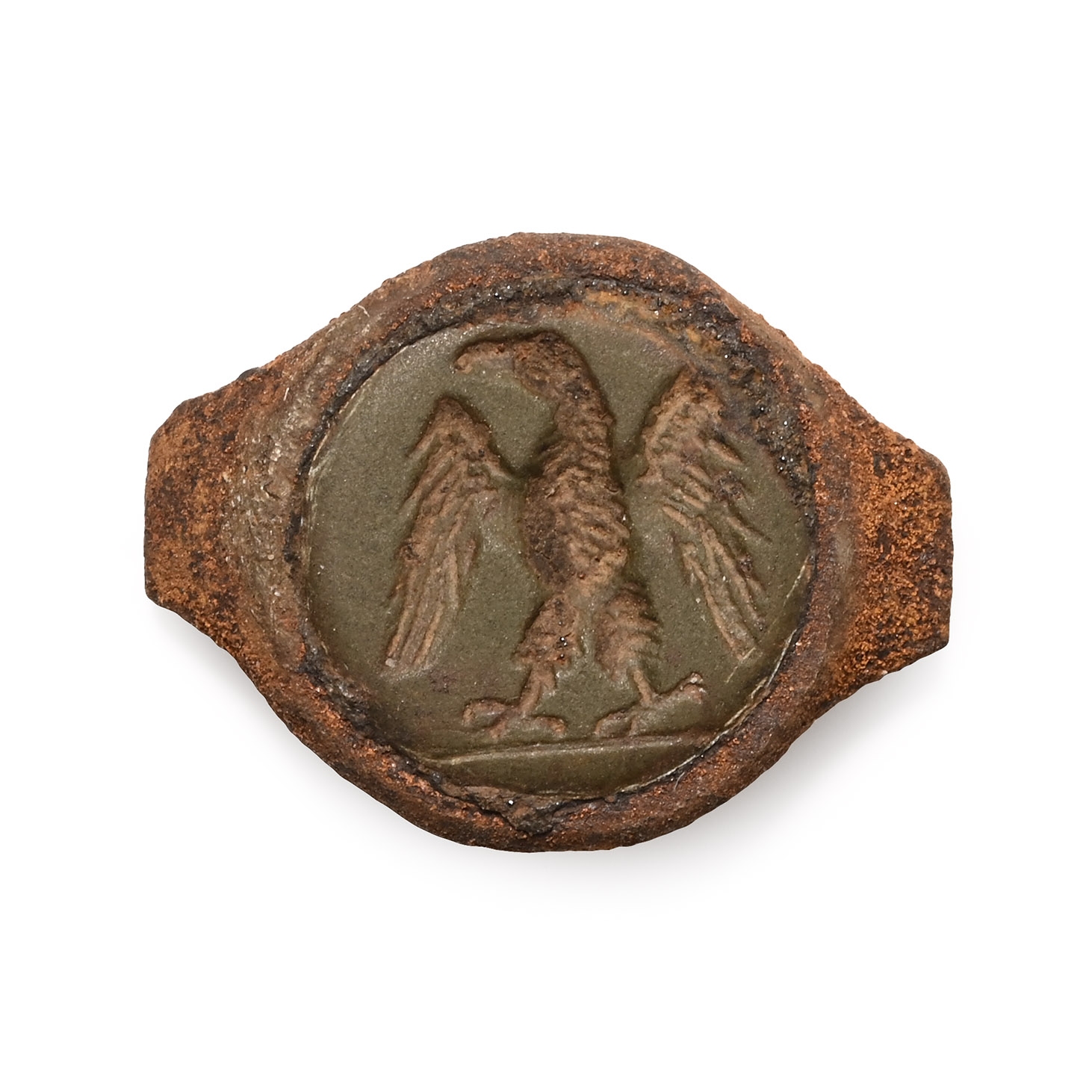
LOT 0725
Roman Eagle Gemstone in Remains of Bronze Ring
CIRCA 2ND-3RD CENTURY A.D.
3/4 in. (4.17 grams, 20 mm).
A round intaglio with a standing eagle on a baseline with its wings spread and head turned left.
ProvenanceAcquired 1980-2015.
Ex Abelita family collection.
TimeLine Auctions follows a vetting process to ensure the authenticity and legality of all items, reinforcing our commitment to integrity and responsible trading. Each antiquity, antique, and coin lot undergoes thorough examination by a vetting committee of at least ten external specialists, professional trade association members, scientists, and archaeologists: Our Vetting Process
AUCTIONS:
TimeLine is a leading auction house specialising in antiquities, ancient art, collectables, natural history, coins, medals, and books. Our auctions offer museums, collectors, historians, and enthusiasts the opportunity to acquire unique and historically significant pieces.
-
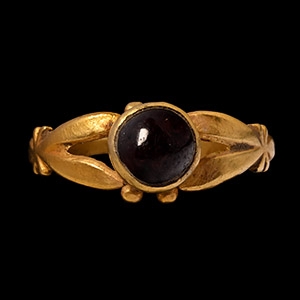
Roman Gold Ring with Cabochon Garnet
4th-5th century A.D.Sold for (Inc. bp): £1,170
With bifid openwork shoulders and cupped cell, inset cabochon garnet. 3.38 grams, 22.73 mm overall, 16.13 mm internal diameter (approximate size British K 1/2, USA 5 1/2, Europe 10.58, Japan 10)
Acquired on the London art market in the late 1980s-1990s. From the family collection of an East London, UK, gentleman. -
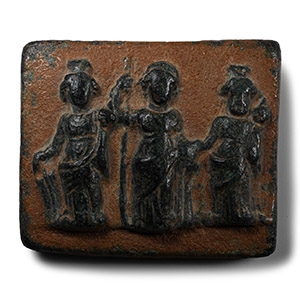
Roman Bronze Weight with Three Goddesses
1st-4th century A.D.Sold for (Inc. bp): £1,430
Square panel with three figures modelled in the half-round - Isis Fortuna with a rudder, Minerva with a spear, Nona with a drop-spindle; to the reverse, lozenge within a ring with enigmatic 'VIKΠΔ' legend (bungled, for 'LIBRA'?). 78.7 grams, 38 mm
From the collection of a gentleman, acquired on the London art market in the 1990s. -
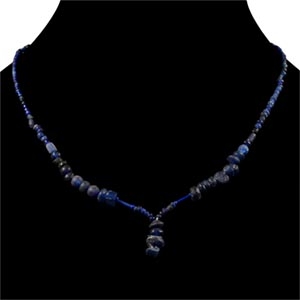
Roman Glass Bead Necklace String
1st-4th century A.D. and laterSold for (Inc. bp): £33
Composed of mainly oblate and cylindrical beads restrung to a Y-shape. 8.3 grams, 39.5 cm
Ex property of a late Japanese collector, 1970-2000s.
