
Loading, please wait...
LOT 0121
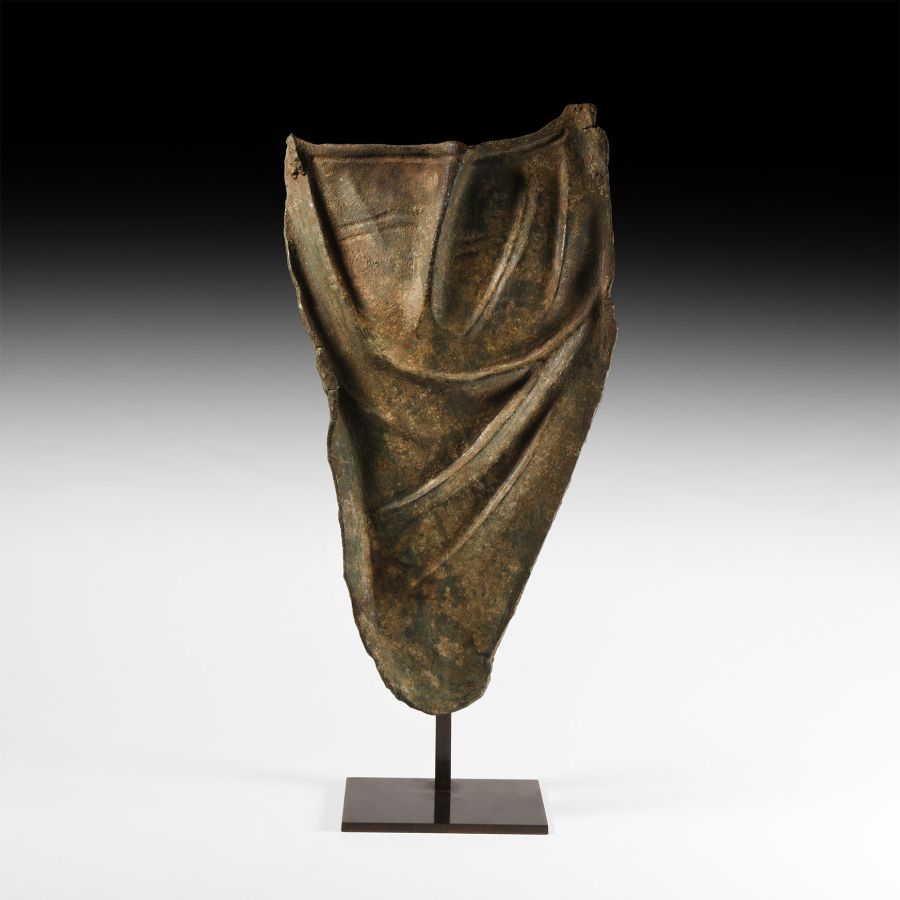
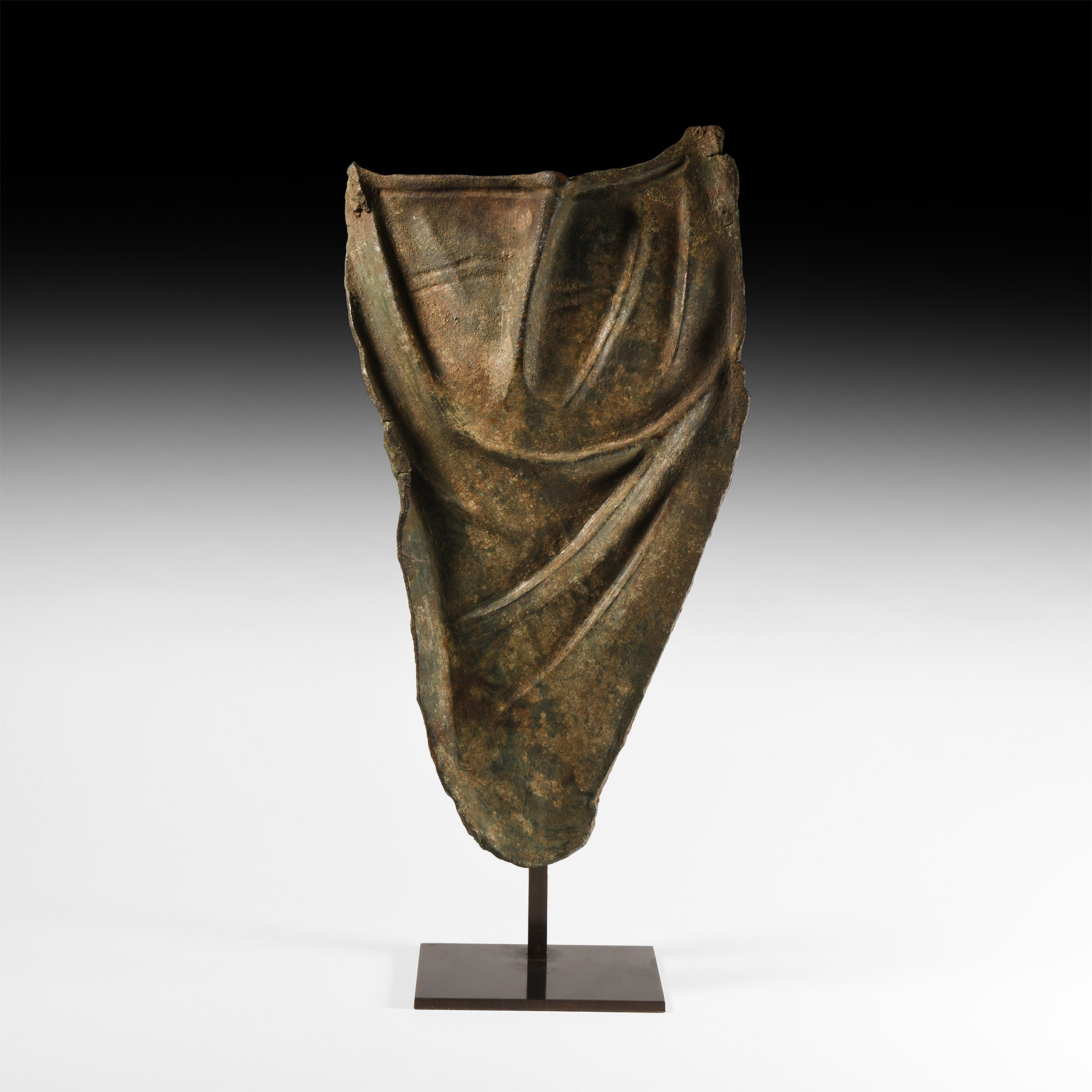
Roman Drapery from a Life-Size Statue
1ST-2ND CENTURY A.D. OR LATER
16 5/8 in. (3.1 kg total, 42.2 cm high including stand).
A bronze drapery fragment modelling the folds of the fabric in relief, presumably once forming part of a larger statue; mounted on a custom-made display stand.
ProvenanceAcquired 1980s-early 1990s.
Ex private German collection.
English private collection.
TimeLine Auctions follows a vetting process to ensure the authenticity and legality of all items, reinforcing our commitment to integrity and responsible trading. Each antiquity, antique, and coin lot undergoes thorough examination by a vetting committee of at least ten external specialists, professional trade association members, scientists, and archaeologists: Our Vetting Process
AUCTIONS:
TimeLine is a leading auction house specialising in antiquities, ancient art, collectables, natural history, coins, medals, and books. Our auctions offer museums, collectors, historians, and enthusiasts the opportunity to acquire unique and historically significant pieces.
-
Roman Lock Plate Figure
Circa 1st-3rd century A.D.Sold for (Inc. bp): £33
A bronze key composed of a tapering shaft with hatched and notched detailing, finial in the form of a bust with stylised facial detailing, rectangular openwork ward; perforated through the finial for suspension. 30.7 grams, 79 mm
Acquired before 2000. From the collection of a European gentleman living in the UK. -
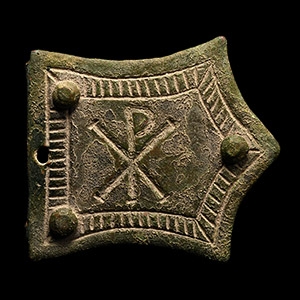
Roman Belt Mount with Chi Rho
Circa 3rd-4th century A.D.Sold for (Inc. bp): £156
A bronze pentagonal mount with scooped edges, four piercings to accept fixing rivets, hatched band enclosing an incuse Chi Rho christogram. 25.9 grams, 55 mm
Acquired in the late 1990s-2000. Property of an East London gentleman. -
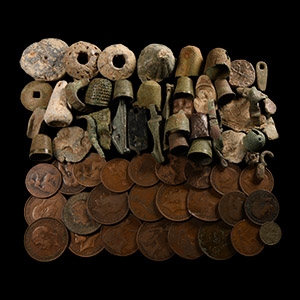
Roman to Post Medieval Artefact Group
1st-20th century A.D.Sold for (Inc. bp): £52
A group of items including coins, weights, thimbles and other artefacts. 700 grams total, 10-52 mm
Found UK. Ex property of a Nottingham, UK, collector.
