
Loading, please wait...
LOT 0683
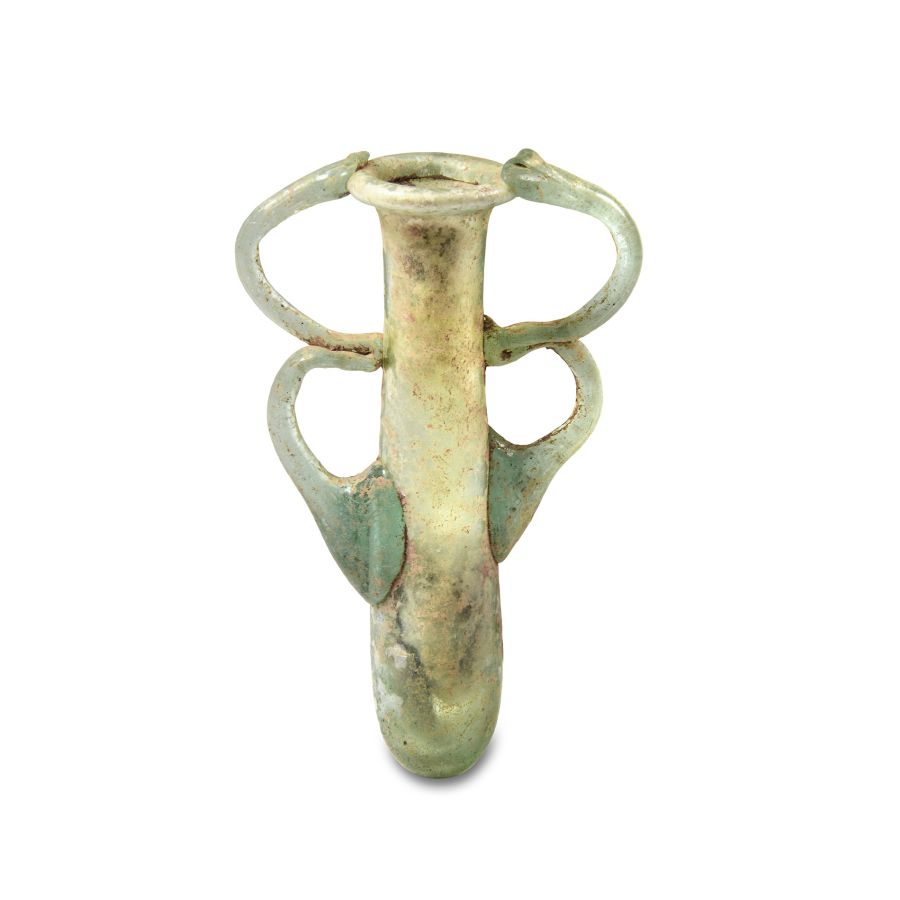
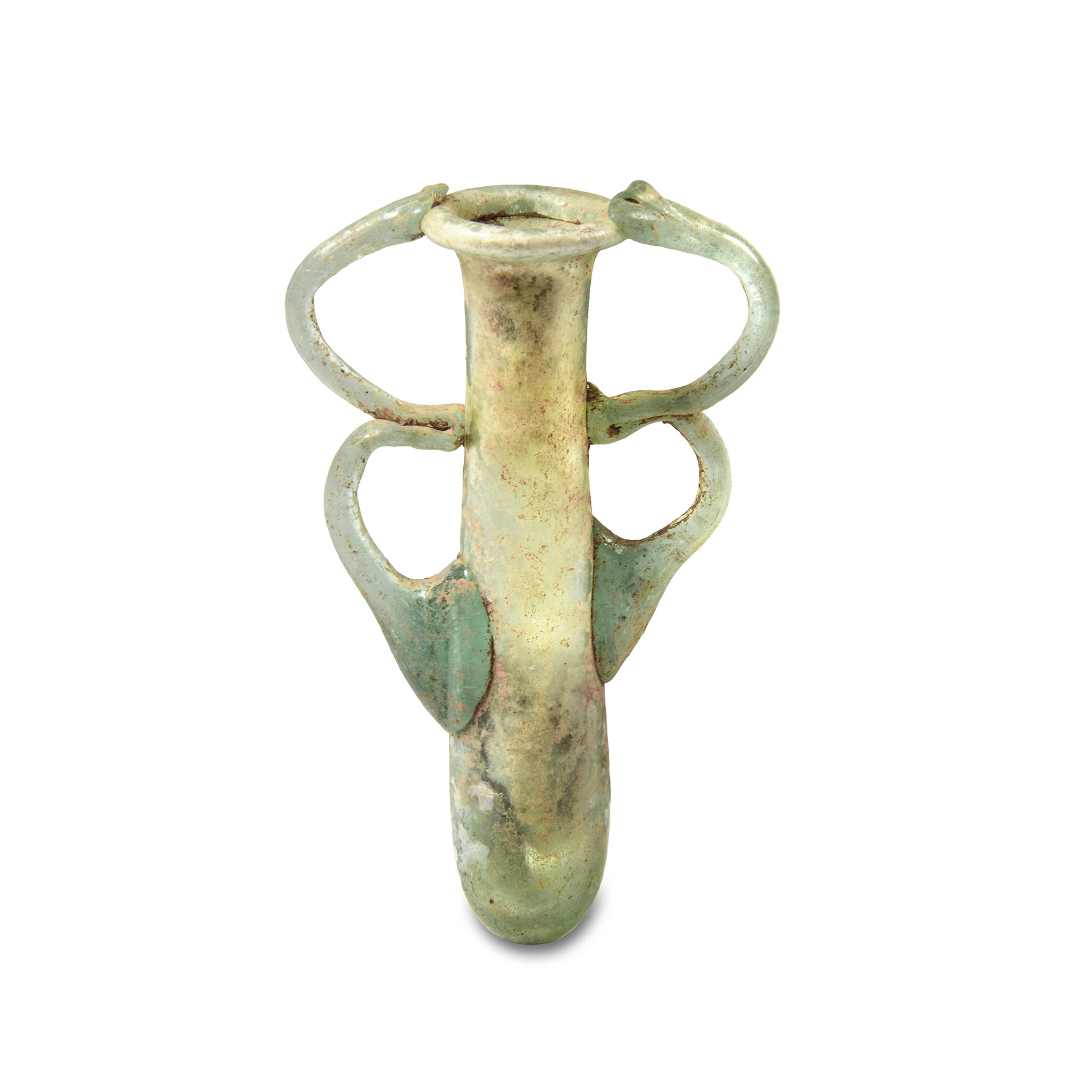
Roman Double-Handled Unguentarium
1ST-4TH CENTURY A.D.
4 in. (41 grams, 10.1 cm high).
An aqua glass unguentarium or double cosmetic tube of tubular form with rolled rim, two twin-looped applied handles; iridescent surfaces.
ProvenanceAcquired early 1990s.
Ex private American collection; thence by descent.
Private collection since 1998.
Cf. Whitehouse, D., The Corning Museum of Glass, Volume Two, New York, 2001, p.192, for a comparable example.
CONDITIONTimeLine Auctions follows a vetting process to ensure the authenticity and legality of all items, reinforcing our commitment to integrity and responsible trading. Each antiquity, antique, and coin lot undergoes thorough examination by a vetting committee of at least ten external specialists, professional trade association members, scientists, and archaeologists: Our Vetting Process
AUCTIONS:
TimeLine is a leading auction house specialising in antiquities, ancient art, collectables, natural history, coins, medals, and books. Our auctions offer museums, collectors, historians, and enthusiasts the opportunity to acquire unique and historically significant pieces.
-
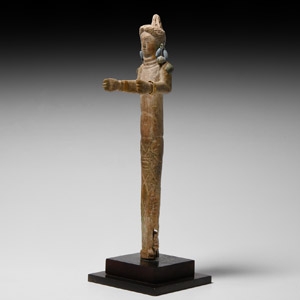
Roman Female Bone Doll
1st-2nd century A.D.Sold for (Inc. bp): £572
A Roman or Parthian bone figurine of a female with separate articulated bent arms, piled hairstyle, incised facial features, tiered collar, slender body with lattice detailing to the skirt; bronze stud to the shoulders, wire loop earrings with tubular blue glass beads, gold arm-rings; mounted on a custom-made stand. 355 grams total, 21.5 cm including stand
Fine condition.
Previously acquired in 1971. with Gallery Delalande, Paris, France. Property of a Brussels gentleman. -
.jpg)
Roman Magical Gnostic Gemstone
2nd-3rd century A.D.Estimate: £1,000 - 1,400 (+bp*)
Opening Bid: £550
An ellipsoid bifacial haematite gemstone with intaglio scenes: obverse with a reaper holding a sickle and cutting down a crop; reverse with a bird, wings spread beneath a glyph. 7.37 grams, 26.8 mm
Acquired in the late 1980s-early 1990s. Important North West London collection. -
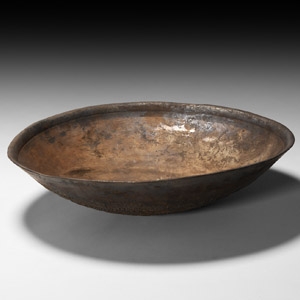
Roman Silver Dish with Marine Encrustations
1st-3rd century A.D.Estimate: £2,000 - 3,000 (‡+bp*)
Opening Bid: £500
A sheet silver dish, shallow with thickened rim; marine encrustations to the outer face. 396 grams, 21 cm wide
Acquired early 1990s. Ex private American collection; thence by descent. Private Swiss collection since 1998. This lot has been checked against the Interpol Database of stolen works of art and is accompanied by search certificate no.11631-199032.
