
Loading, please wait...
LOT 0875
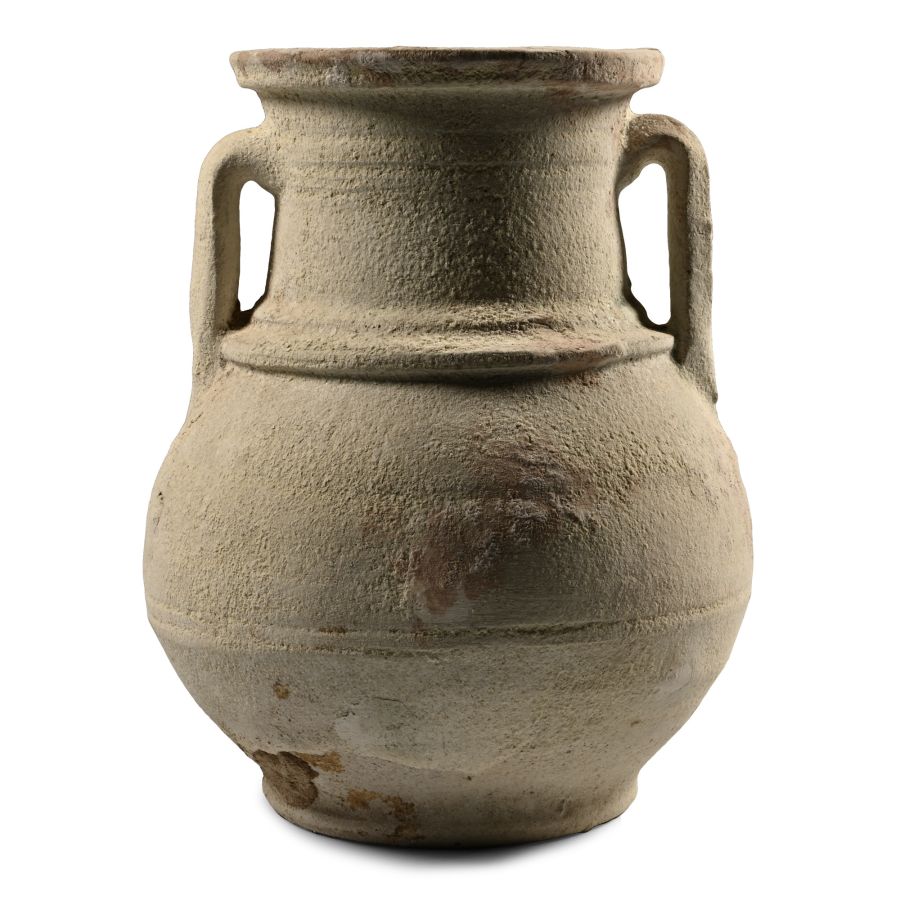
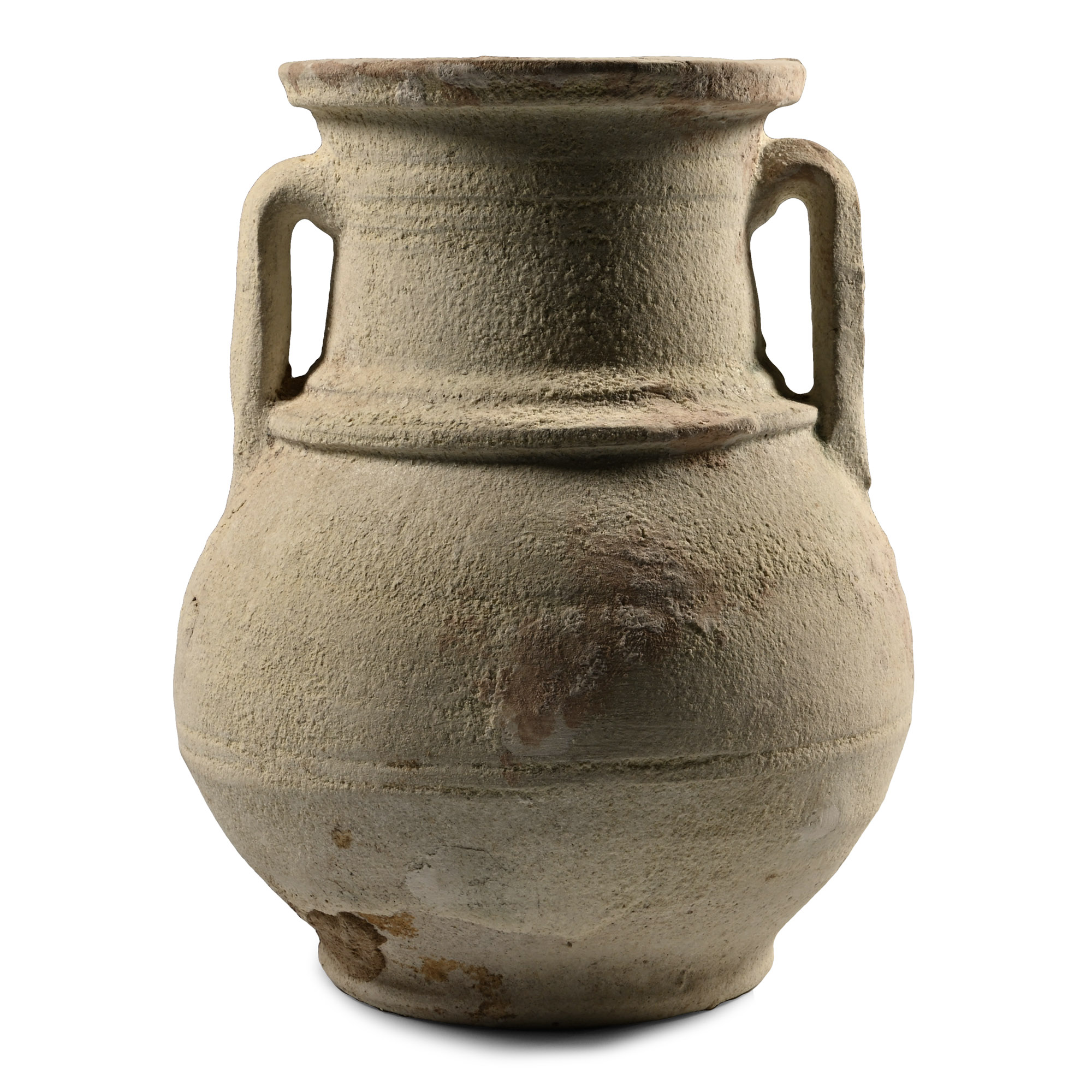
Roman Double-Handled Lightly Glazed Jar
1ST-4TH CENTURY A.D.
8 in. (1.16 kg, 20.3 cm).
Of squat profile with bulbous body, basal ring, carinated rib to the shoulder, broad neck and everted flange rim; two lateral strap handles.
ProvenanceFrom a London, UK, gentleman's collection of ancient pottery and artefacts, 1990s.
This lot is accompanied by an illustrated lot declaration signed by the Head of the Antiquities Department, Dr Raffaele D’Amato.
TimeLine Auctions follows a vetting process to ensure the authenticity and legality of all items, reinforcing our commitment to integrity and responsible trading. Each antiquity, antique, and coin lot undergoes thorough examination by a vetting committee of at least ten external specialists, professional trade association members, scientists, and archaeologists: Our Vetting Process
AUCTIONS:
TimeLine is a leading auction house specialising in antiquities, ancient art, collectables, natural history, coins, medals, and books. Our auctions offer museums, collectors, historians, and enthusiasts the opportunity to acquire unique and historically significant pieces.
-
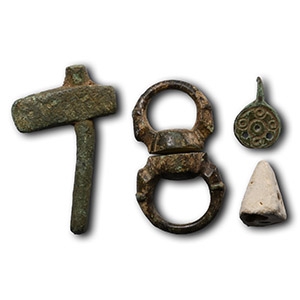
Roman to Norman Artefact Group
4th-12th century A.D.Sold for (Inc. bp): £65
Comprising: a Roman bronze votive hammer; a 6th century Anglo-Saxon bronze hooked clasp; a Viking lead gaming piece; a Norman bronze hunting dog leash swivel. 40 grams total, 17-44 mm
Found Cambridgeshire, UK. This lot is accompanied by an illustrated lot declaration signed by the Head of the Antiquities Department, Dr Raffaele D’Amato. -
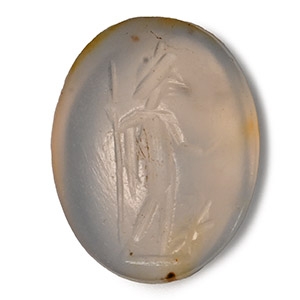
Roman Chalcedony Gemstone with Jupiter
2nd-3rd century A.D.Sold for (Inc. bp): £234
An oval intaglio with convex faces, engraved with an image of standing god Jupiter holding a long spear, an eagle at his feet. 0.66 grams, 12 mm
Ex Swiss collection formed in the 1980s onwards. This lot is accompanied by an illustrated lot declaration signed by the Head of the Antiquities Department, Dr Raffaele D’Amato. -
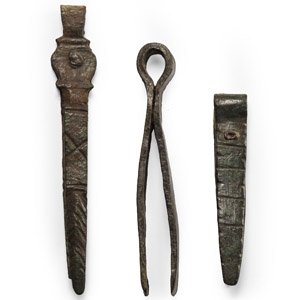
Roman Bronze Tweezers Group
1st-4th century A.D.Sold for (Inc. bp): £286
Including one with riveted shank and narrow arms, possibly for medical use. 22.8 grams total, 44-67 mm
Ex German art market, 2000s. Acquired from an EU collector living in London. From the collection of Surrey, UK, gentleman. This lot is accompanied by an illustrated lot declaration signed by the Head of the Antiquities Department, Dr Raffaele D’Amato.
