
Loading, please wait...
LOT 0604
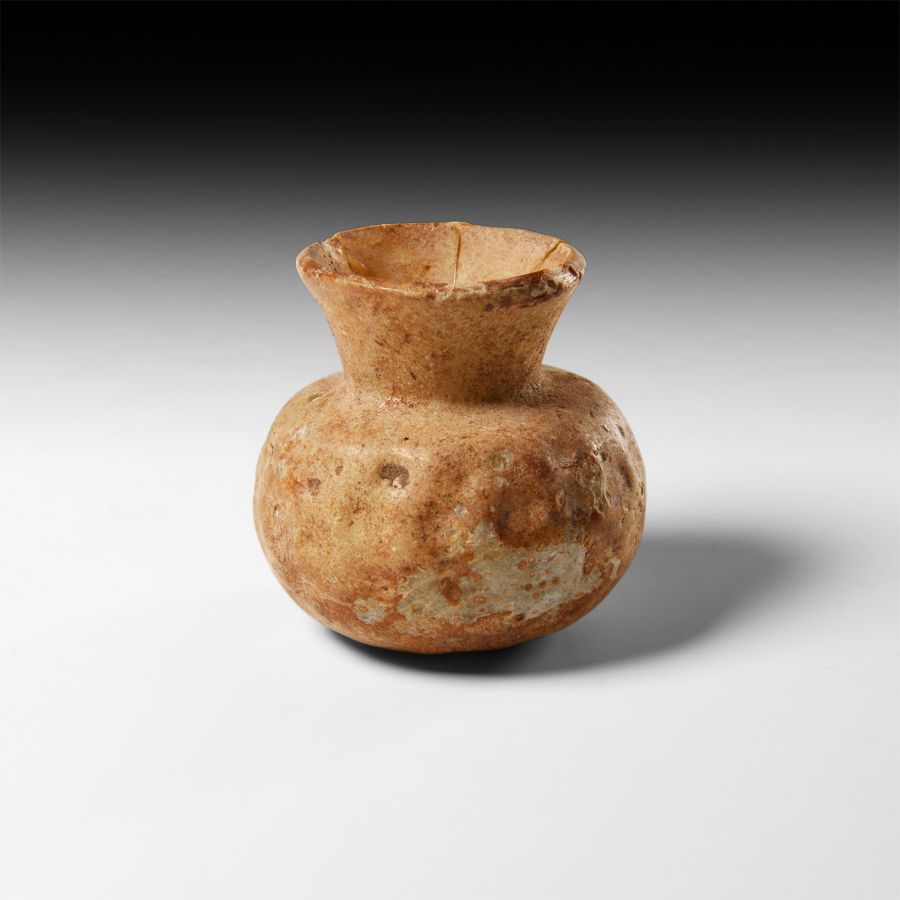
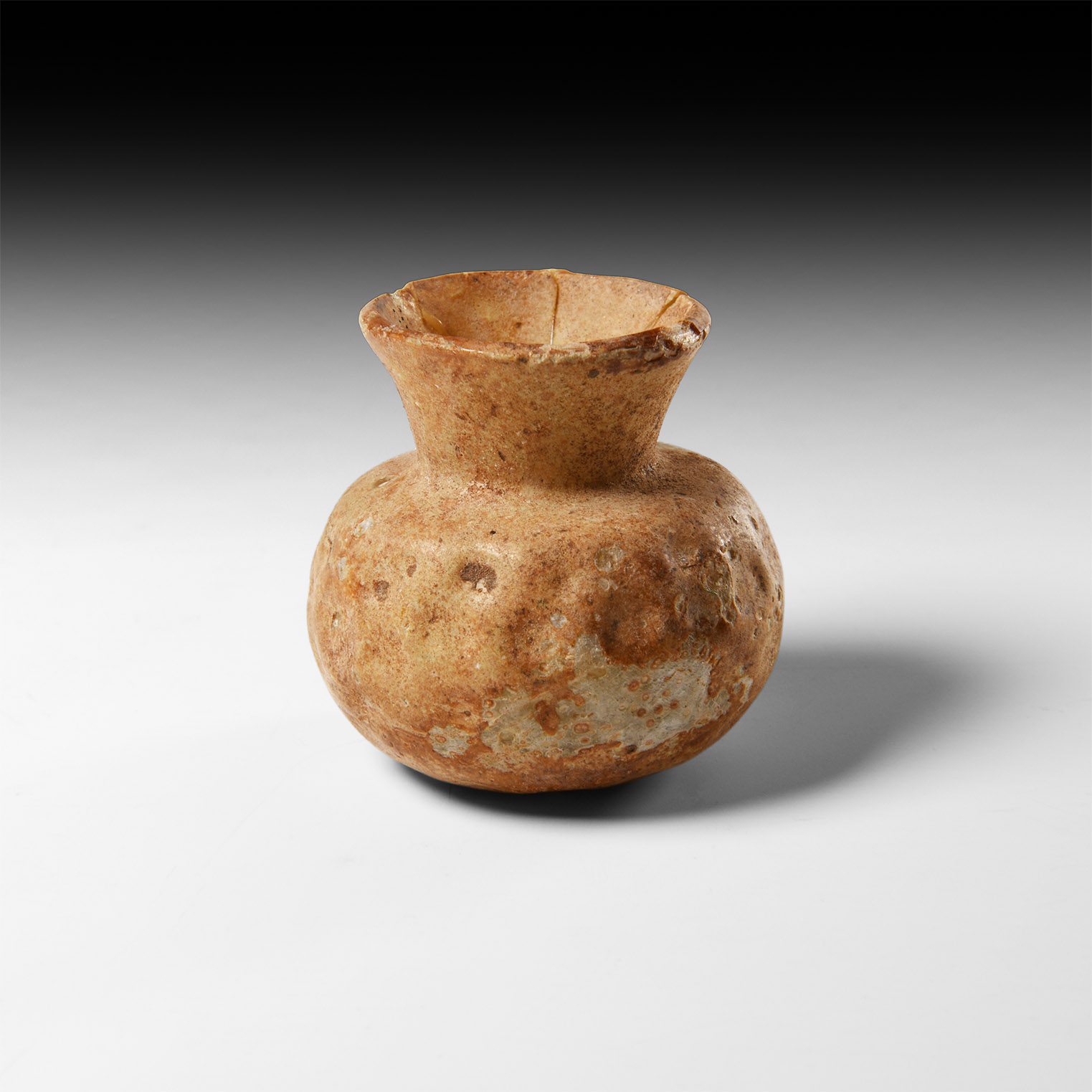
Roman Dimpled Glass Jar
1ST-4TH CENTURY A.D.
1 7/8 in. (36.9 grams, 47 mm wide).
An opaque glass jar of squat, bulbous form and with trumpet-style neck and mouth, the body decorated with shallow dimples; repaired. [No Reserve]
ProvenanceAcquired 2000s.
Ex London, UK, collection.
TimeLine Auctions follows a vetting process to ensure the authenticity and legality of all items, reinforcing our commitment to integrity and responsible trading. Each antiquity, antique, and coin lot undergoes thorough examination by a vetting committee of at least ten external specialists, professional trade association members, scientists, and archaeologists: Our Vetting Process
AUCTIONS:
TimeLine is a leading auction house specialising in antiquities, ancient art, collectables, natural history, coins, medals, and books. Our auctions offer museums, collectors, historians, and enthusiasts the opportunity to acquire unique and historically significant pieces.
-
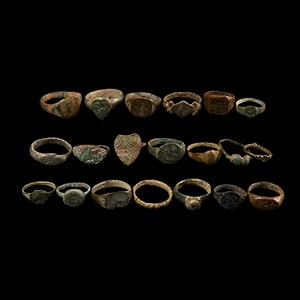
Roman and Later Ring Collection
1st-19th century A.D.Sold for (Inc. bp): £312
A mixed group of 20 copper-alloy rings of various types and sizes, including examples with glass cabochons, incised geometric motifs to the bezels, cruciform motifs, tiered bezels and other types. 59 grams total, 15-24 mm
Acquired before 2000. From the collection of a European gentleman living in the UK. -
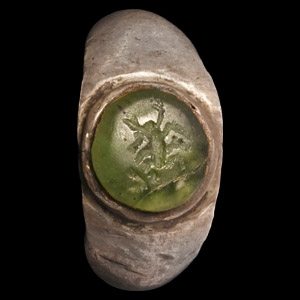
Roman Silver Ring with Glass Insect Intaglio
2nd-3rd century A.D.Sold for (Inc. bp): £364
A silver finger ring with inset glass cabochon, intaglio scorpion motif. 7.43grams, 24.82 mm overall, 18.67 mm internal diameter (approximate size British N, USA 6 1/2, Europe 13.72, Japan 13)
English private collection. -
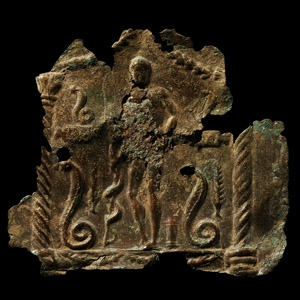
Roman Votive Plaque with Asclepius
2nd-3rd century A.D.Sold for (Inc. bp): £286
A sheet-bronze votive plaque fragment displaying repoussé ornament, likely the god Asclepius holding his snake-entwined staff beneath a columned arch, additional snakes raising their heads and necks beside and above him, other enigmatic symbols in the field. 2.67 grams, 52 mm
Acquired before 2000. From the collection of a European gentleman living in the UK.
Aesculapius, god of medicine, the Greek Asclepius, son of Apollo and a mortal, Coronis, is often accompanied by a snake, a symbol of wisdom and healing power. Aesculapius-Asclepius is also often represented with the staff having a snake wrapped around it.
