
Loading, please wait...
LOT 0654
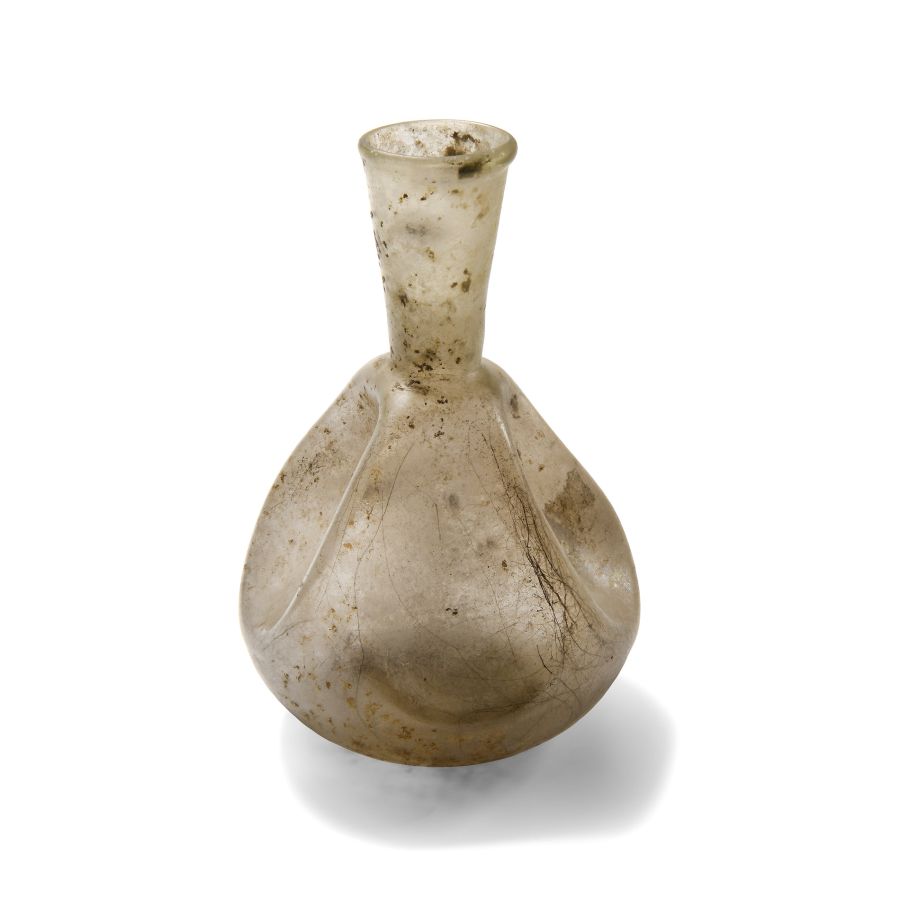
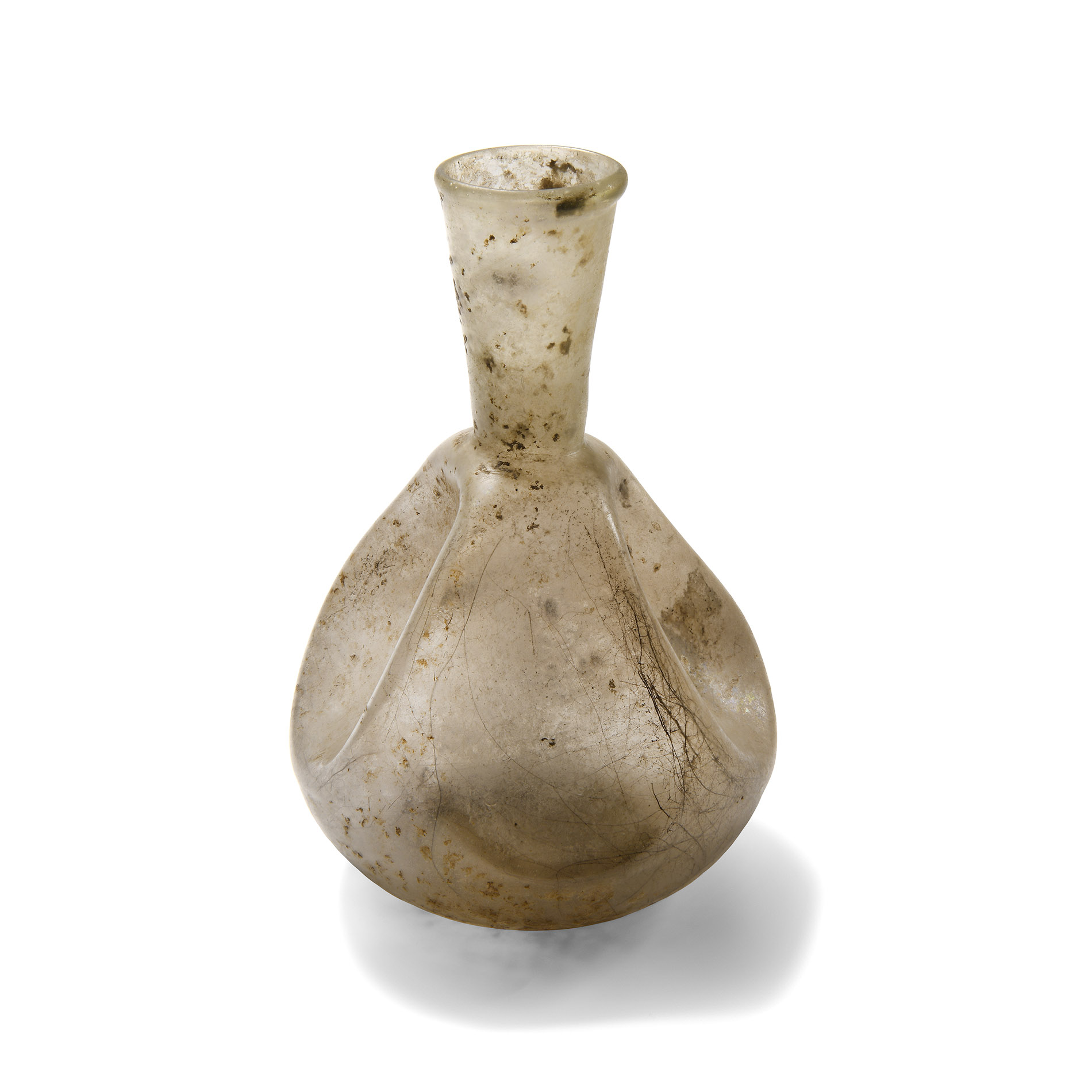
Roman Dimpled Glass Flask
1ST-3RD CENTURY A.D.
5 1/2 in. (59 grams, 14 cm high).
A clear glass vessel with dimpled piriform body and flared neck; basal ring; areas of iridescence.
ProvenanceFrench collection, 1960s-early 2000s.
From an important Paris gallery, France.
TimeLine Auctions follows a vetting process to ensure the authenticity and legality of all items, reinforcing our commitment to integrity and responsible trading. Each antiquity, antique, and coin lot undergoes thorough examination by a vetting committee of at least ten external specialists, professional trade association members, scientists, and archaeologists: Our Vetting Process
AUCTIONS:
TimeLine is a leading auction house specialising in antiquities, ancient art, collectables, natural history, coins, medals, and books. Our auctions offer museums, collectors, historians, and enthusiasts the opportunity to acquire unique and historically significant pieces.
LOT 0654
Roman Dimpled Glass Flask
Estimate £400 - 600€460 - 700 (for guidance only)$540 - 810 (for guidance only)
-
.jpg)
Roman Bronze Bear Fitting
1st-4th century A.D.Estimate: £500 - 700 (+bp*)
Opening Bid: £278
A bronze furniture fitting formed as a square base with gusseted profile, a bear cub crouching on the upper face with one forepaw raised; open to the rear and underside. 108 grams, 53 mm
Acquired in the 1990s. Collection of a Suffolk, UK, gentleman. -
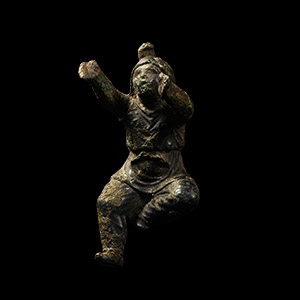
Roman Figure of a Boy in Oriental Dress
1st-2nd century A.D.Estimate: £1,000 - 1,400 (‡+bp*)
Opening Bid: £500
A bronze figure of a child sitting with one leg extended and the other bent beneath the body, arms raised in supplication; loose fitting trousers and knee-length tunic gathered at the waist, boots on the feet and a separate pointed hood on the head; Scythian or similar costume. 14.6 grams, 61 mm
Private Swiss collection, acquired 2001. -
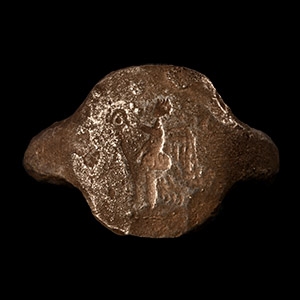
Roman Silver Ring with Victory
2nd-4th century A.D.Sold for (Inc. bp): £65
A silver ring composed of a D-section hoop and roughly oval-shaped bezel engraved with a figure of winged Victory standing left, wearing a helmet and holding a wreath in her extended hand. 4.95 grams, 21.19 mm overall, 18.30 mm internal diameter (approximate size British P 1/2, USA 7 3/4, Europe 16.86, Japan 16)
Private collection formed since the 1940s. UK art market. Property of an Essex gentleman.
