
Loading, please wait...
LOT 0810
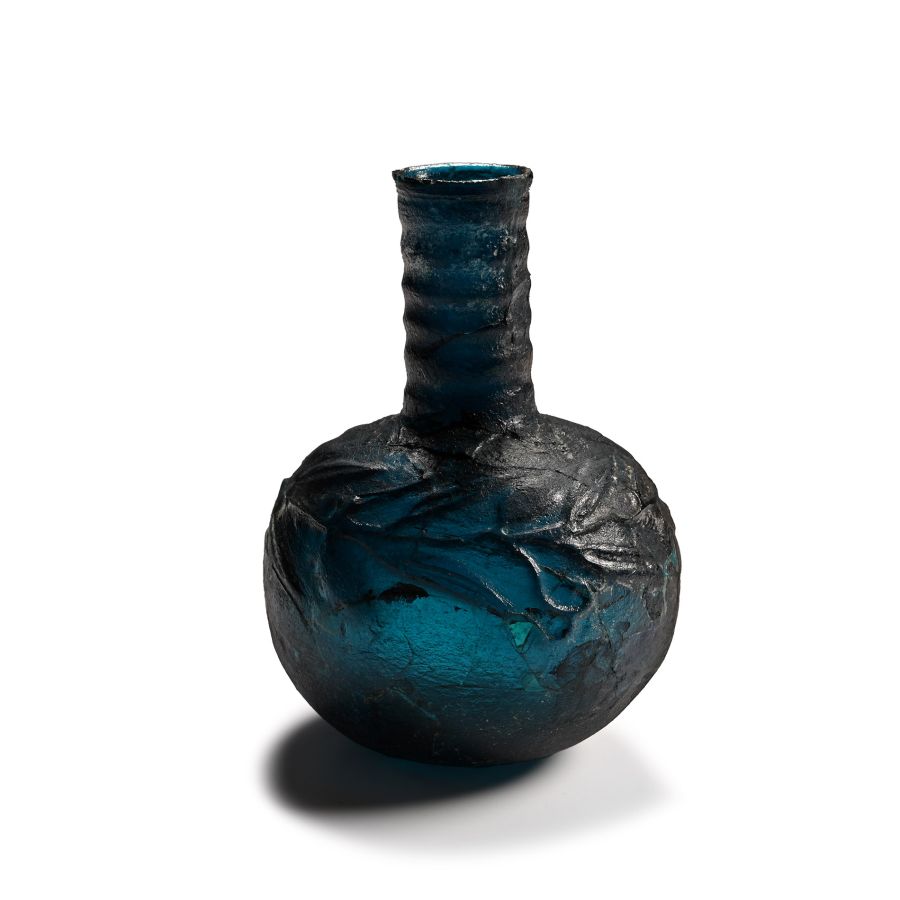
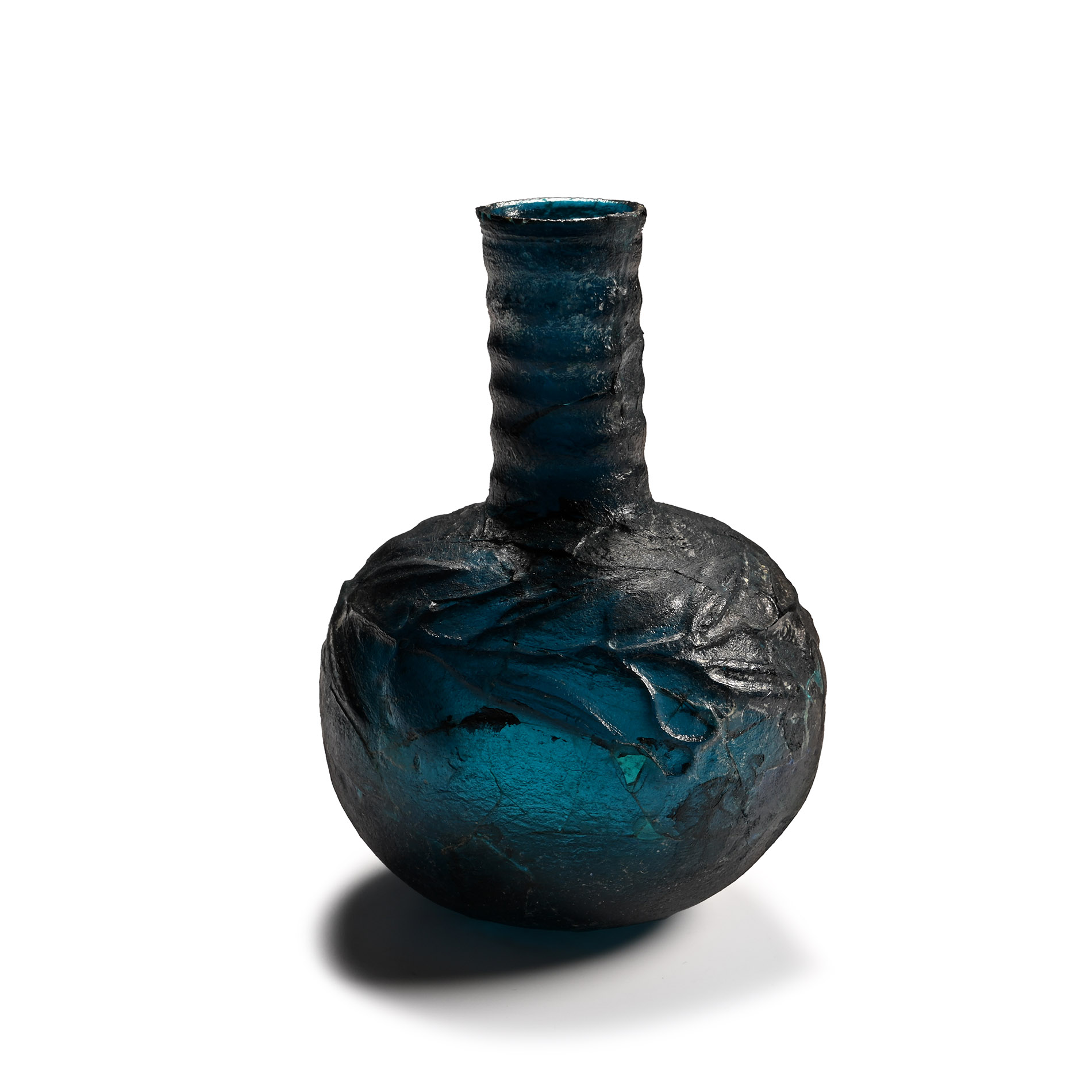
Roman Deep Blue Bottle with Relief Decoration
1ST-3RD CENTURY A.D.
3 1/2 in. (48.8 grams, 89 mm).
Mould-blown with spherical, squat body and dimple base; low-relief encircling laurel branch with fruit below the shoulder; tubular neck with offset rings flared towards the mouth; restored.
Provenancewith Rosebery's London, 3 May 2019, no.165.
This lot is accompanied by an illustrated lot declaration signed by the Head of the Antiquities Department, Dr Raffaele D’Amato.
Cf. Whitehouse, D., Roman Glass in the Corning Museum of Glass, vol.2, New York, 2001, item 621, for type.
CONDITIONTimeLine Auctions follows a vetting process to ensure the authenticity and legality of all items, reinforcing our commitment to integrity and responsible trading. Each antiquity, antique, and coin lot undergoes thorough examination by a vetting committee of at least ten external specialists, professional trade association members, scientists, and archaeologists: Our Vetting Process
AUCTIONS:
TimeLine is a leading auction house specialising in antiquities, ancient art, collectables, natural history, coins, medals, and books. Our auctions offer museums, collectors, historians, and enthusiasts the opportunity to acquire unique and historically significant pieces.
LOT 0810
Roman Deep Blue Bottle with Relief Decoration
Estimate £600 - 800€700 - 930 (for guidance only)$810 - 1,080 (for guidance only)
-
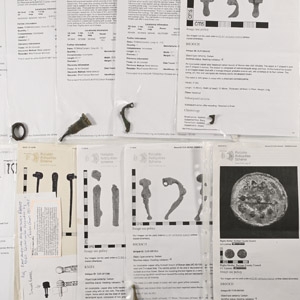
Roman Bronze Artefact Group
1st-4th century A.D.Sold for (Inc. bp): £111
Comprising: a T-shaped headstud variant brooch, 100-200 A.D.; headstud brooch, circa 75-175 A.D.; oval terret ring, circa 1st-3rd century A.D.; plate brooch with pellet decoration, 100-200 A.D.; Hod Hill type brooch, circa 43-70 A.D.; a headstud brooch body, circa 75-175 A.D.; incomplete dividers with decorated arms, 43-410 A.D.; an incomplete knife handle with enamelled decoration, 43-250A.D.; an incomplete trumpet brooch, 43-150 A.D.; and a trumpet brooch lacking pin, circa 75-175 A.D. 264 grams total including reports, 16-93 mm
Found Yorkshire/County Durham, UK. Each item accompanied by a copy of the British Museum's Portable Antiquities Scheme (PAS) report. This lot is accompanied by an illustrated lot declaration signed by the Head of the Antiquities Department, Dr Raffaele D’Amato. -
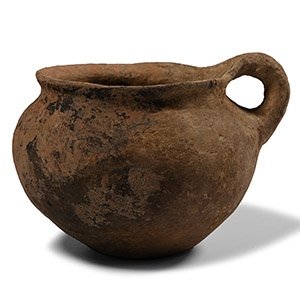
Roman Terracotta Single-Handled Jug
1st-4th century A.D.Sold for (Inc. bp): £65
With a squat bulbous body and flat base, everted rim and strap handle to the rear. 226 grams, 11.7 cm
Ex collection of a late London collector, 1989 onwards. This lot is accompanied by an illustrated lot declaration signed by the Head of the Antiquities Department, Dr Raffaele D’Amato. -
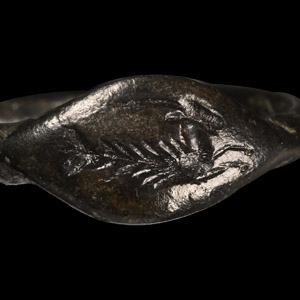
Large Roman Bronze Ring with Capricorn
2nd-3rd century A.D.Sold for (Inc. bp): £247
With integral ellipsoid bezel, incuse capricorn motif. 2.34 grams, 23.52 mm overall, 19.68 mm internal diameter (approximate size British S 1/2, USA 9 1/4, Europe 20.63, Japan 19)
Ex German art market, 2000s. Acquired from an EU collector living in London. From the collection of Surrey, UK, gentleman. This lot is accompanied by an illustrated lot declaration signed by the Head of the Antiquities Department, Dr Raffaele D’Amato.
