
Loading, please wait...
LOT 0637
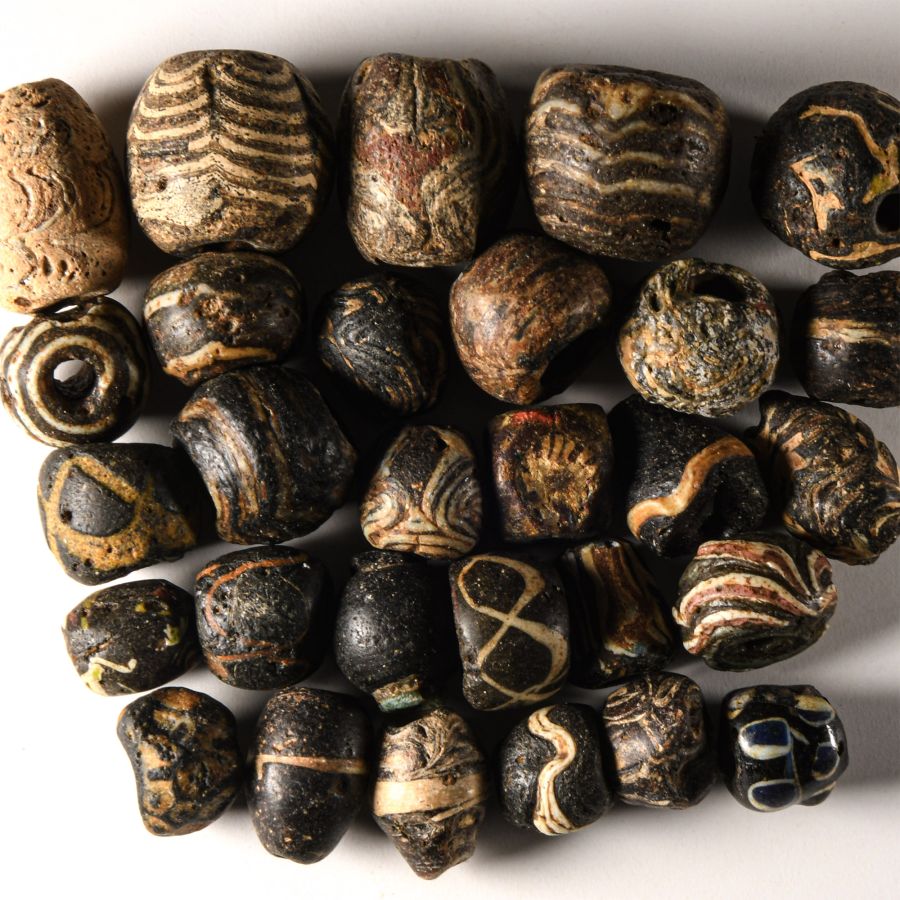
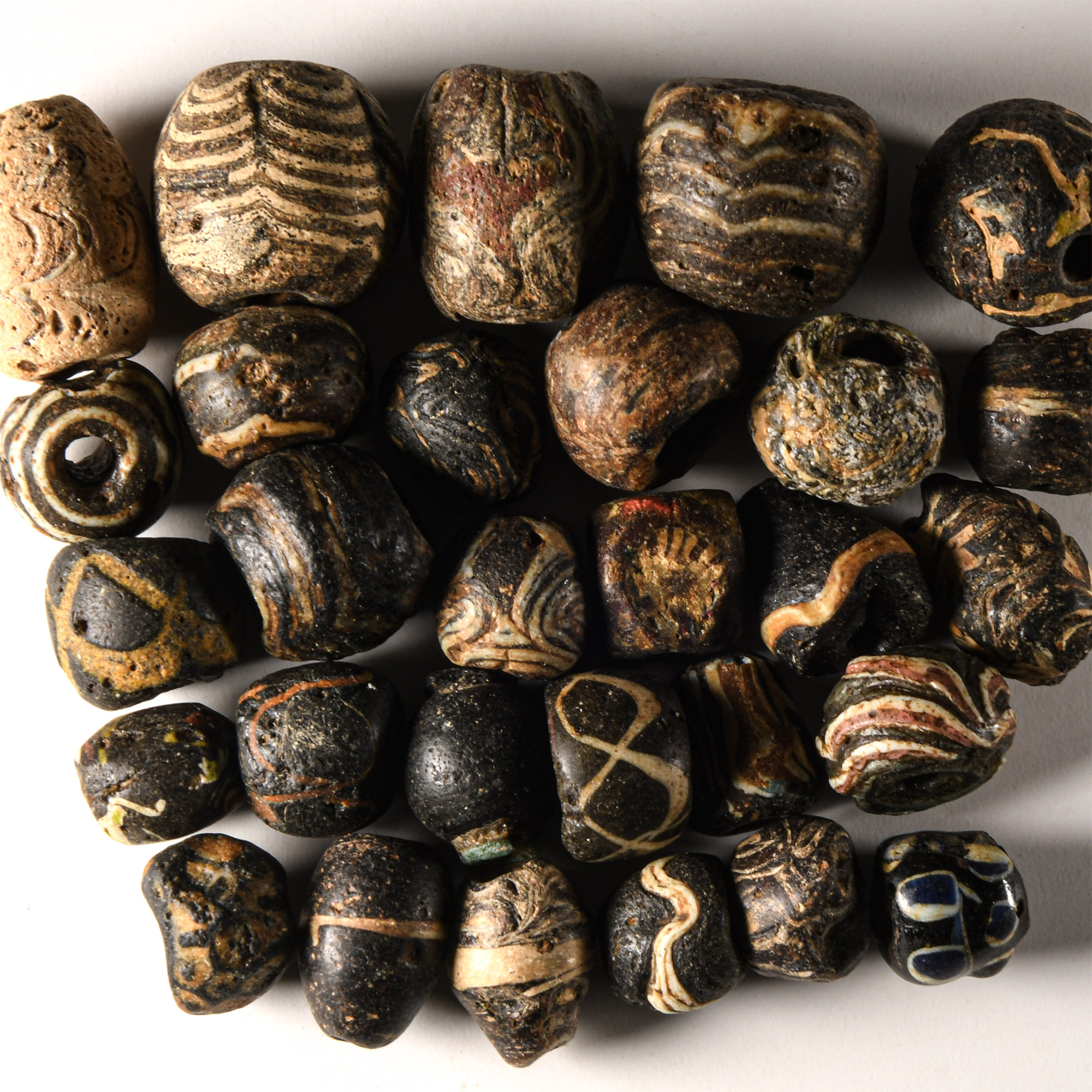
Roman Decorated Glass Necklace Bead Group
CIRCA 1ST-4TH CENTURY A.D.
3/8 - 7/8 in. (106 grams total, 11-21 mm).
Composed of early trail-decorated rolled-pad, lampwork, millefiori, folded, and dark glass beads, most in polychrome. [30]
ProvenanceUK gallery, early 2000s.
CONDITIONTimeLine Auctions follows a vetting process to ensure the authenticity and legality of all items, reinforcing our commitment to integrity and responsible trading. Each antiquity, antique, and coin lot undergoes thorough examination by a vetting committee of at least ten external specialists, professional trade association members, scientists, and archaeologists: Our Vetting Process
AUCTIONS:
TimeLine is a leading auction house specialising in antiquities, ancient art, collectables, natural history, coins, medals, and books. Our auctions offer museums, collectors, historians, and enthusiasts the opportunity to acquire unique and historically significant pieces.
-
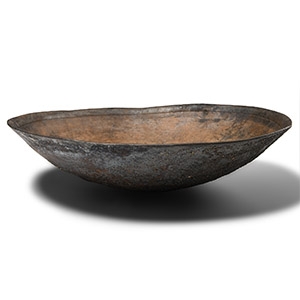
Roman Silver Dish
1st-3rd century A.D.Estimate: £1,200 - 1,700 (‡+bp*)
Opening Bid: £600
Shallow with thickened rim; encrustations to the outer face. 396 grams, 21 cm wide
Acquired early 1990s. Ex private American collection; thence by descent. Private Swiss collection since 1998. This lot has been checked against the Interpol Database of stolen works of art and is accompanied by search certificate no.11631-199032. -
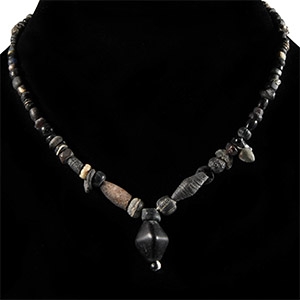
Roman Stone and Glass Bead Necklace String
1st century A.D. and laterSold for (Inc. bp): £39
Restrung group of mainly rough red opaque glass furnace-wound beads with a polyhedral centrepiece. 19.3 grams, 36 cm long
Acquired 1980-2015. Ex Abelita family collection. -
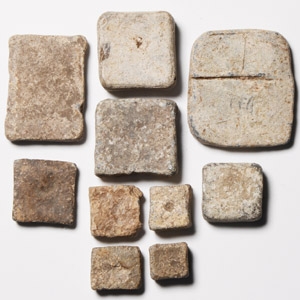
Roman Lead Weight Group
1st-4th century A.D.Sold for (Inc. bp): £33
Tabular in form with punched dimple, incised lines and other markings. 160 grams total, 9-30 mm
Ex Simmons Gallery, London E11, UK, in the 1990s. From a North London collection.
