
Loading, please wait...
_900x900.jpg "Roman Decorated Bronze Vessel Lid Group")
_200x200.jpg "Roman Decorated Bronze Vessel Lid Group")
.jpg "Roman Decorated Bronze Vessel Lid Group")
LOT 0904
Roman Decorated Bronze Vessel Lid Group
3RD-4TH CENTURY A.D.
4 3/8 - 4 1/2 in. (765 grams total, 11.2-11.6 cm wide).
Each a domed disc with central depression, concentric tendril bands and leaf motifs to shoulder, hinge lugs. [3]
ProvenanceAcquired on the European art market in the early 2000s.
with Galerie Rhéa, Zurich, Switzerland.
TimeLine Auctions follows a vetting process to ensure the authenticity and legality of all items, reinforcing our commitment to integrity and responsible trading. Each antiquity, antique, and coin lot undergoes thorough examination by a vetting committee of at least ten external specialists, professional trade association members, scientists, and archaeologists: Our Vetting Process
AUCTIONS:
TimeLine is a leading auction house specialising in antiquities, ancient art, collectables, natural history, coins, medals, and books. Our auctions offer museums, collectors, historians, and enthusiasts the opportunity to acquire unique and historically significant pieces.
-
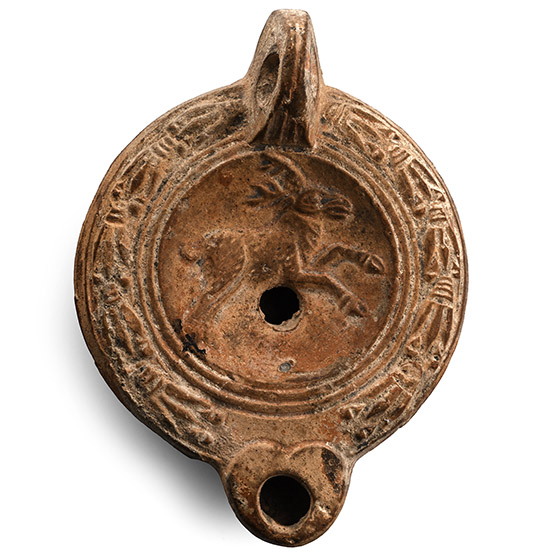
Roman Terracotta Oil Lamp with Rampant Stag
2nd century A.D.Sold for (Inc. bp): £598
Discoid in plan with stub heart-shaped nozzle, loop handle with ribbing to outer face, shoulder with low-relief wreath detailing, discus with stag running right; ropework bands to underside of nozzle, base marked off with two circular grooves, impressed 'C' to centre. 81 grams, 10.3 cm
From a Scottish gentleman’s collection, Glasgow, formed from the early 2000s. -
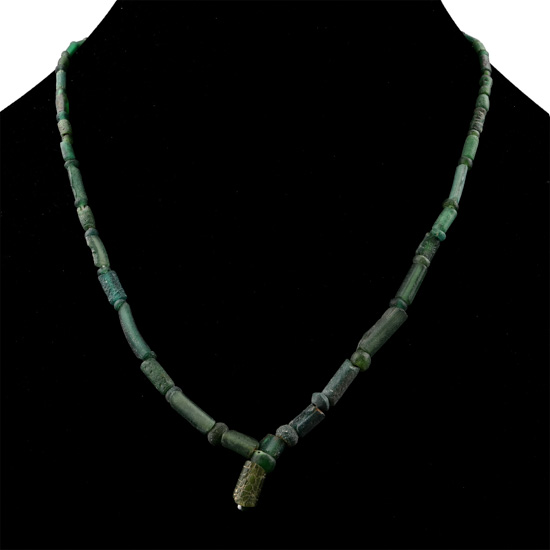
Roman and Other Black Glass Bead Necklace String
1st-4th century A.D. and laterSold for (Inc. bp): £59
Composed of tubular and reused bangle fragments; restrung. 18.63 grams, 44.5 cm
From London, UK, gallery collection, 1990s. -
.jpg)
Roman Amethyst Gemstone of the Goddess Minerva
1st-2nd century A.D.Estimate: £1,200 - 1,700 (+bp*)
Opening Bid: £600
Plano-convex in section with incuse bust of Minerva wearing a Corinthian-style crested helmet; supplied with a museum-quality impression. 0.48 grams, 11 mm
Private English collection, formed between the late 1970s and early 1990s. Private collection, London, UK.
