
Loading, please wait...
LOT 0650
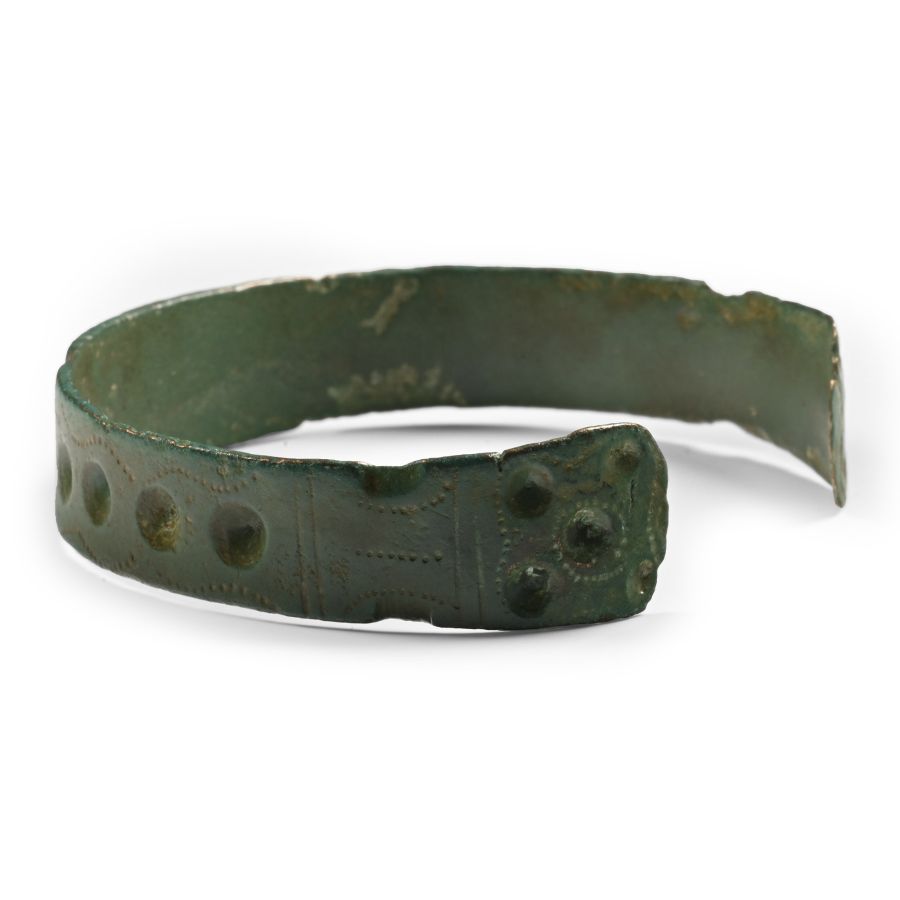
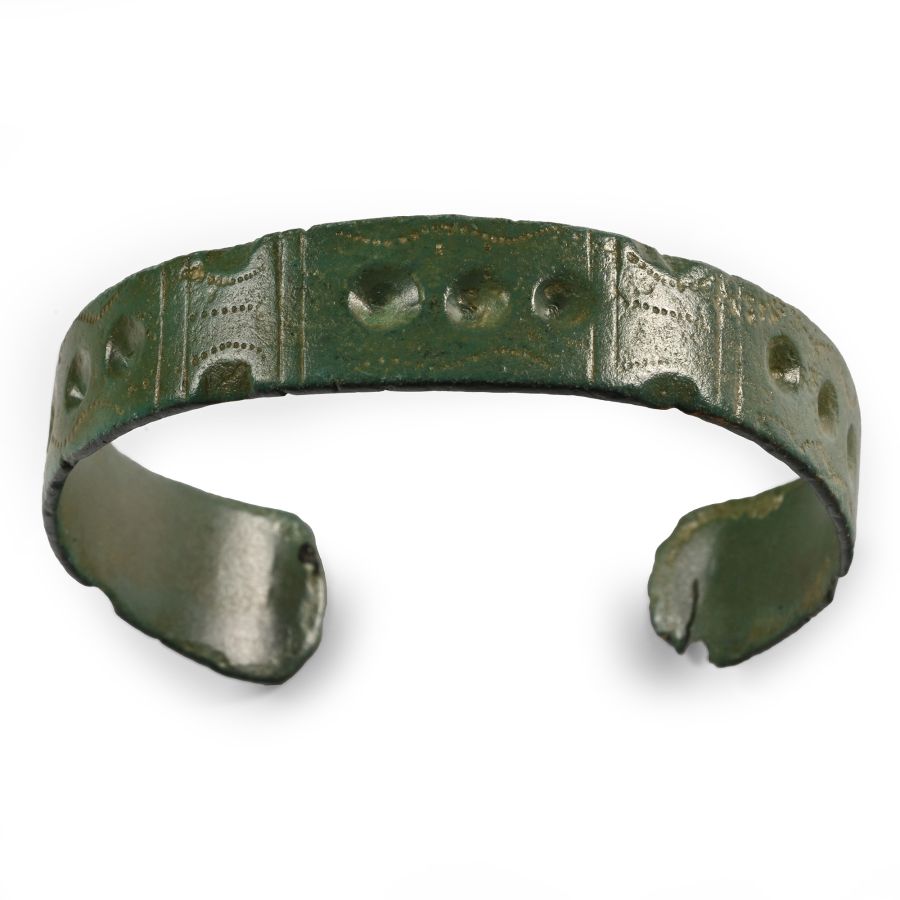
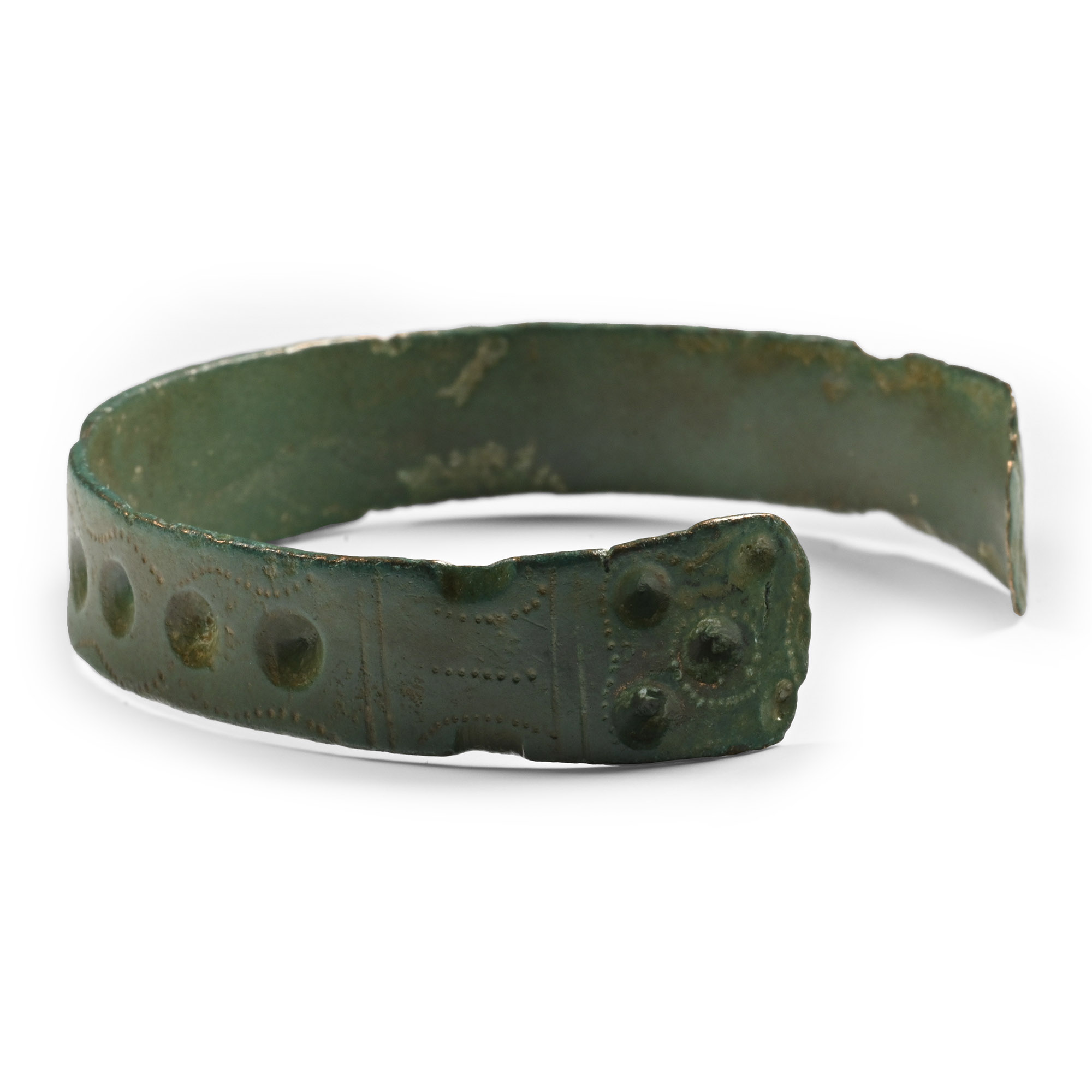
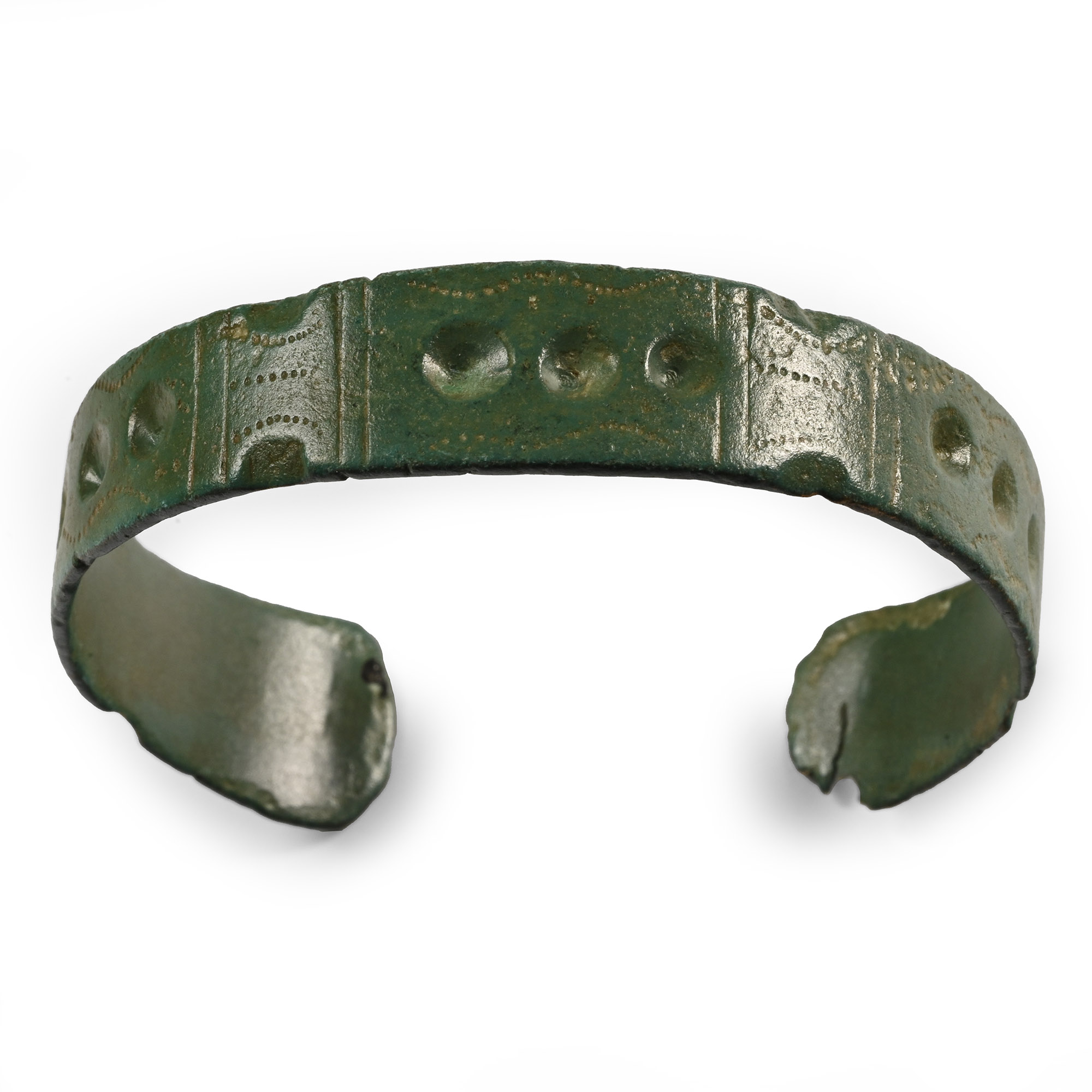
Roman Decorated Bronze Bracelet
1ST-4TH CENTURY A.D.
2 1/4 in. (19.3 grams, 57 mm).
Flat-section wide body decorated with punched pointillé decoration and deeply punched pellets arranged in groups; rounded finials with similar decoration. [No Reserve]
ProvenanceEx German art market, 2000s.
Acquired from an EU collector living in London.
From the collection of Surrey, UK, gentleman.
This lot is accompanied by an illustrated lot declaration signed by the Head of the Antiquities Department, Dr Raffaele D’Amato.
TimeLine Auctions follows a vetting process to ensure the authenticity and legality of all items, reinforcing our commitment to integrity and responsible trading. Each antiquity, antique, and coin lot undergoes thorough examination by a vetting committee of at least ten external specialists, professional trade association members, scientists, and archaeologists: Our Vetting Process
AUCTIONS:
TimeLine is a leading auction house specialising in antiquities, ancient art, collectables, natural history, coins, medals, and books. Our auctions offer museums, collectors, historians, and enthusiasts the opportunity to acquire unique and historically significant pieces.
-
Roman Glass Bead Necklace
Circa 1st-2nd century A.D. and laterSold for (Inc. bp): £156
Restrung designer necklace of mixed glass and carnelian beads, oval, oblate, polyhedral and round; with modern clasp. 75.4 grams, 38 cm
Previously acquired in the 1980s. From a North West London, UK, collection. Property of a Californian, USA, collector. This lot is accompanied by an illustrated lot declaration signed by the Head of the Antiquities Department, Dr Raffaele D’Amato. -
Roman to Norman Artefact Group
4th-12th century A.D.Sold for (Inc. bp): £65
Comprising: a Roman bronze votive hammer; a 6th century Anglo-Saxon bronze hooked clasp; a Viking lead gaming piece; a Norman bronze hunting dog leash swivel. 40 grams total, 17-44 mm
Found Cambridgeshire, UK. This lot is accompanied by an illustrated lot declaration signed by the Head of the Antiquities Department, Dr Raffaele D’Amato. -
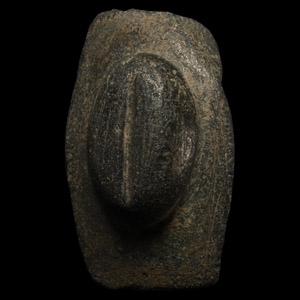
Romano-British Bronze Vulva Mount
1st-2nd century A.D.Sold for (Inc. bp): £65
Rectangular panel with curved long edges, raised boss with vertical slit representing a vulva, two mounting lugs to reverse. 8.54 grams, 27 mm
Found Essex, UK. This lot is accompanied by an illustrated lot declaration signed by the Head of the Antiquities Department, Dr Raffaele D’Amato.
