
Loading, please wait...
LOT 0797
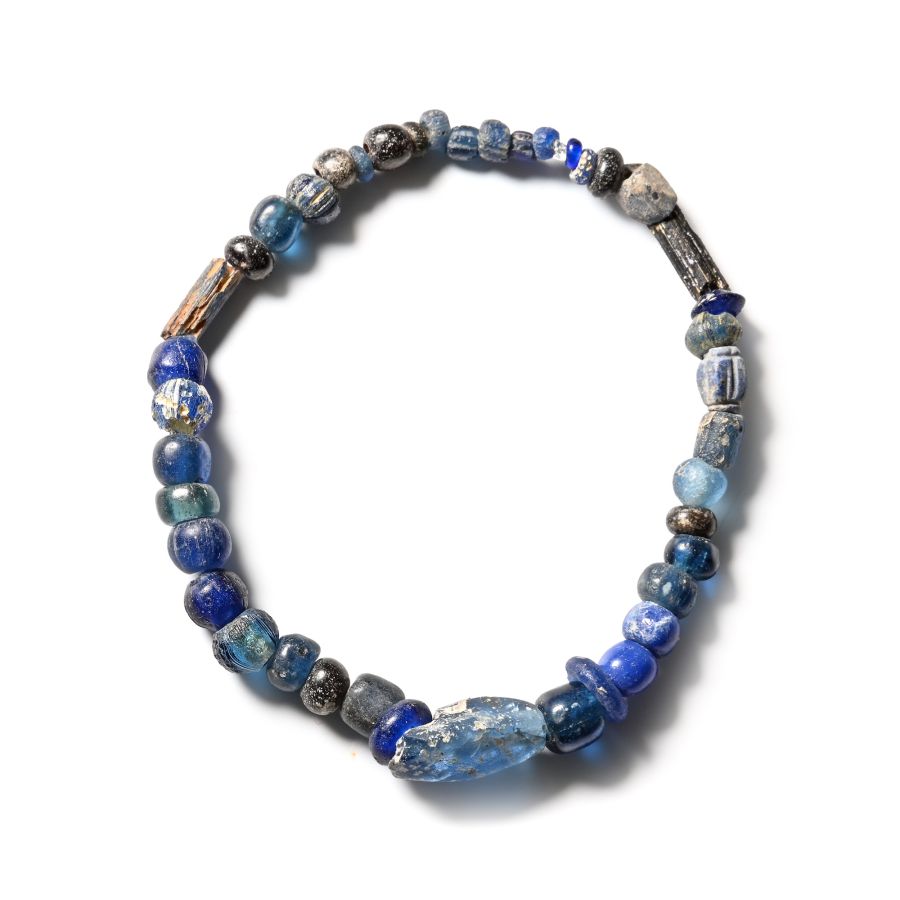
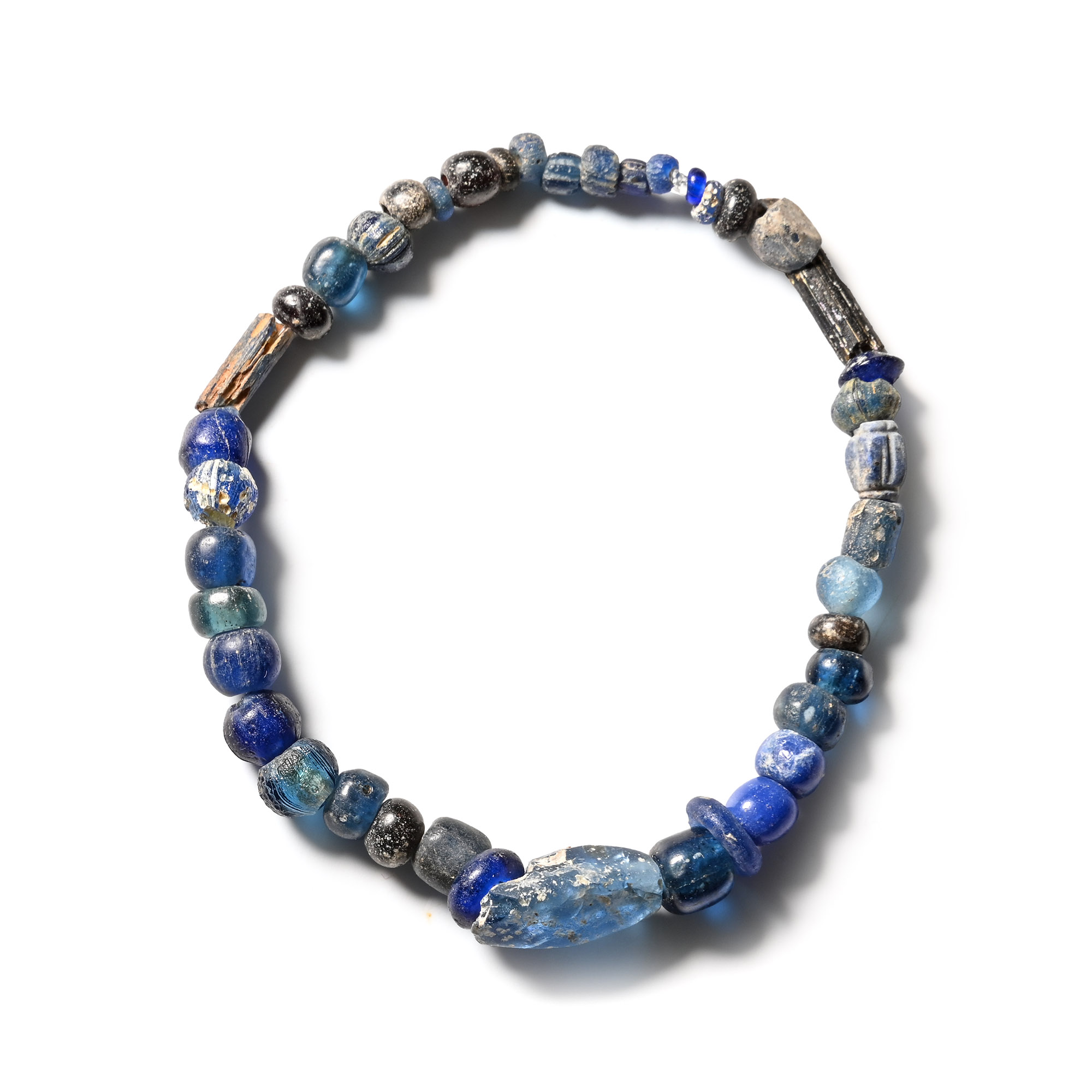
Roman Dark Blue Glass Bead Bracelet
1ST-4TH CENTURY A.D. AND LATER
5/8 in. (6.46 grams, 17 mm).
Composed mainly of oblate, spherical and tubular beads, restrung with an elasticated string. [No Reserve]
ProvenanceEx Ancient Art Shop, Windsor, UK, 1990s.
Ex private collection.
TimeLine Auctions follows a vetting process to ensure the authenticity and legality of all items, reinforcing our commitment to integrity and responsible trading. Each antiquity, antique, and coin lot undergoes thorough examination by a vetting committee of at least ten external specialists, professional trade association members, scientists, and archaeologists: Our Vetting Process
AUCTIONS:
TimeLine is a leading auction house specialising in antiquities, ancient art, collectables, natural history, coins, medals, and books. Our auctions offer museums, collectors, historians, and enthusiasts the opportunity to acquire unique and historically significant pieces.
-
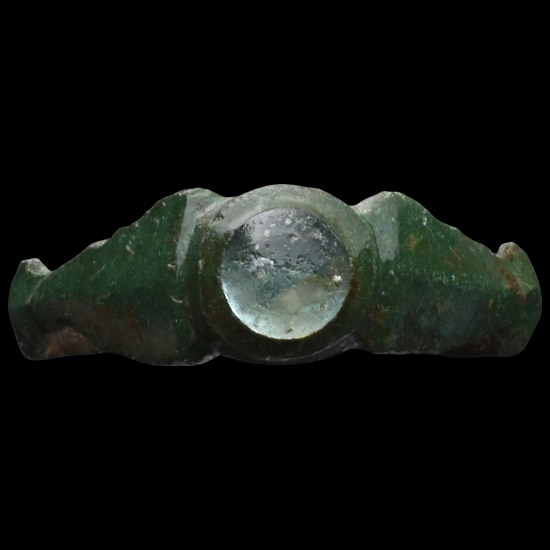
Roman Bronze Ring with Glass Gem
Circa 3rd century A.D.Sold for (Inc. bp): £124
With slender hoop and amphora-shaped shoulders, supporting a cell set with a clear 'aqua' glass cabochon. 2.00 grams, 21.92 mm overall, 17.81 x 15.28 mm internal diameter (approximate size British J, USA 4 33/4, Europe 8.69, Japan 8)
From the private collection of Mr Brian Edwards, New Malden, Surrey, UK, formed from the late 1970s-early 1980s; thence by descent. Accompanied by the original collector's data sheet(s) with reference no.A109. -
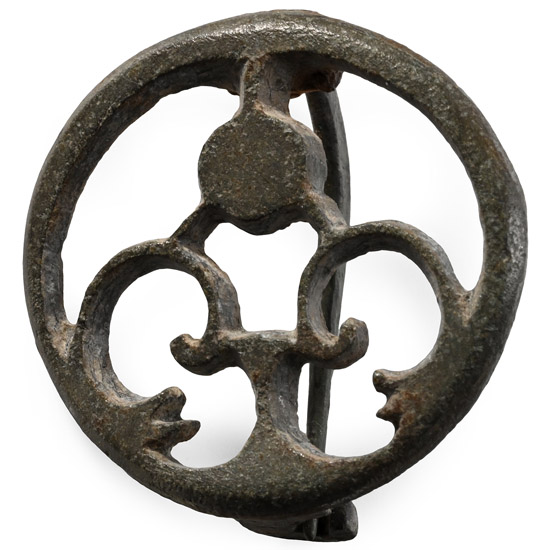
Roman Bronze Plate Brooch with Trumpets
2nd-3rd century A.D.Sold for (Inc. bp): £85
Circular frame enclosing two opposing trumpet-shaped motifs, with a pin and catch on the reverse. 11.12 grams, 34 mm
From the private coin collection of a West London, UK, gentleman, formed since the mid 1980s. -
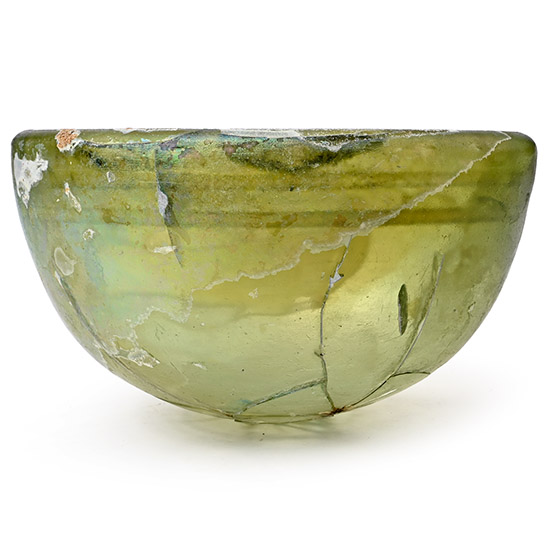
Roman Green Glass Bowl
150-50 B.C.Sold for (Inc. bp): £468
Hemispherical body with a wheel-cut decoration on the inside rim. 280 grams, 12.8 cm wide
From an important London, UK, collection 1980-2020.
Such bowls were mainly produced in the Eastern Mediterranean and diffused in Rome since the 2nd century B.C., when the sea was becoming a Mare Nostrum for the Res Publica. They were characterised by a hemispherical body with a round and convex bottom, but especially by concentric circular grooves.
