
Loading, please wait...
LOT 0200
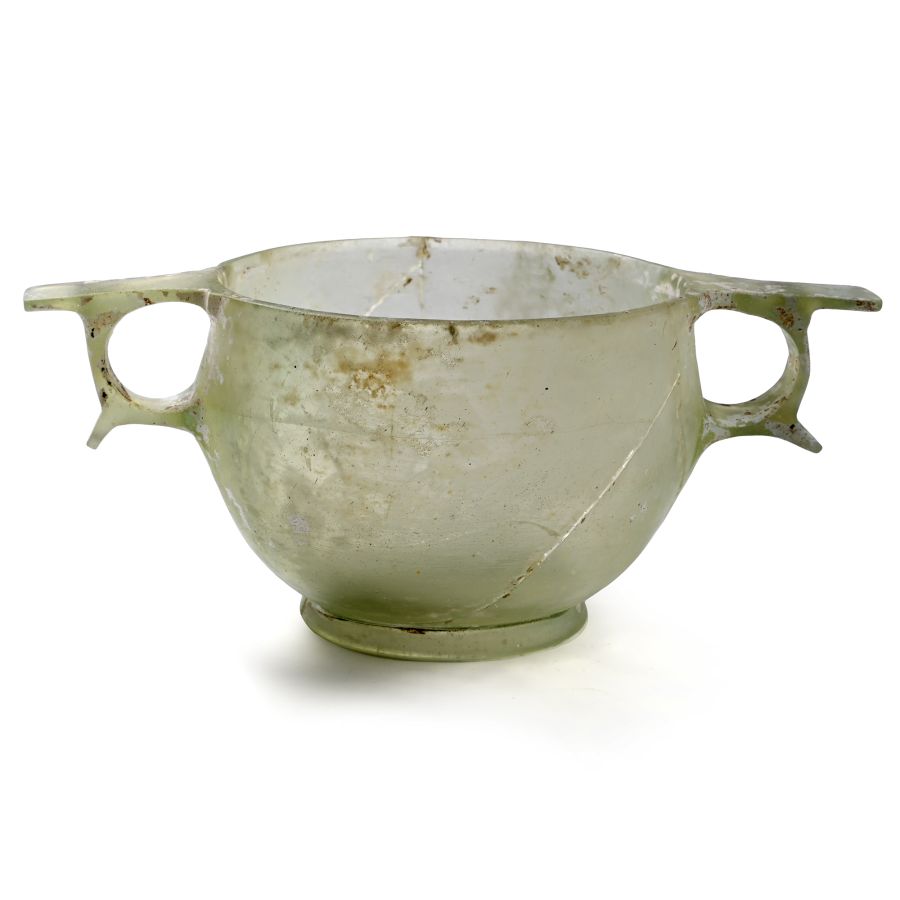
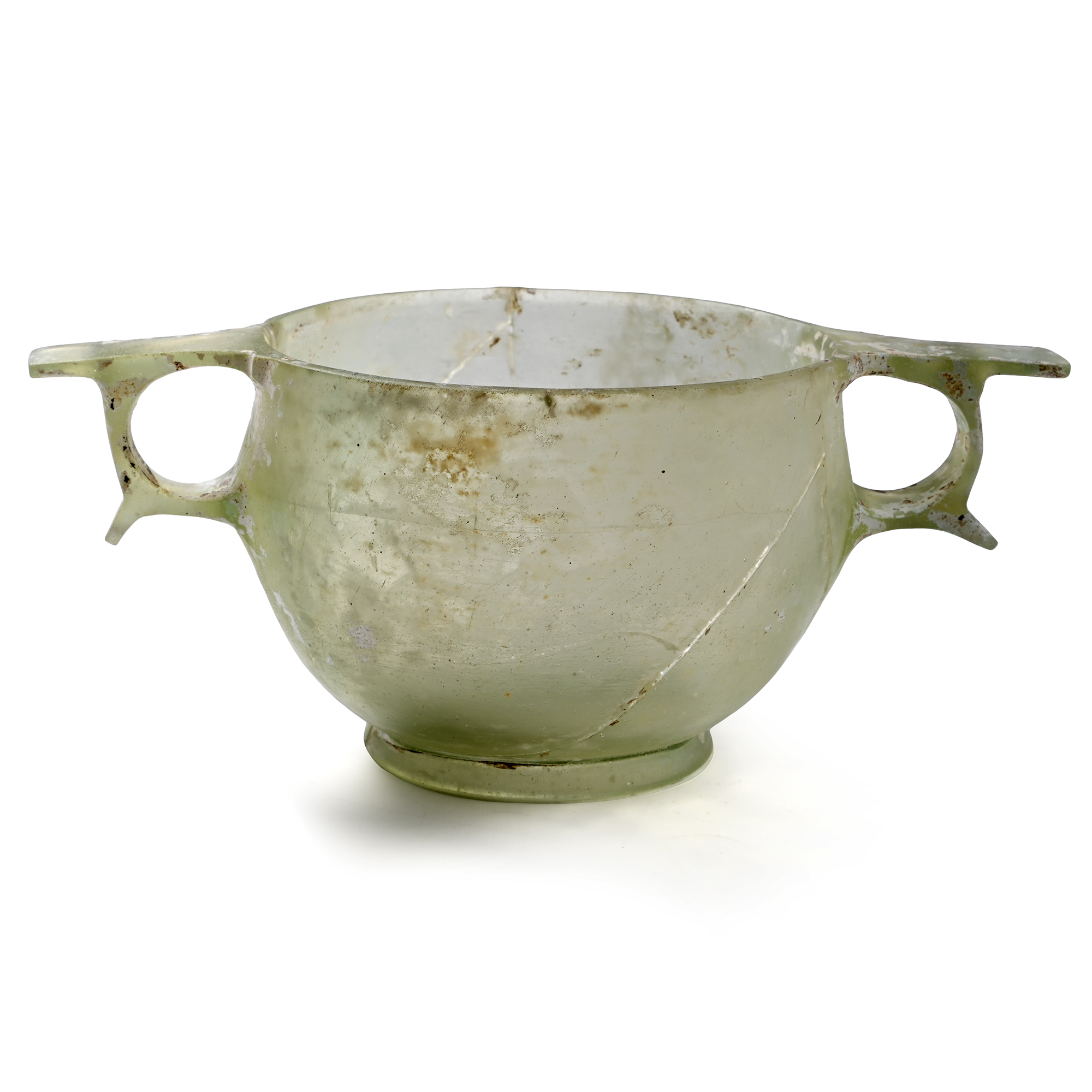
Roman Cut-Glass Skyphos
1ST CENTURY B.C.-1ST CENTURY A.D.
7 1/8 in. (260 grams, 18.3 cm wide).
Drum-shaped frosted glass vessel on a low basal ring, lateral loop handles each with an angled spur below and fish-tail plaque above.
ProvenanceAcquired in the 1980s.
with Christopher Sheppard, London, UK.
Acquired from the above in 2007.
Accompanied by an academic report by Dr Raffaele D’Amato.
This lot has been checked against the Interpol Database of stolen works of art and is accompanied by search certificate number no.13248-252970.
Cf. similar item in the Metropolitan Museum of Art under accession no.81.10.94, in Thorpe, W., ‘The Prelude to European Cut Glass’ in Transactions of the Society of Glass Technology, 23, 1936, p.14 n.2; cf. Whitehouse, D., Roman Glass in the Corning Museum of Glass,, New York, 2001, part I, pp.92ff. and esp. no.133, for similar cups; for metal parallels see Hilgers, W., Lateinische Gefassnamen. Bezeichnungen, Funktion und Form römischer Gefasse nach den antiken Schriftquellen, Beihefte der Bonner Jahrbucher, v.31, Düsseldorf, 1969; Pappalardo, U., ’Gli Argenti’ in Ferrari, O. & Others, Le collezioni del Museo Nazionale di Napoli, Roma, 1986, pp.91-99 and 206-217; for mould-blown skyphoi of the same type see Isings, C., Roman glass from dated finds, Groningen-Djakarta, 1957.
FootnotesThe classic shape of this skyphos, a two-handled drinking cup from the 1st century, reflects the metal prototypes of the period. The most famous are the silver cups from Boscoreale and the House of the Menander at Pompeii (Hilgers, 1969, pl.2, nos.5-6 and pl.4, nos.1-4; Pappalardo, 1986, pp.206-207, nos.1-4).
CONDITIONTimeLine Auctions follows a vetting process to ensure the authenticity and legality of all items, reinforcing our commitment to integrity and responsible trading. Each antiquity, antique, and coin lot undergoes thorough examination by a vetting committee of at least ten external specialists, professional trade association members, scientists, and archaeologists: Our Vetting Process
AUCTIONS:
TimeLine is a leading auction house specialising in antiquities, ancient art, collectables, natural history, coins, medals, and books. Our auctions offer museums, collectors, historians, and enthusiasts the opportunity to acquire unique and historically significant pieces.
LOT 0200
Roman Cut-Glass Skyphos
Estimate £4,000 - 6,000€4,640 - 6,960 (for guidance only)$5,400 - 8,100 (for guidance only)
-
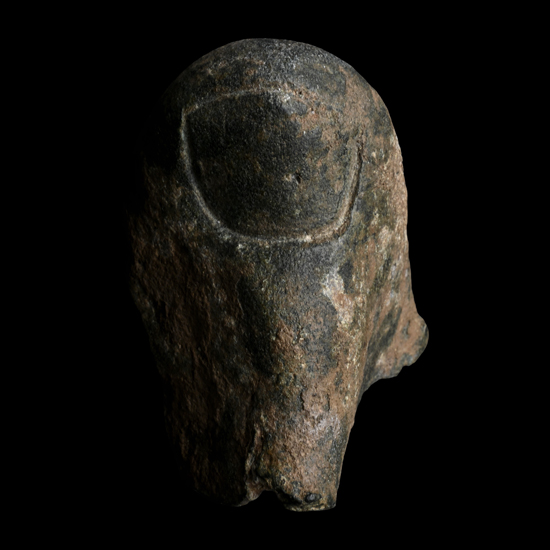
Twice Life-Size Roman Bronze Statue Big Toe
1st-4th century A.D.Sold for (Inc. bp): £598
Comprising the tip of a big toe with nail detailing; hollow-form. 179 grams, 57 mm
From the private collection of a European gentleman (1942-2024), formed since the 1970s. -
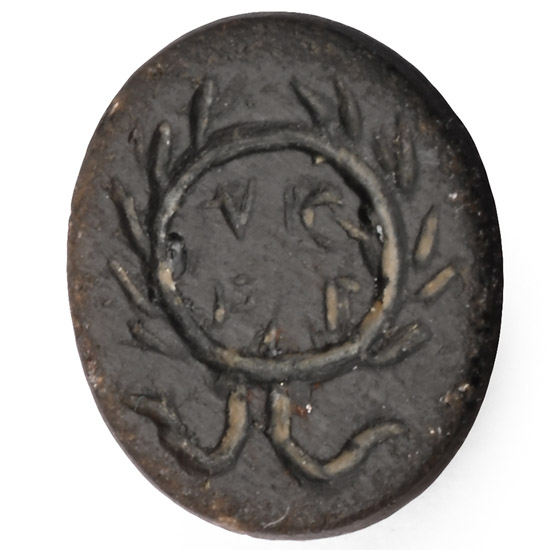
Roman Black Gemstone with Laurel Wreath
2nd-3rd century A.D.Sold for (Inc. bp): £65
With intaglio laurel wreath; supplied with a museum-quality impression. 0.18 grams, 7.35 mm
From the private collection of a European gentleman (1942-2024), formed since the 1970s. -
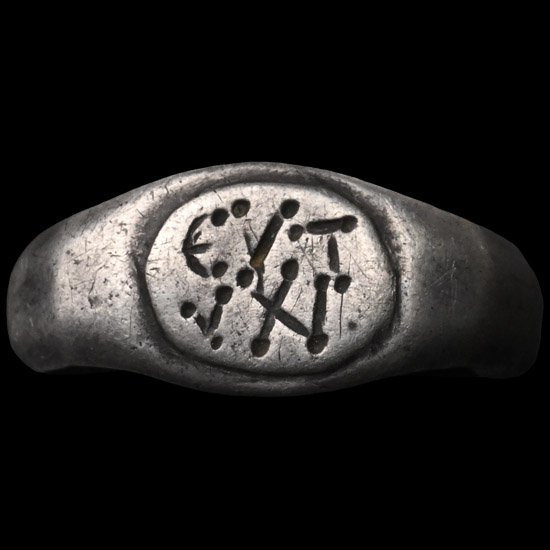
Roman Silver Ring with Inscription
1st century A.D.Sold for (Inc. bp): £130
With broad plaque, incised border to the raised bezel, incised legend 'EVTVN', each line ending with an impressed point; small size suitable for a child. 2.63 grams, 18.62 mm overall, 15.21 mm internal diameter (approximate size British F, USA 2 3/4, Europe 3.67, Japan 3)
From the collection of a gentleman, acquired on the London art market in the 1990s.
