
Loading, please wait...
LOT 1634
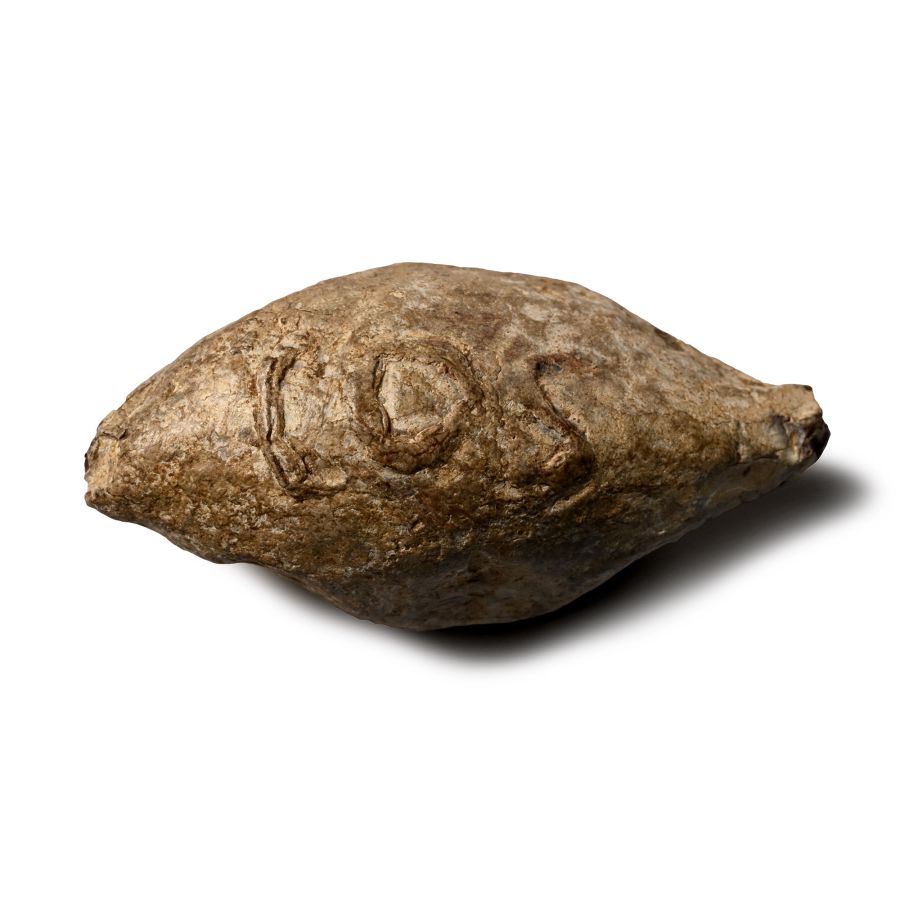
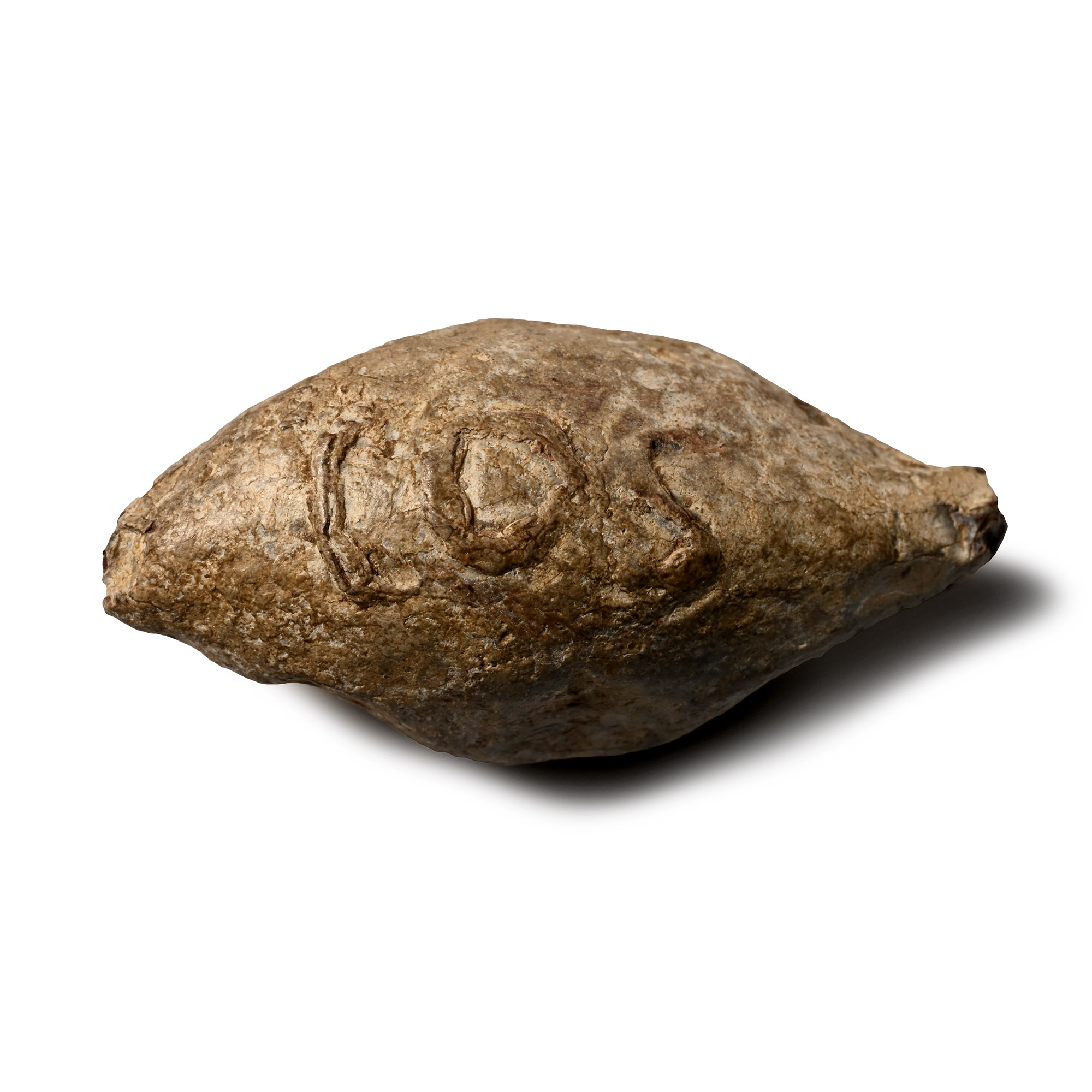
Roman 'Consular' Lead Slingshot
1ST CENTURY B.C.
1 3/8 in. (38 grams, 36 mm).
Fusiform shot with casting nipple at each end, low-relief legend 'COS' to one face. [No Reserve]
ProvenanceFrom the collection of a London antiquarian, formed since the 1980s.
This lot is accompanied by an illustrated lot declaration signed by the Head of the Antiquities Department, Dr Raffaele D’Amato.
TimeLine Auctions follows a vetting process to ensure the authenticity and legality of all items, reinforcing our commitment to integrity and responsible trading. Each antiquity, antique, and coin lot undergoes thorough examination by a vetting committee of at least ten external specialists, professional trade association members, scientists, and archaeologists: Our Vetting Process
AUCTIONS:
TimeLine is a leading auction house specialising in antiquities, ancient art, collectables, natural history, coins, medals, and books. Our auctions offer museums, collectors, historians, and enthusiasts the opportunity to acquire unique and historically significant pieces.
-
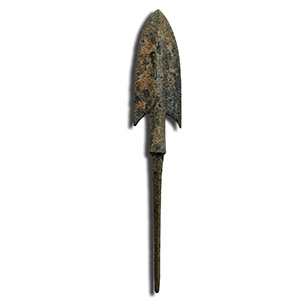
Luristan Bronze Arrowhead
13th-7th century B.C.Sold for (Inc. bp): £20
Heater-shaped with barbs to the rear and midrib developing to a tang. 30 grams, 15 cm
Acquired 1980-2015. Ex Abelita family collection. This lot is accompanied by an illustrated lot declaration signed by the Head of the Antiquities Department, Dr Raffaele D’Amato. -
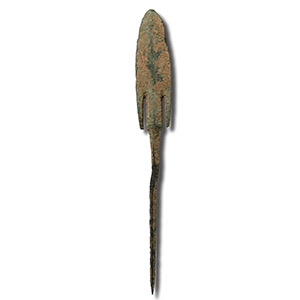
Luristan Barbed Bronze Arrowhead
13th-6th century B.C.Sold for (Inc. bp): £33
Comprising a paddle-shaped blade with long barbs, circular-section socket and a tapering square-section tang. 16.2 grams, 12.9 cm
Acquired 1980-2015. Ex Abelita family collection. This lot is accompanied by an illustrated lot declaration signed by the Head of the Antiquities Department, Dr Raffaele D’Amato. -
.jpg)
Marlik Bronze Short Sword
14th-10th century B.C.Sold for (Inc. bp): £1,105
Formed with a slender triangular blade, raised midrib with flat upper face, penannular guard and scooped shoulders, columnar grip with gusseted collar; the upper grip decorated with vertical lines, the lower part with horizontal grooves; crescent pommel. 430 grams, 44 cm
Ex Alexander Cotton collection, Hampshire, UK 1980s. This lot is accompanied by an illustrated lot declaration signed by the Head of the Antiquities Department, Dr Raffaele D’Amato.
This short sword or dagger belongs to the category of blades with pennanular guard, with hilt and guard cast in one piece with the grip. This solid weapon has separate sets of encircling ribs on the grip. Negahban excavated similar weapons from the Marlik cemeteries, although sometimes the type combines grip and penannular guard with flanged hilts open to accept inlays.
