
Loading, please wait...


LOT 0710
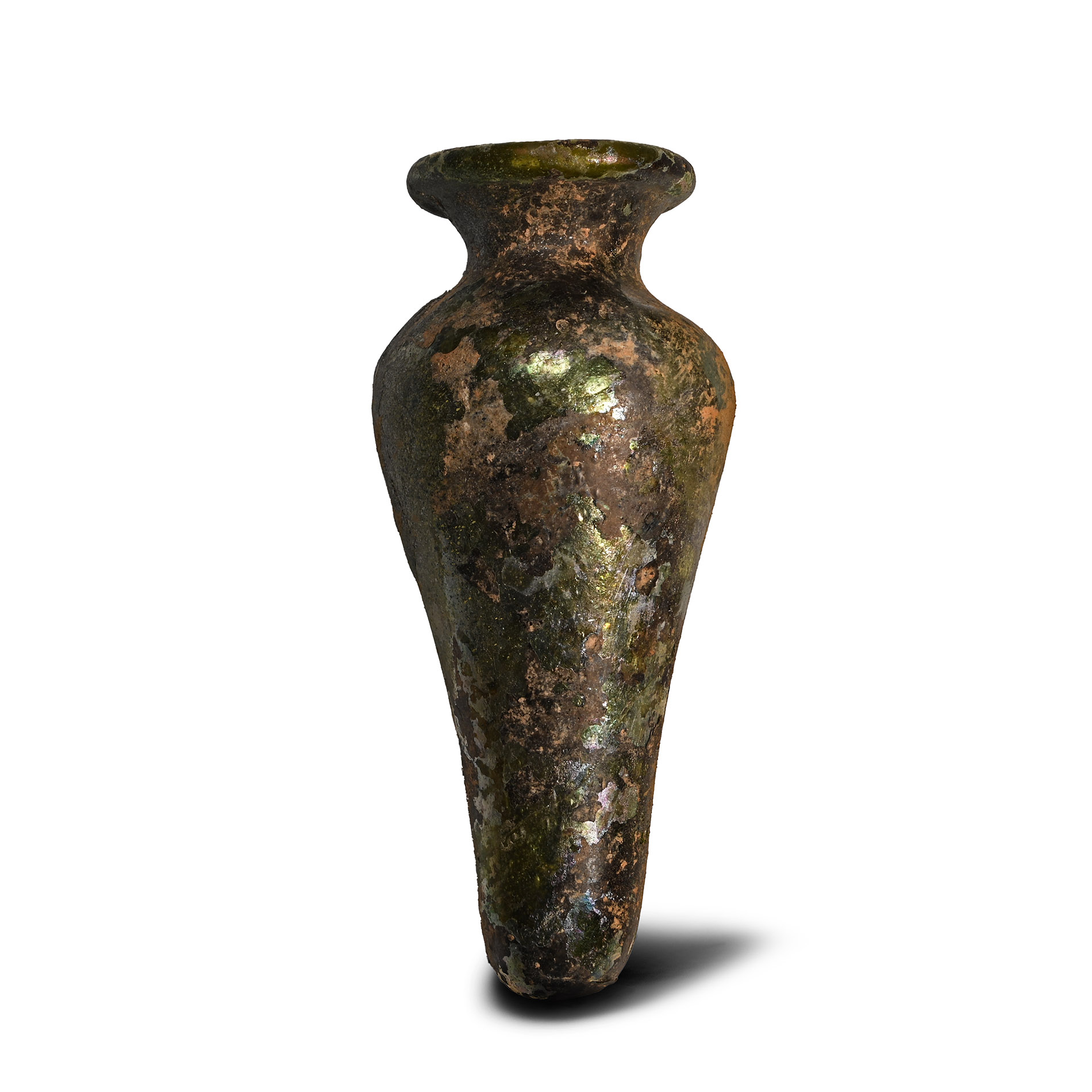
Roman Conical Green Glass Vessel
1ST-3RD CENTURY A.D.
5 in. (52 grams, 12.5 cm).
With broad rounded shoulder tapering to a conical foot, low cylindrical neck and everted mouth with rolled rim. [No Reserve]
ProvenanceEx London art market 1990s.
From a London, UK, collection.
This lot is accompanied by an illustrated lot declaration signed by the Head of the Antiquities Department, Dr Raffaele D’Amato.
Cf. Lightfoot, C.S., Ancient Glass in the National Museums of Scotland, Edinburgh, 2007, item 307, for type.
CONDITIONTimeLine Auctions follows a vetting process to ensure the authenticity and legality of all items, reinforcing our commitment to integrity and responsible trading. Each antiquity, antique, and coin lot undergoes thorough examination by a vetting committee of at least ten external specialists, professional trade association members, scientists, and archaeologists: Our Vetting Process
AUCTIONS:
TimeLine is a leading auction house specialising in antiquities, ancient art, collectables, natural history, coins, medals, and books. Our auctions offer museums, collectors, historians, and enthusiasts the opportunity to acquire unique and historically significant pieces.
-
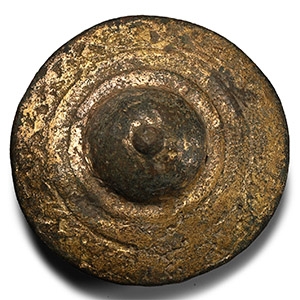
Roman Gilt-Bronze Brooch
1st-3rd century A.D.Sold for (Inc. bp): £130
Broad disc with concentric circles, central dome with knop, two attachment pins to reverse. 45.2 grams, 57 mm
Acquired from Brigantia Antiques, York, UK, circa 1995. Ian Wilkinson collection, Nottinghamshire, UK, formed since 1985. This lot is accompanied by an illustrated lot declaration signed by the Head of the Antiquities Department, Dr Raffaele D’Amato. -
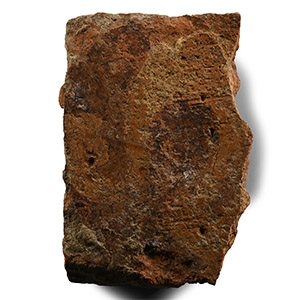
Romano-British Fresco Painted on Tile Fragment
3rd-4th century A.D.Sold for (Inc. bp): £156
Rectangular tegula fragment with painted detailing to the dressed face. 215 grams, 88 mm
Found Leicestershire, UK. Acquired from a collector in 2012. Ian Wilkinson collection, Nottinghamshire, UK, formed since 1985. This lot is accompanied by an illustrated lot declaration signed by the Head of the Antiquities Department, Dr Raffaele D’Amato. -
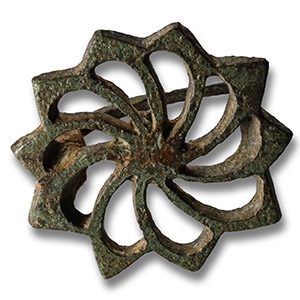
Roman Bronze Sun Wheel Plate Brooch
2nd century A.D.Sold for (Inc. bp): £78
With dentilled rim, openwork radiating cured arms from a central hub;pin, pin-lugs and catch to the reverse. 11.4 grams, 36 mm
From an English collection formed before 2000. This lot is accompanied by an illustrated lot declaration signed by the Head of the Antiquities Department, Dr Raffaele D’Amato.
