
Loading, please wait...
LOT 0883
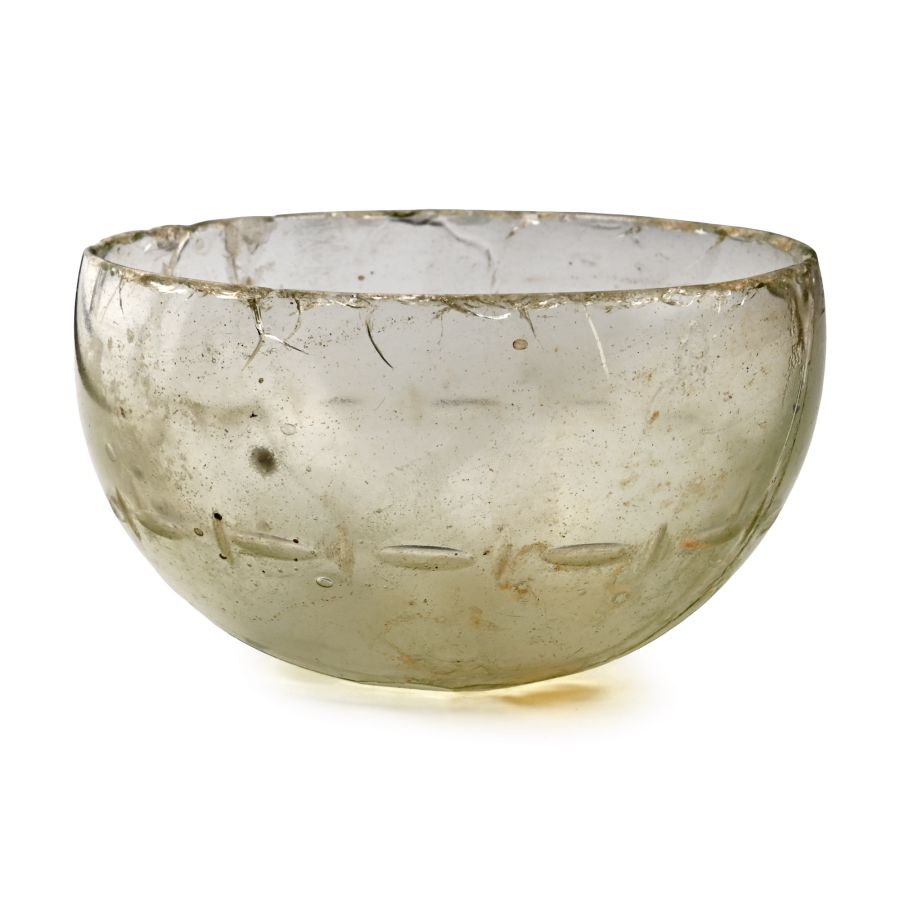
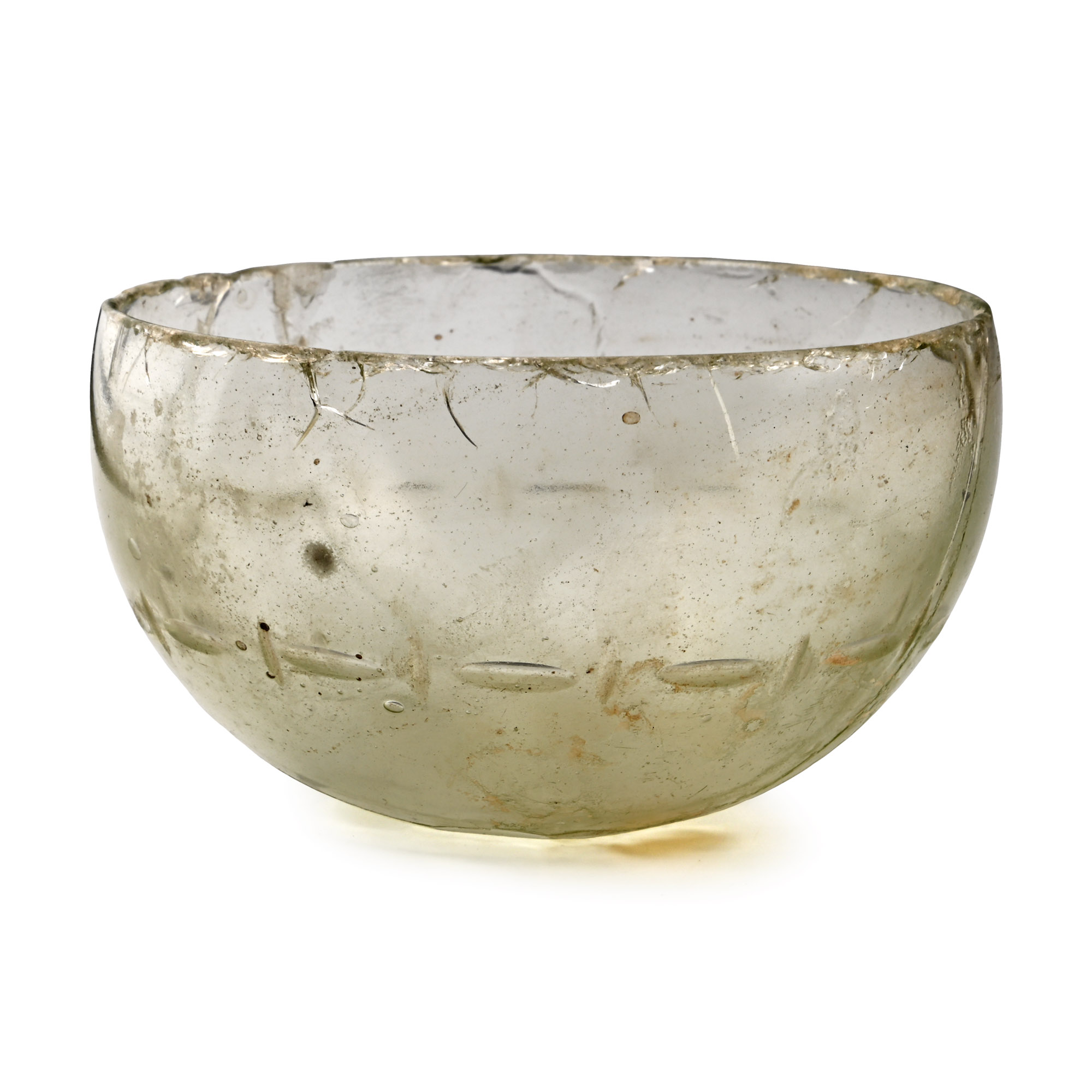
Roman Colourless Glass Bowl with Etched and Grooved Decoration
1ST CENTURY B.C.-1ST CENTURY A.D.
3 1/2 in. (108 grams, 91 mm wide (235 grams total, 91 mm wide including stand)).
Hemispherical in profile with wheel-cut dimples to the foot, band of alternating horizontal and vertical strokes below the equator; repaired; supplied with a display stand.
ProvenanceMayfair, London, UK, gallery, 2000s.
Ex Surrey, UK, gentleman.
This lot is accompanied by an illustrated lot declaration signed by the Head of the Antiquities Department, Dr Raffaele D'Amato.
TimeLine Auctions follows a vetting process to ensure the authenticity and legality of all items, reinforcing our commitment to integrity and responsible trading. Each antiquity, antique, and coin lot undergoes thorough examination by a vetting committee of at least ten external specialists, professional trade association members, scientists, and archaeologists: Our Vetting Process
AUCTIONS:
TimeLine is a leading auction house specialising in antiquities, ancient art, collectables, natural history, coins, medals, and books. Our auctions offer museums, collectors, historians, and enthusiasts the opportunity to acquire unique and historically significant pieces.
LOT 0883
Roman Colourless Glass Bowl with Etched and Grooved Decoration
Estimate £500 - 700€580 - 810 (for guidance only)$680 - 950 (for guidance only)
-
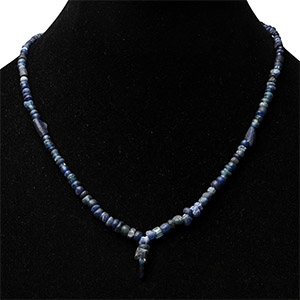
Roman Blue Glass Bead Necklace String
1st-4th century A.D. and laterSold for (Inc. bp): £98
Composed mainly of oblate and annular beads, restrung to a Y-shape. 11.96 grams, 41 cm
From the London, UK, art market in the 1990s. This lot is accompanied by an illustrated lot declaration signed by the Head of the Antiquities Department, Dr Raffaele D'Amato.
Such necklaces testify to the popularity of glass ornaments across the Roman Empire. Roman jewellery at first followed trends set by the Etruscans, using gold and glass beads, but with the extension of the Empire and the adoption of different styles from Greece, Egypt and North Africa, jewellery designs became increasingly various and elaborate. Each bead of this beautiful necklace is unique in shape, lustre and speckling, creating a mosaic like impression. Blue glass beads are distinguished by the scholars in opaque mid-blue and deep translucent cobalt blue. -
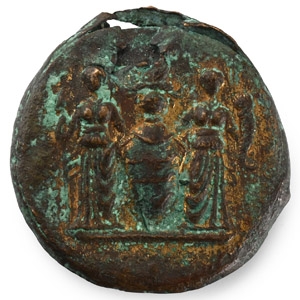
Roman Gilt Bronze Medallion with Mythological Scene
3rd-5th century A.D.Sold for (Inc. bp): £91
Discoid in plan with repoussé sheet-bronze cover on a bronze disc; facing image of two goddesses holding cornucopiae (Fortuna and Isis) flanking an altar, on a baseline. 7.5 grams, 23 mm
Acquired in 1993. Private collection, thence by descent. Private collection, since the late 1990s. This lot is accompanied by an illustrated lot declaration signed by the Head of the Antiquities Department, Dr Raffaele D'Amato.
There are reliefs and paintings from across the Empire showing religious processions involving cult statues of the two goddesses. The famous Roman novel 'The Golden Ass' by Lucius Apuleius provides literary evidence of such processions in honour of the goddess Isis. The statue of the goddess was taken from the temple and processed through the streets with great pomp and ceremony on an elaborate bier or cart by the priests and devotees to the accompaniment of music and prayers. -
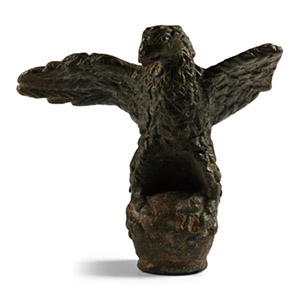
Roman Bronze Legionary Eagle Staff Finial
2nd-3rd century A.D.Estimate: £1,200 - 1,700 (‡+bp*)
Opening Bid: £667
Comprising a hollow-formed knop with collar to the socket, eagle modelled in the round perching on the knop with wings spread and head turned; socket behind the shoulders. 236 grams, 81 mm
Acquired in the mid 1980s-1990s. Private collection, Switzerland, thence by descent. Private collection, since the late 1990s. This lot has been checked against the Interpol Database of stolen works of art and is accompanied by search certificate number no.12238-222314. This lot has been cleared against the Art Loss Register database, and is accompanied by an illustrated lot declaration signed by the Head of the Antiquities Department, Dr Raffaele D’Amato. This lot is accompanied by an illustrated lot declaration signed by the Head of the Antiquities Department, Dr Raffaele D'Amato.
