
Loading, please wait...
LOT 0839
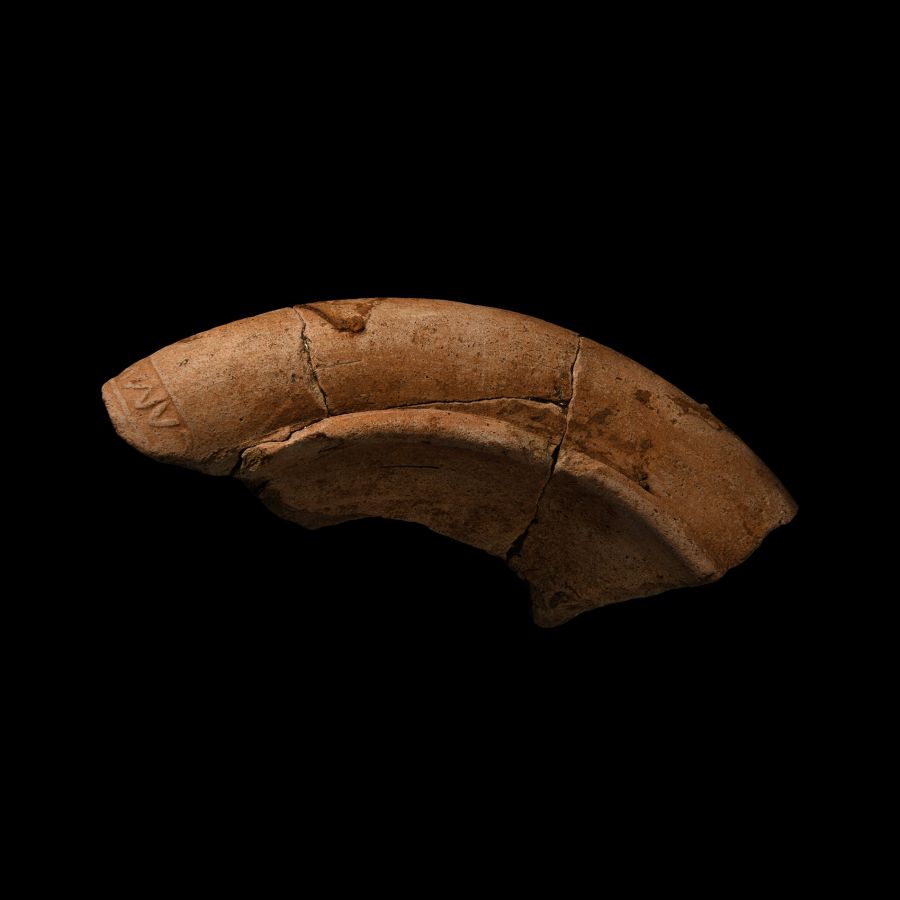
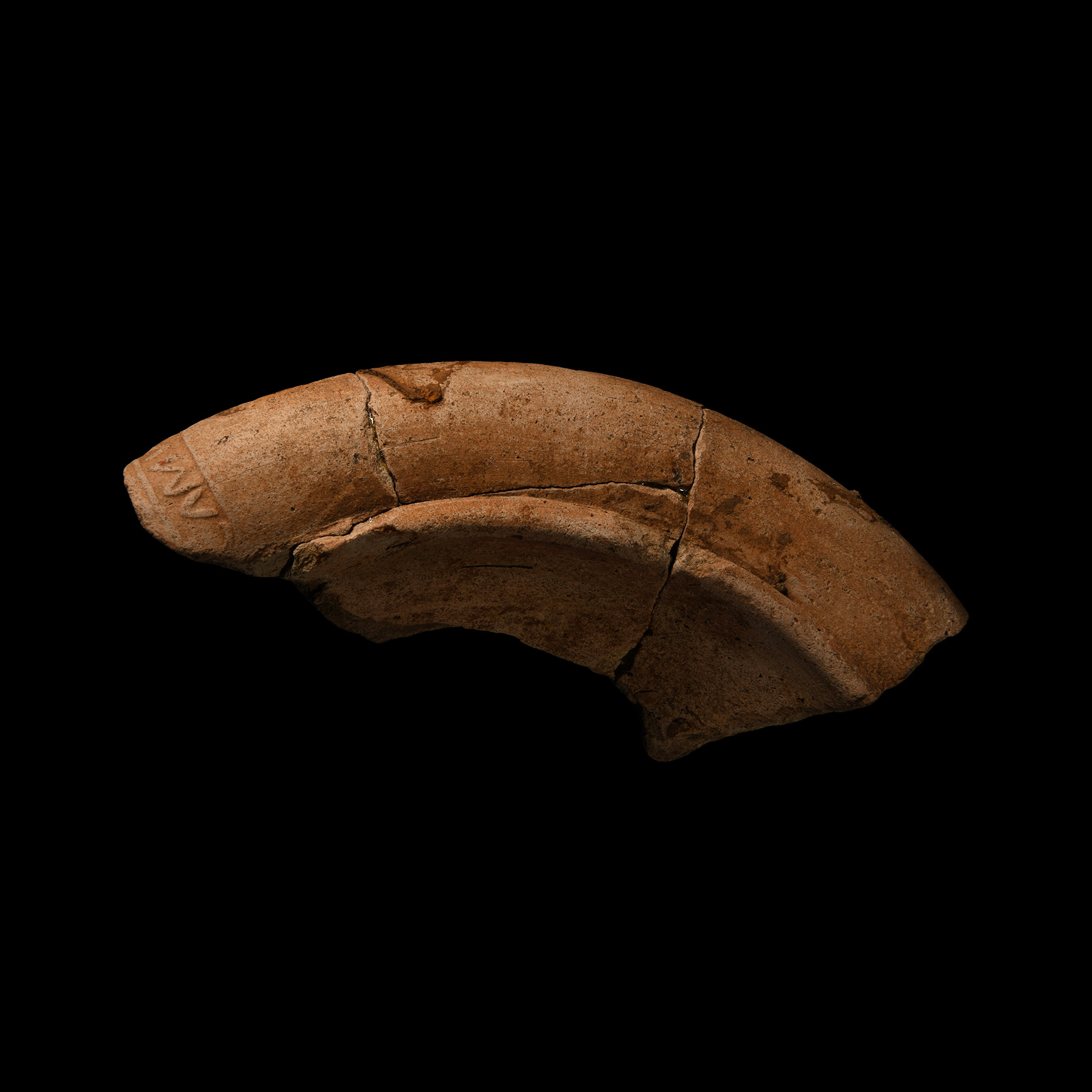
Roman Colchester Inscribed CAMV Mortarium Fragment
1ST-2ND CENTURY A.D.
7 1/2 in. (263 grams, 19 cm).
Comprising a section of the rim and inner wall of a mortarium vessel; stamped 'CAMV' within a rectangular panel to the upper face of the rim; repaired. [No Reserve]
ProvenanceFound Bedfordhire, 1980s.
Property of a Kempston, UK gentleman.
The abbreviation of CAMV for the ancient town of Camulodunum (modern Colchester, Essex) is well attested and commonly seen on the coins of the Celtic king Cunobelin.
CONDITIONTimeLine Auctions follows a vetting process to ensure the authenticity and legality of all items, reinforcing our commitment to integrity and responsible trading. Each antiquity, antique, and coin lot undergoes thorough examination by a vetting committee of at least ten external specialists, professional trade association members, scientists, and archaeologists: Our Vetting Process
AUCTIONS:
TimeLine is a leading auction house specialising in antiquities, ancient art, collectables, natural history, coins, medals, and books. Our auctions offer museums, collectors, historians, and enthusiasts the opportunity to acquire unique and historically significant pieces.
-
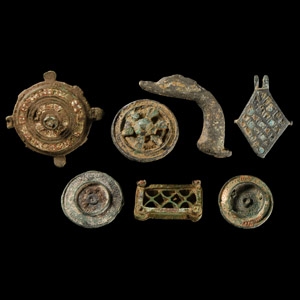
Roman Bronze Brooch and Other Artefact Collection
2nd-4th century A.D.Sold for (Inc. bp): £143
The group comprising: brooches, a seal box lid and zoomorphic mount; including examples with trace remains of gilding, polychrome and millefiori enamelling and other decorative techniques; four accompanied by PAS record ids. 62 grams total, 21-45 mm
Found Berkshire, UK. -
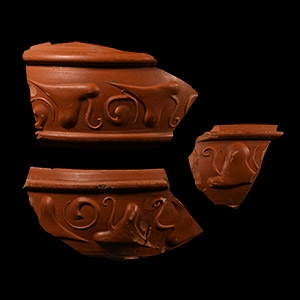
Roman Samian Ware Decorated Bowl Fragments
2nd century A.D.Sold for (Inc. bp): £46
Each fragment decorated with foliate motifs in raised relief to the external sidewall. 195 grams total, 6.7-11.8 cm
Found Bedfordhire, 1980s. Property of a Kempston, UK gentleman. -
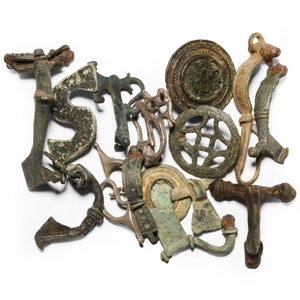
Roman Bronze and Silver Brooch Collection
Circa 2nd-4th century A.D.Sold for (Inc. bp): £130
Comprising a variety of brooch types, including openwork plate brooches; ornate trumpet brooches; a letter 'S'; a discoid plate brooch with glass centre encircled by remains of gilt punch motifs and tinned reverse; an openwork axe brooch; together with a range of other types, most decorated; all without pins. 149 grams total, 27-65 mm
Acquired on the UK art market. Property of a Ruislip, UK, gentleman, by inheritance.
