
Loading, please wait...
LOT 0796
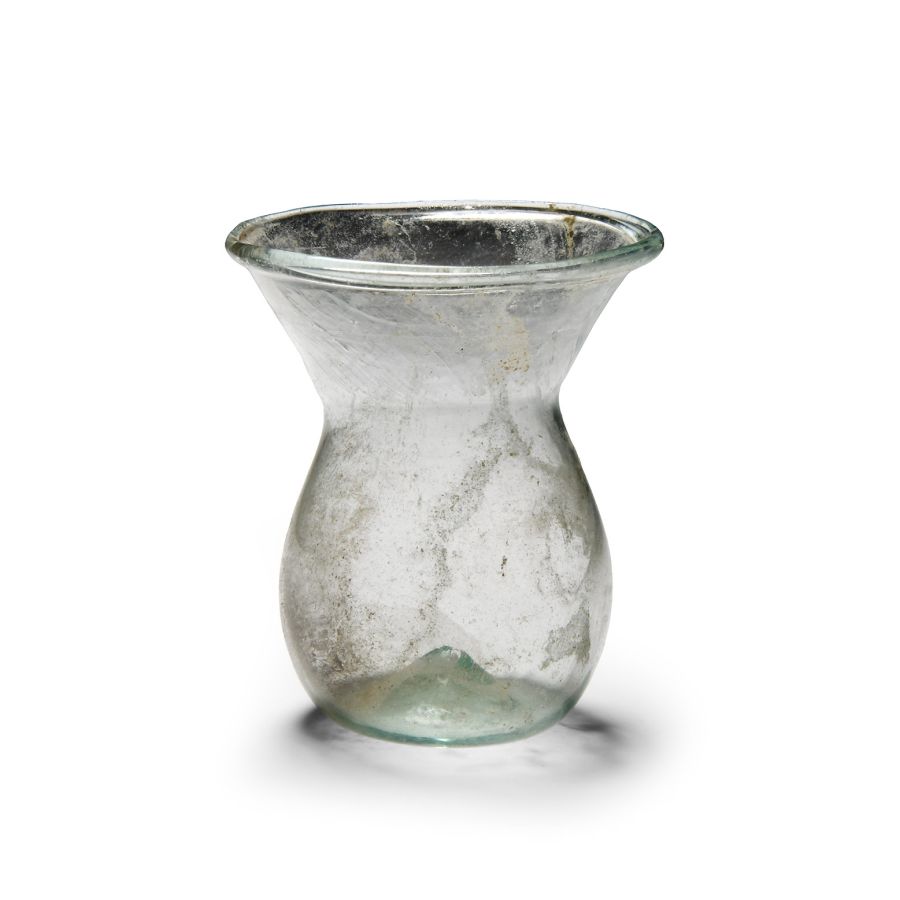
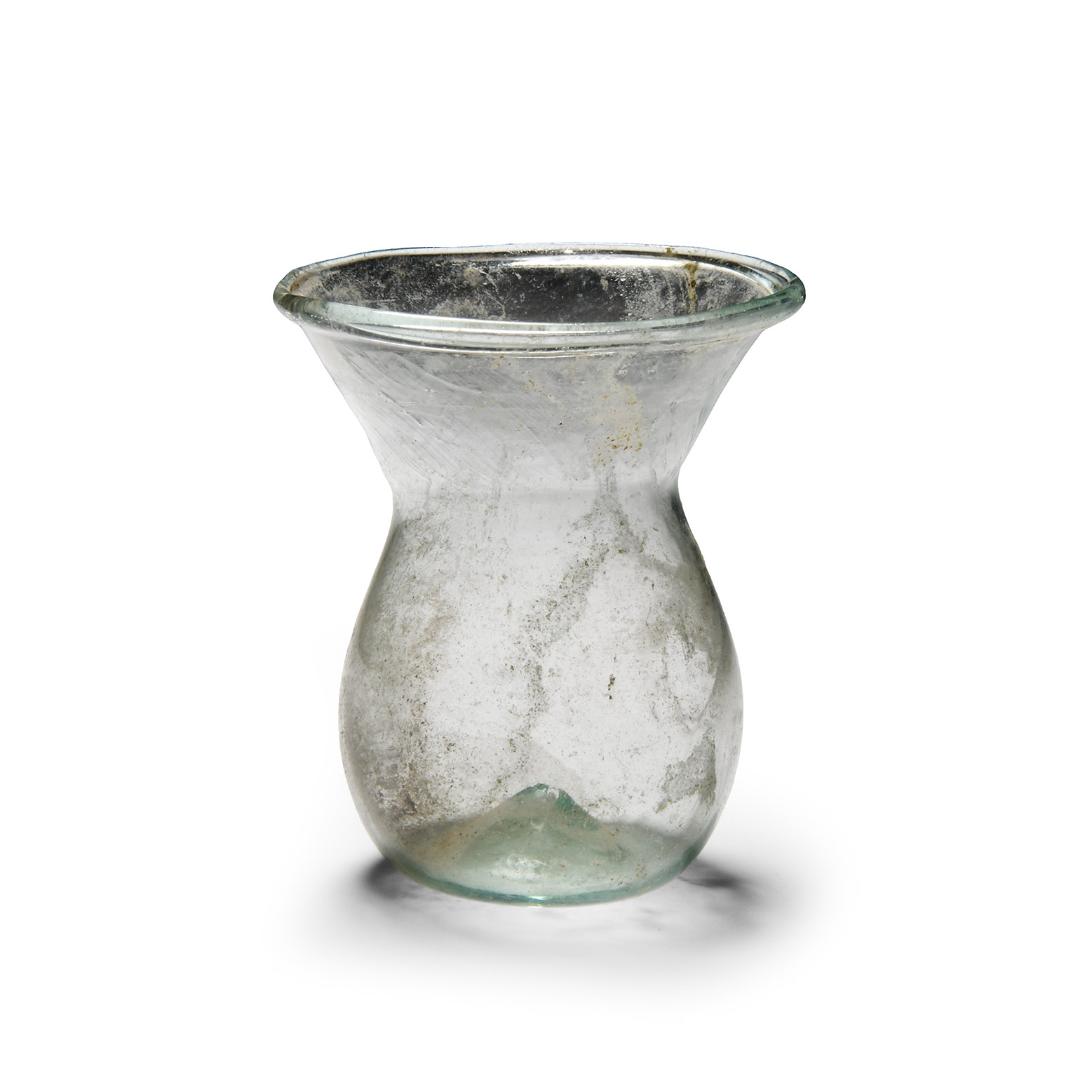
Roman Clear Glass Bottle
4TH CENTURY A.D.
2 3/4 in. (26.5 grams, 69 mm high).
With dimpled base and funicular neck.
ProvenanceAcquired 1980-2015.
Ex Abelita family collection.
Cf. Whitehouse, D., Roman Glass in the Corning Museum of Glass, vol.1, New York, 1997, item 312.
CONDITIONTimeLine Auctions follows a vetting process to ensure the authenticity and legality of all items, reinforcing our commitment to integrity and responsible trading. Each antiquity, antique, and coin lot undergoes thorough examination by a vetting committee of at least ten external specialists, professional trade association members, scientists, and archaeologists: Our Vetting Process
AUCTIONS:
TimeLine is a leading auction house specialising in antiquities, ancient art, collectables, natural history, coins, medals, and books. Our auctions offer museums, collectors, historians, and enthusiasts the opportunity to acquire unique and historically significant pieces.
-
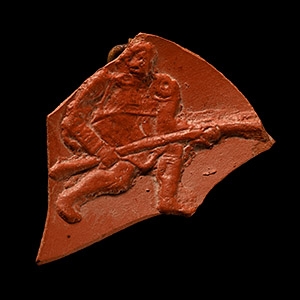
Roman Redware Sherd with Venator Gladiator
4th century A.D.Sold for (Inc. bp): £91
The fighting venator dressed in a long sleeved tunic embroidered with orbiculi and pectorarin, segmenta on the sleeves, brandishing a javelin of venabulum type; suspension loop to the reverse. 18 grams, 70 mm
Acquired 1960s-1990s. From the late Alison Barker collection, a retired London barrister.
The combat scene is likely a reference to the gladiatorial fights between men and animals; such games in the arena were a principal form of entertainment through the Roman Republic and Roman Empire. Both men and women would partake in such fights. The venatores (hunters) were the most specialised in this field, fighting with a spear with winged blades and long knives (culter venatorius). -
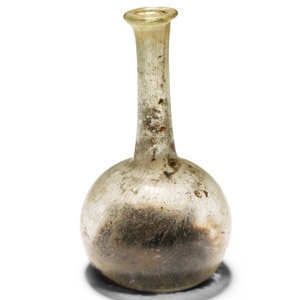
Roman Glass Cosmetic Bottle
Circa 3rd century A.D.Sold for (Inc. bp): £85
The slender tubular neck rising from a globular body. 34 grams, 10.1 cm
Ex Coincraft, London WC1. Ex private Merseyside, UK, collection. -
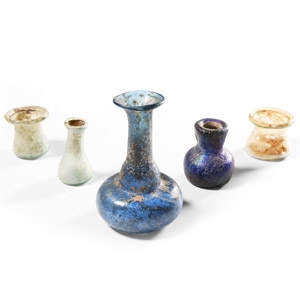
Roman Glass Vessel Collection
1st-4th century A.D. and laterSold for (Inc. bp): £286
Comprising various types including bottles and flasks in blue and pale green. 32 grams total, 21-57 mm
Acquired 1970s-1996. Property of a North American collector. London collection, 2016.
