
Loading, please wait...

LOT 0897
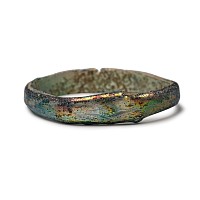
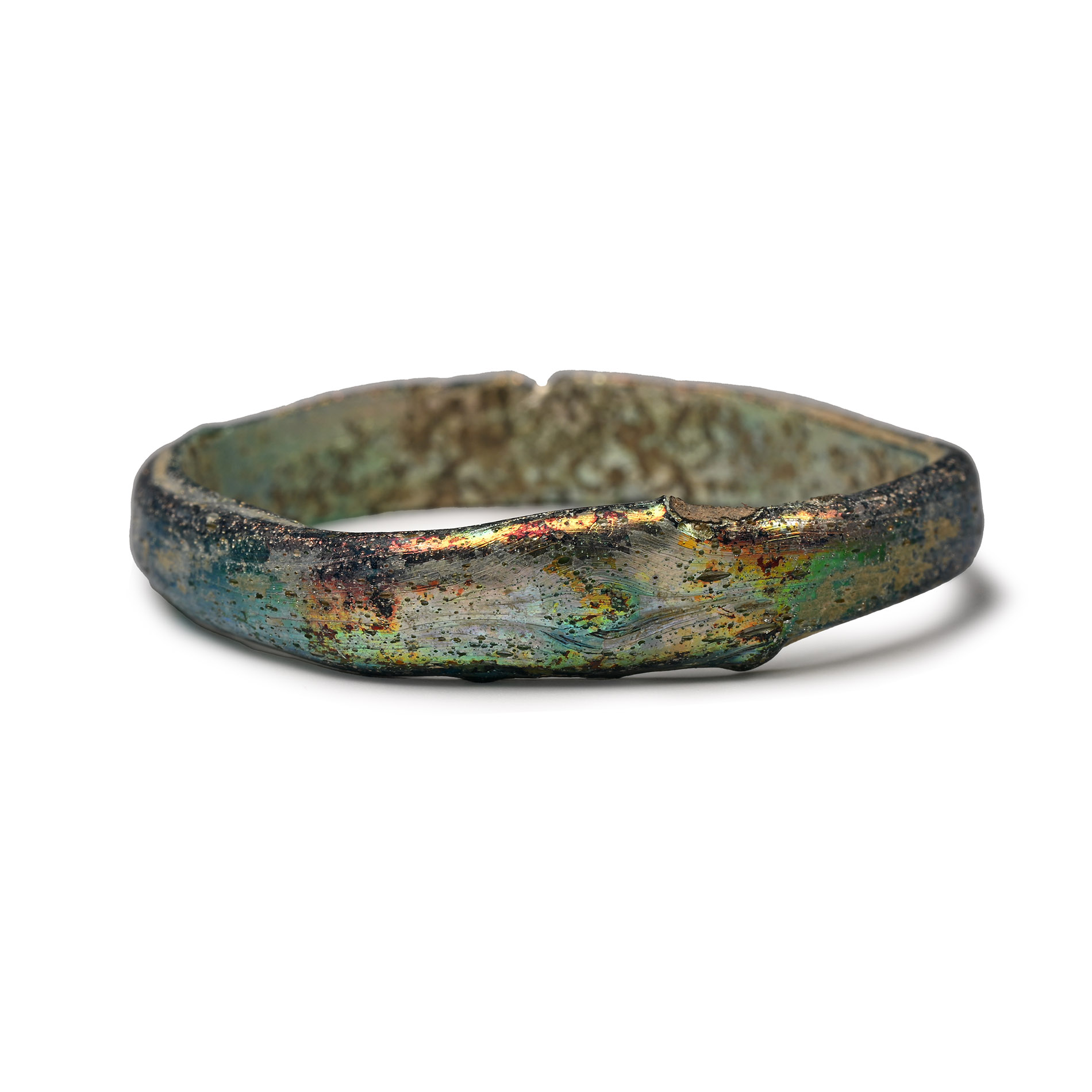
Roman Child's Iridescent Glass Bangle
3RD-4TH CENTURY A.D.
1 1/2 in. (3.09 grams, 38 mm).
D-shaped in section with iridescent surface. [No Reserve]
ProvenanceFrom an old English collection.
Acquired from Helios Gallery in 2011.
Ian Wilkinson collection, Nottinghamshire, UK, formed since 1985.
This lot is accompanied by an illustrated lot declaration signed by the Head of the Antiquities Department, Dr Raffaele D’Amato.
TimeLine Auctions follows a vetting process to ensure the authenticity and legality of all items, reinforcing our commitment to integrity and responsible trading. Each antiquity, antique, and coin lot undergoes thorough examination by a vetting committee of at least ten external specialists, professional trade association members, scientists, and archaeologists: Our Vetting Process
AUCTIONS:
TimeLine is a leading auction house specialising in antiquities, ancient art, collectables, natural history, coins, medals, and books. Our auctions offer museums, collectors, historians, and enthusiasts the opportunity to acquire unique and historically significant pieces.
-
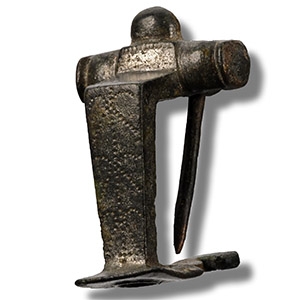
Romano-British Decorated Bronze Knee Brooch
2nd century A.D.Sold for (Inc. bp): £59
Comprising a chord housed with a horizontal sleeve with median lug above and pin to the rear; right-angled bow with pointillé detailing, perpendicular lower end and square foot with concentric rings to underside, hooked catch to reverse. 17 grams, 35 mm
Found near Gloucester, UK, in the 1970s. Acquired from Spinks, The Shambles, York, 2011. Ian Wilkinson collection, Nottinghamshire, UK, formed since 1985. Accompanied by an old handwritten dealer's ticket. This lot is accompanied by an illustrated lot declaration signed by the Head of the Antiquities Department, Dr Raffaele D’Amato. -
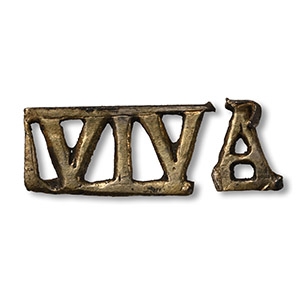
Roman Silver-Gilt 'VIVA' Lettering Group
3rd-4th century A.D. or laterSold for (Inc. bp): £364
An openwork bar displaying the Latin word 'VIVA'; section of frame before the first 'V' and the 'A' now separate. 0.53 grams total, 6-12 mm
Acquired in the late 1990s-2000. Property of an East London gentleman. This lot is accompanied by an illustrated lot declaration signed by the Head of the Antiquities Department, Dr Raffaele D’Amato.
Possibly forming part of the phrase VIVAT '[may he/she ] live'. -
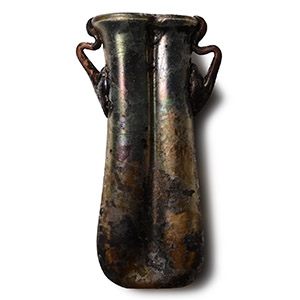
Roman Glass Double Balsamarium
Circa 4th century A.D.Sold for (Inc. bp): £234
A dark amber double balsamarium formed as a pair of conjoined tubes with slightly flared tops with thickened rims; applied handles at the shoulders joined to the rim; glass with areas of iridescence and dark crust, a few small earthy deposits. 67 grams, 10.3 cm
From a UK private collection. Ex London, UK, gallery. Ex TimesAncient, Bristol, UK. Accompanied by a copy of a previous catalogue entry. This lot is accompanied by an illustrated lot declaration signed by the Head of the Antiquities Department, Dr Raffaele D’Amato.
