
Loading, please wait...


LOT 0966
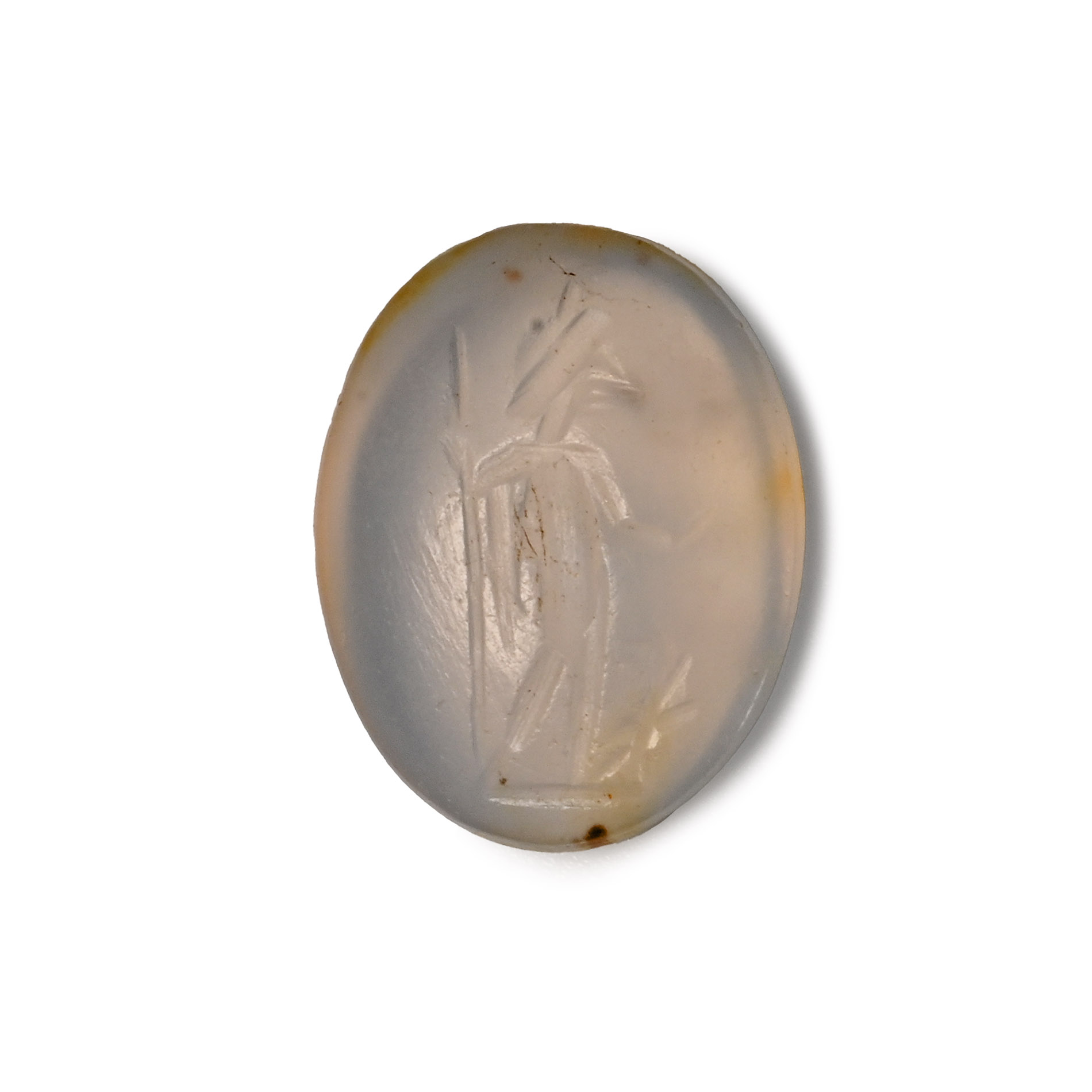
Roman Chalcedony Gemstone with Jupiter
2ND-3RD CENTURY A.D.
1/2 in. (0.66 grams, 12 mm).
An oval intaglio with convex faces, engraved with an image of standing god Jupiter holding a long spear, an eagle at his feet.
ProvenanceEx Swiss collection formed in the 1980s onwards.
This lot is accompanied by an illustrated lot declaration signed by the Head of the Antiquities Department, Dr Raffaele D’Amato.
TimeLine Auctions follows a vetting process to ensure the authenticity and legality of all items, reinforcing our commitment to integrity and responsible trading. Each antiquity, antique, and coin lot undergoes thorough examination by a vetting committee of at least ten external specialists, professional trade association members, scientists, and archaeologists: Our Vetting Process
AUCTIONS:
TimeLine is a leading auction house specialising in antiquities, ancient art, collectables, natural history, coins, medals, and books. Our auctions offer museums, collectors, historians, and enthusiasts the opportunity to acquire unique and historically significant pieces.
-
.jpg)
Roman Silver Votive Figure of the God Mercury
1st-3rd century A.D.Sold for (Inc. bp): £182
Modelled in the round, wearing a tightly-wrapped toga, his left arm bent and hand gripping the marsupium bag of coins; with full beard and hair parted neatly at the rear. 4.7 grams, 29 mm
Acquired in the 1980s. From the collection of a London antiquarian. This lot is accompanied by an illustrated lot declaration signed by the Head of the Antiquities Department, Dr Raffaele D’Amato. -
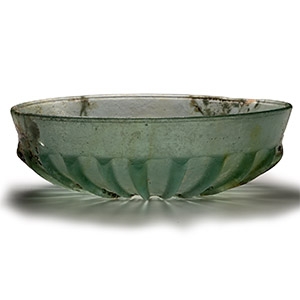
Roman Glass Ribbed Vessel
Eastern Mediterranean, 1st century B.C.-1st century A.D.Sold for (Inc. bp): £572
Flat, thick-walled bowl, mould-made with 22 large ribs to the outer face below the rim extending to the middle of the base; reassembled from fragments. 140 grams, 11.1 cm wide
Ex Martin Wunsch, New York 1980s-1990s. Accompanied by a copy of an Art Loss Register certificate no.S00098335. This lot is accompanied by an illustrated lot declaration signed by the Head of the Antiquities Department, Dr Raffaele D’Amato. -
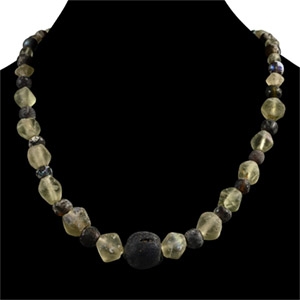
Roman Glass Bead Necklace
1st-2nd century A.D.Sold for (Inc. bp): £78
A designer necklace composed of graduated glass beads including green polyhedral and blue spherical; with modern clasp, restrung. 92 grams, 47 cm
Previously acquired in the 1980s. From a North West London, UK, collection. Property of a Californian, USA, collector. This lot is accompanied by an illustrated lot declaration signed by the Head of the Antiquities Department, Dr Raffaele D’Amato.
